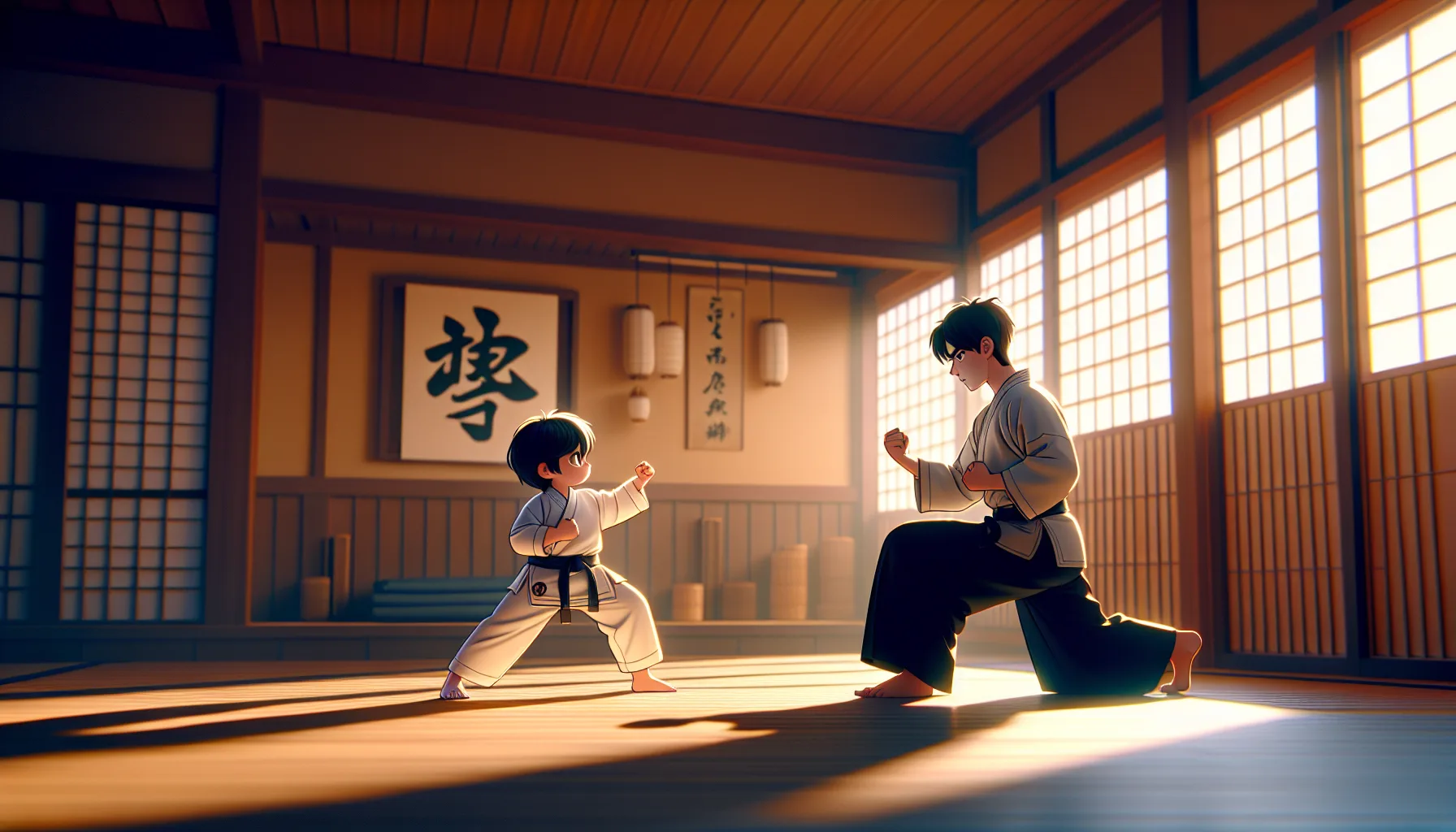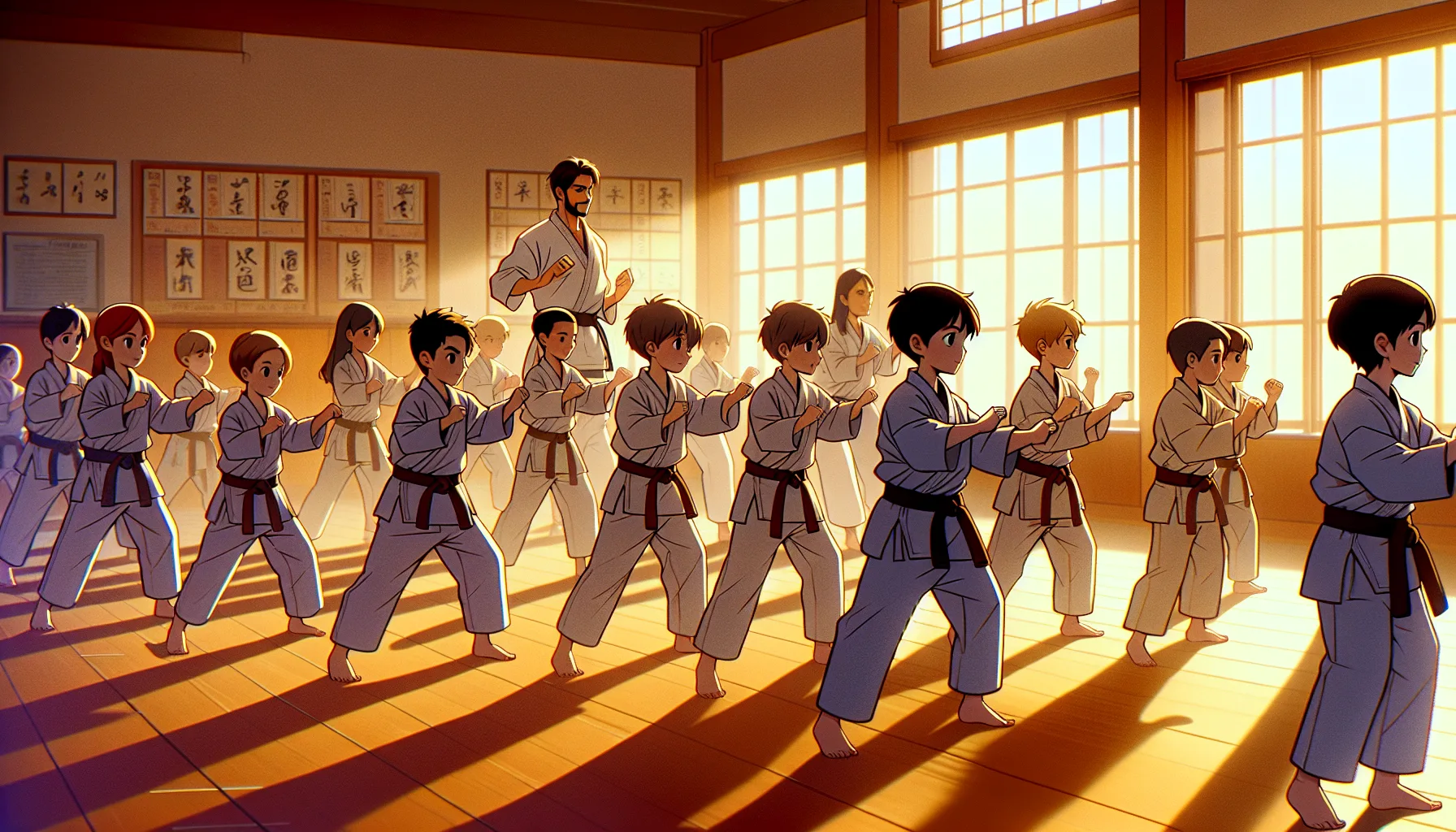
The dojo suits ADHD because it supplies what classrooms cannot: constant movement, short varied drills, immediate feedback, explicit rules, and visible progress. Attention is not a fixed quantity, it depends heavily on the environment. Many children who cannot sit through a lesson train well for a full hour.
Let me be direct about something: the classroom was not designed for children with ADHD. It requires sustained sedentary attention, delayed feedback, and compliance with a pace set by the middle of the group. For a child whose brain runs on novelty, movement, and immediate consequence, that environment is a daily exercise in fighting your own neurology.
The dojo is different. Not because we lower standards. Because we structure the environment in a way that works with how ADHD brains actually function.
What is ADHD actually?
Before we talk about solutions, let us be precise about the problem. ADHD is not a deficit of attention in the colloquial sense. Children with ADHD can attend for hours to activities that are stimulating, novel, or immediately rewarding. What they struggle with is voluntary regulation of attention: the ability to direct focus toward something that is not intrinsically compelling, and to hold it there when other stimuli compete.
This is an executive function challenge. The prefrontal cortex, which manages working memory, cognitive flexibility, and inhibitory control, develops more slowly in ADHD and operates differently. A decade of research shows executive function is trainable, and that physical activity is one of the most reliable training tools we have.
A 2012 study published in the Journal of Attention Disorders found that a single bout of aerobic exercise improved attention and response inhibition in children with ADHD. More recent work has shown that the effect is sustained with regular training. The dojo provides exactly the kind of structured physical activity that produces these benefits.
Short Drills, Immediate Feedback
One of the structural advantages of martial arts training for ADHD children is the format of the sessions themselves. At Inception Academy, classes are not long stretches of the same activity. They are sequences of short, varied drills with clear starts, clear ends, and immediate feedback on performance.
Punch combination. Switch. Kick drill. Bow. Line up. New partner.
That rhythm is neurologically compatible with ADHD. The brain gets novelty at regular intervals, which maintains arousal and engagement. The feedback, a correction from the instructor, a partner's response, the physical sensation of a technique landing correctly, is immediate rather than delayed. And the transitions are clear and physical, which helps with the task-switching difficulties that many ADHD children experience.
Contrast this with a classroom lesson that runs forty minutes on a single topic with feedback delayed until the marked work returns two days later. For a child with ADHD, that is not just difficult. It is genuinely unfair to their neurology.
The Physical Outlet Problem
Ask any parent of a child with ADHD and they will tell you the same thing: the days with physical activity are better days. This is not anecdote. The research on dopamine regulation in ADHD provides a clear mechanism. Physical activity raises dopamine and norepinephrine levels in ways that support the attentional systems that ADHD underserves.
But not all physical activity is equal for this purpose. Unstructured free play is valuable. Organised sport has benefits. What martial arts offers that neither of these fully provides is structured physical activity with a clear cognitive load attached.
In the dojo, movement is always purposeful. Every drill requires attention to technique, to timing, to the partner in front of you. The physical output and the cognitive engagement happen simultaneously. This dual engagement is particularly effective for ADHD brains, which tend toward under-stimulation in quieter settings and benefit from environments that make higher demands on the whole system.
Working Memory on the Mat
Working memory, the ability to hold and manipulate information in mind over short periods, is a consistent area of difficulty in ADHD. Classroom learning relies heavily on working memory: remember the instructions, hold the context while you work, track where you are in a multi-step task.
In the dojo, we train working memory constantly, but in a way that the child experiences as physical rather than academic.
A basic combination drill requires the student to hold the sequence in mind, execute it under pressure, receive a correction, update their internal representation of the movement, and try again. That is working memory training. A sparring exercise requires tracking your partner's movements, planning your response, and executing, all simultaneously. That is cognitive flexibility and inhibitory control training.
The difference is that on the mat, the working memory demand is attached to something the child finds compelling: movement, competition, the satisfaction of a technique landing. That emotional hook changes everything about how the brain engages with the task.
Structure as Safety, Not Constraint
Children with ADHD often present as chaotic, but the chaos is frequently a response to environments that lack sufficient structure. When the rules are unclear, when expectations shift, when consequences are inconsistent, the ADHD brain cannot establish the predictive models it needs to regulate behaviour effectively.
The dojo's structure is clear and consistent. The bow means we begin. The line-up means we are ready. The instructor's command means we move. The class follows the same arc session after session. For an ADHD child, this predictability is not boring. It is regulating.
Parents regularly tell us that their child, who can barely sit through dinner without disrupting the table, walks into class, bows, lines up, and focuses. The environment is doing a significant portion of the regulatory work, scaffolding the child's attention until they develop their own capacity to manage it. Over months and years, that scaffolding becomes less necessary because the child has internalised the structure.
This is what the neurodivergence curriculum at Inception Academy is built around: environments that work with neurology, not against it.
Belt Progression and the ADHD Brain
Standard school assessment is poorly suited to ADHD learners for reasons that go beyond the obvious. The timelines are long, the milestones are abstract, and the feedback is often global rather than specific. You get a grade, but not a precise picture of what you did well and what needs work.
Belt progression in martial arts is the opposite. The criteria are specific and observable. The timeline between assessments is short enough to maintain motivation but long enough to require genuine development. The grading itself is a high-stakes event with clear, immediate outcomes.
For ADHD brains, which tend to be reward-sensitive and highly responsive to clear, achievable goals, this structure works. The belt is not just a prize. It is a precise measure of real competence. And when a child earns it, they know exactly what they did to get there.
What Parents Can Do
Martial arts training works best when it is supported at home. A few practical suggestions for parents of ADHD children starting at Inception Academy.
Be consistent with attendance. ADHD children benefit from routine, and irregular attendance undermines the structure that makes the dojo so effective. Two sessions per week, reliably, produces far better outcomes than occasional participation.
Talk about the session afterwards. Ask specific questions rather than "how was it?" Try: "What did you work on tonight?" or "Did you manage to land that kick combination?" Specific questions reinforce attention and help consolidate the session's learning.
Connect the dojo values to home expectations. The values framework we use, from Calmness at white belt through to Altruism at black, gives you a shared vocabulary. When you notice your child managing frustration better, name it: "That was perseverance. That is what you are building at training."
Do not over-explain or over-praise. ADHD children are often flooded with adult commentary. The dojo works partly because the instructor gives clear, direct feedback and then stops. Brief, specific, genuine acknowledgement is worth far more than extended praise.
The Long View
ADHD is not something children grow out of entirely, though many develop compensatory strategies that make it less impairing over time. The goal of intervention, whether pharmacological, behavioural, or environmental, is not to eliminate the ADHD. It is to build the skills and self-knowledge that allow the person to work effectively with their own neurology.
The dojo builds those skills. Not by demanding that the ADHD child become someone they are not, but by providing an environment where the qualities that come naturally to them, the intensity, the energy, the quick uptake of novel stimulation, are genuine assets rather than problems to be managed.
A child with ADHD who trains consistently in martial arts for two or three years has learned, in the most physical and immediate way possible, that they can direct their attention, sustain effort, and achieve something real. That knowledge transfers. It has to. It is built into the body.
If your child has ADHD and you are wondering whether the dojo might help, the most useful thing is to come and see it. Book a free trial and watch what happens when the environment finally matches the brain.
For more on how we approach psychological discipline at Inception Academy, including the specific attributes we develop across the belt journey, read about our curriculum framework.