Strength, coordination, and physical confidence
Physical Resilience
Physical resilience is more than fitness. It is the ability to take a hit, get up, and keep going. The dojo builds this through progressive physical training adapted to each age group.
Beyond Fitness
Physical resilience as a developed capacity
Fitness is only one component of physical resilience. A child can be fit and still be unprepared for an awkward fall on the playground, an unexpected tackle in a school sport, or any moment when their body is asked to do something difficult and keep going. Resilience is built through doing difficult things repeatedly and recovering from them.
The dojo provides this through manageable adversity: contact, fatigue, technical challenge, and the experience of failing at a physical task and trying again. Every session is graded to the age and stage of the student. The work is hard, but the difficulty is calibrated, supervised, and paired with the recovery and feedback that turns adversity into capability.
Children who train this way develop a body they can rely on. The benefit shows up in sport, in outdoor activity, and in the physical demands of everyday life: confidence in their movement, composure when things get awkward, and the quiet knowledge that they can keep going when something gets harder than expected.
Coordination and Movement
Foundation skills that transfer to every sport
The Junior Programme, for children aged 4 to 7, focuses on fundamental movement skills: agility, balance, spatial awareness, coordination, and basic body control. These are the building blocks of every physical activity, not just martial arts.
A 5-year-old who develops good spatial awareness, reliable balance, and clean coordination through dojo training arrives at any other sport with a significant head start. The Junior Programme builds these skills directly and enjoyably, in short, structured sessions calibrated to how young children learn and move.
Kata builds coordination better than almost anything else. Memorising and reproducing precise movement sequences trains motor planning, spatial memory, and attention to physical detail. Each kata is built up gradually across belt levels, so progress is visible and earned.
Strength and Conditioning
Functional fitness through martial arts training
IAMA does not train children in a gym-style format. The physical conditioning in IAMA sessions comes through martial arts activity: pad work, drilling, sparring, kata, and bodyweight exercises. The result is functional strength: strength that comes with coordination, timing, and physical intelligence rather than isolated muscle development.
Children who train consistently at IAMA develop real physical capability. The demands increase across belt levels and across age groups, so a child who starts at Junior level and progresses to Intermediate and Senior training is building on years of progressive physical development by the time they reach full curriculum intensity.
Contact and Composure
Learning to take and deliver controlled contact without panic
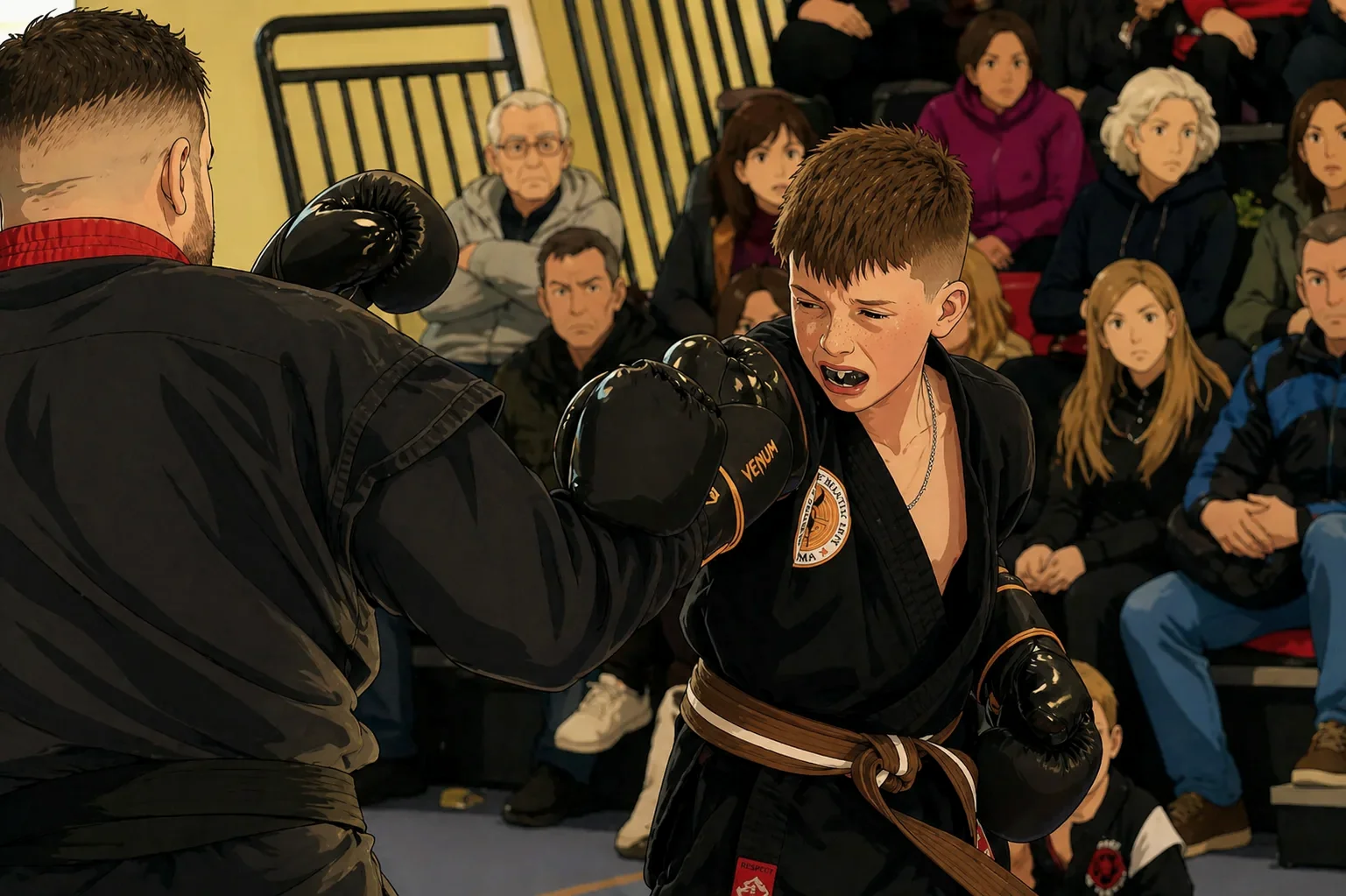
Safe, controlled contact sparring is introduced progressively as children advance through the curriculum. This is one of the most significant physical resilience builders in the programme. A child who has sparred regularly has learned that being struck is survivable, that panic is not useful, and that composure under physical pressure is a trainable skill.
The first time a child experiences contact sparring in a safe, supervised environment and discovers that they can handle it is often a significant moment. The instructor team at IAMA manages this introduction carefully. Contact levels are appropriate to age and grade. Every sparring session is supervised. The goal is physical confidence, not physical toughening.
Children who develop composure under physical pressure through sparring often show broader improvements in how they handle stressful situations outside the dojo. The physiological response to stress is the same whether the stressor is a sparring partner or a difficult exam. The same training that builds composure in one context transfers to the other.
Age-Appropriate Progression
Three class groups, calibrated training intensity
Ages 4 to 7
Juniors
Coordination and Fun
Foundation movement skills: agility, balance, spatial awareness, and basic body control. Sessions are structured and energetic. Juniors develop the physical literacy that underpins every other sport and activity their child will pursue. The emphasis is on engagement and consistent positive experience with physical challenge.
Ages 8 to 12
Intermediates
Increased Intensity, Introduction to Sparring
Building on foundation skills with more demanding drills, pad work, and controlled contact sparring. Intermediates develop genuine functional strength and begin experiencing what it means to train under realistic pressure. Conditioning increases progressively across the belt levels within this group.
Ages 13 and over
Seniors
Full Curriculum Intensity
Full Zen Do Kai curriculum at adult training intensity. Seniors engage in contact sparring, advanced self-defence scenarios, and the physical conditioning demands of the complete BJMA system. By this stage, students have the physical foundation and mental resilience to train seriously.
Free Trial · No Obligation
Train Zen Do Kai in Christchurch
One trial session is not enough to commit to a programme. Your first month at IAMA is free, no obligation, no pressure. By the end of your month trial, you'll know whether this is the right fit for your child.
Start Your Free Trial