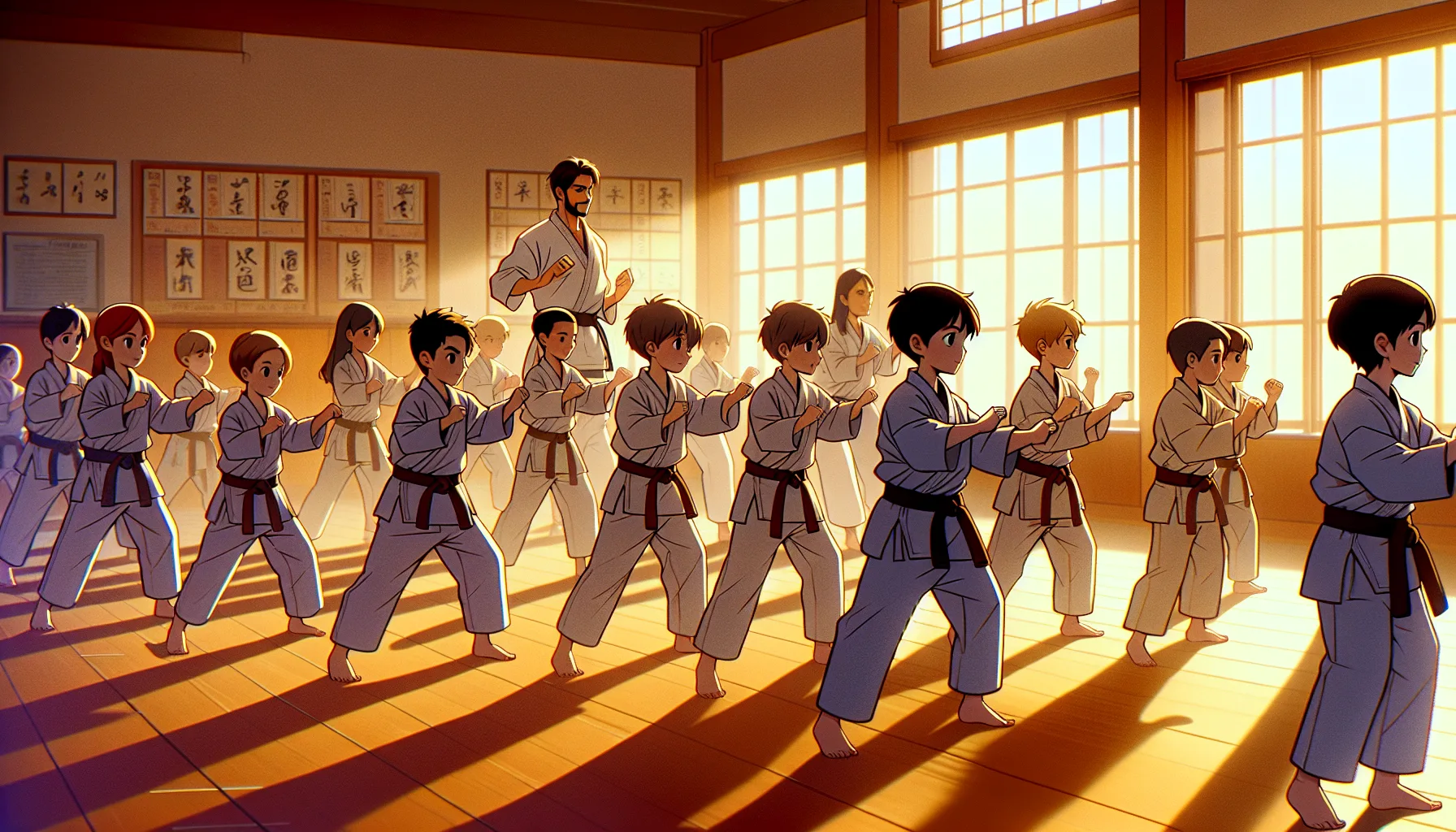
Resilience is a skill, not a temperament. Training builds it by supplying difficulty a child can survive and then repeat: a technique that will not work yet, a grading retaken, a harder partner. For neurodivergent children this matters more, because most of their difficulty arrives unchosen.
Resilience is one of those words that gets used constantly and understood poorly. Parents want their children to have it. Schools write it into their strategic plans. Coaches claim to build it. Ask what it actually means and the answers get vague fast.
In the psychological literature, resilience has a reasonably precise definition: the capacity to adapt successfully in the face of adversity, threat, or significant challenge. Notice what it is not. It is not the absence of difficulty. It is not a refusal to feel distress. It is the capacity to move through difficulty without being permanently derailed by it.
For neurodivergent children, that capacity matters more, not less, than for their neurotypical peers. The world they are navigating was not designed with their neurology in mind, and they will face adversity with a specific flavour: the adversity of being different in a setting that rewards conformity.
Why do neurodivergent children face a specific resilience challenge?
Let me be concrete about what I mean. A child with ADHD will have been told, often, to sit still when their body needs to move. They will have been corrected for interrupting, for forgetting, for losing things, for missing social cues. They will have watched other children complete tasks with apparent ease that cost them enormous effort.
A child on the autism spectrum will have navigated social situations that feel like trying to play a game where nobody told you the rules. They will have experienced sensory environments that other children barely notice as overwhelming to the point of pain.
These children are not less capable of resilience. In many ways they are already practising it every day. But they often lack the explicit frameworks, the practised strategies, and the experiences of successful navigation that make resilience self-sustaining.
That is where the dojo comes in.
Predictable Routines as a Foundation
Resilience research is clear on one point: predictable, supportive environments build the capacity to handle unpredictable ones. You cannot build resilience without safety as a base. You cannot learn to manage stress effectively if your baseline environment is constantly stressful.
For many neurodivergent children, the school day is genuinely unpredictable in ways that tax their regulatory resources before the academic work even begins. Unexpected timetable changes, ambiguous social situations, sudden sensory demands, instructions that are unclear or inconsistently applied.
The dojo operates on predictable routines. The class structure is consistent. The bow, the line-up, the warm-up, the drills, the cool-down: each session follows a recognisable arc. Students know what is coming next because it has been the same in every session they have attended.
This is not boring. It is regulating. A nervous system that does not have to use energy predicting the environment has more capacity available for learning, effort, and controlled engagement with challenge. For children whose regulatory systems are already working harder than their neurotypical peers', this predictability is not a nicety. It is a prerequisite for genuine growth.
Sensory Regulation Through Physical Activity
Many neurodivergent children have sensory processing differences. Some are hypersensitive: bright lights, loud sounds, unexpected touch can be genuinely overwhelming. Others are hyposensitive: they seek strong sensory input because their nervous system underregisters it.
Martial arts training addresses both profiles in different ways, and often both in the same session.
For children who seek sensory input, the physical demands of training provide legitimate, structured channels for proprioceptive and vestibular input. The contact in controlled drills, the physical effort of technique, the grounding of stances, all deliver the kind of sensory input these children crave, within a framework that teaches them to manage it rather than simply pursue it.
For children who are sensitive to sensory overload, the dojo teaches progressive desensitisation within a controlled environment. The noise levels, the physical contact, the spatial demands: all of these are present and real, but they are predictable and bounded. A child who is overwhelmed by unexpected touch in daily life can learn to manage the controlled contact of martial arts practice, because it happens on terms they can anticipate and prepare for.
This sensory regulation work is not incidental to the neurodivergence curriculum at Inception Academy. It is central to it. Physical self-regulation is the base on which every other psychological skill is built.
Incremental Challenge: The Right Level of Difficult
One of the most reliable findings in developmental psychology is that growth happens at the boundary between what a child can currently do with effort and what they cannot yet do at all. Vygotsky called this the zone of proximal development. It is a simple concept with important implications.
Too easy, and there is no growth. Too hard, and there is no success, and therefore no learning. The skill is calibrating challenge precisely enough that the child has to stretch, but not so far that they cannot reach.
Martial arts belt progression is structurally designed around this principle. Each belt level introduces new techniques and combinations that are just beyond the student's current mastery. The grading criteria are specific. The timeline between assessments is long enough for genuine learning but short enough to maintain motivation.
Critically, the progression is individual. A child is not competing against the class average. They are competing against their own previous performance. This is particularly important for neurodivergent children, who may have strengths and gaps that do not map neatly onto classroom-style group progression. A child who is physically capable but struggles with the sequential memory demands of a long combination can work on that specific gap without being held back in everything else.
Safe Failure and What It Teaches
Here is a thing that is hard to replicate in many structured children's environments: in the dojo, you fail in front of other people, and it is fine.
You try a technique. It does not work. Your partner counters it. You try it again. It still does not work. The instructor shows you what you did wrong. You adjust and try again.
Nobody makes a big deal of it. Nobody records it. It is not going in a file. It is just training, and training involves failure. That is not a side effect. It is the mechanism.
For neurodivergent children who have often experienced failure in high-stakes, visible, consequential settings (the classroom, the school sports day, the social group), low-stakes recoverable failure is genuinely healing. It rewires the relationship between failure and catastrophe.
The values framework at Inception Academy puts Perseverance as a core attribute, introduced early in the belt journey precisely because it needs to be in place before the student encounters the harder challenges that lie ahead. When we teach perseverance explicitly, when we name it and talk about it and reward it directly, we give children a cognitive framework for making sense of their struggles. They are not failing. They are training.
Coping Strategies Built Into Practice
Resilience is partly dispositional, but mostly it is a toolkit. Specific strategies for managing frustration, regulating emotional arousal, returning to focus after disruption, tolerating discomfort without escalating.
The dojo teaches these strategies through practice rather than through talk. This is important because explicit instruction in coping strategies, the kind that happens in school wellbeing programmes, has limited transfer to real situations. Knowing that you should take deep breaths when you are angry is very different from having practised breath regulation under physical stress enough times that it happens automatically.
In martial arts training, children encounter frustration regularly: the technique that will not come, the partner who is faster, the combination they keep getting wrong. They learn, through coached practice and graduated exposure, to stay functional in those moments. They learn to breathe rather than escalate. They learn to reset after a mistake rather than spiral. They learn to ask for help rather than shut down.
These are not martial arts skills. They are life skills, delivered through martial arts.
What Progress Looks Like
Parents sometimes ask how they will know if the training is working. The answer is often that you will see changes in places that seem unconnected to the dojo.
The child who used to melt down when things did not go their way starts catching themselves sooner in the frustration cycle. The child who froze when faced with a difficult task develops a habit of breaking it into smaller steps. The child who was constantly in trouble for disrupting the class starts applying, outside the classroom, the attention-regulation skills they have practised on the mat.
These transfers do not happen quickly. Two or three months of training is enough to see a child settle into the dojo environment. Genuine behavioural transfer typically takes six months to a year of consistent attendance. But when it comes, it is robust, because it is built on embodied practice rather than verbal instruction.
Resilience cannot be told into existence. It has to be lived into existence, one session, one struggle, one small success at a time.
If your child is neurodivergent and you are looking for an environment that genuinely supports their development, rather than just tolerating their differences, come and see what we do. Book a free trial and bring your questions.
You can also read more about the specific psychological attributes we develop across the belt journey at Inception Academy, and how they apply to children at different developmental stages.