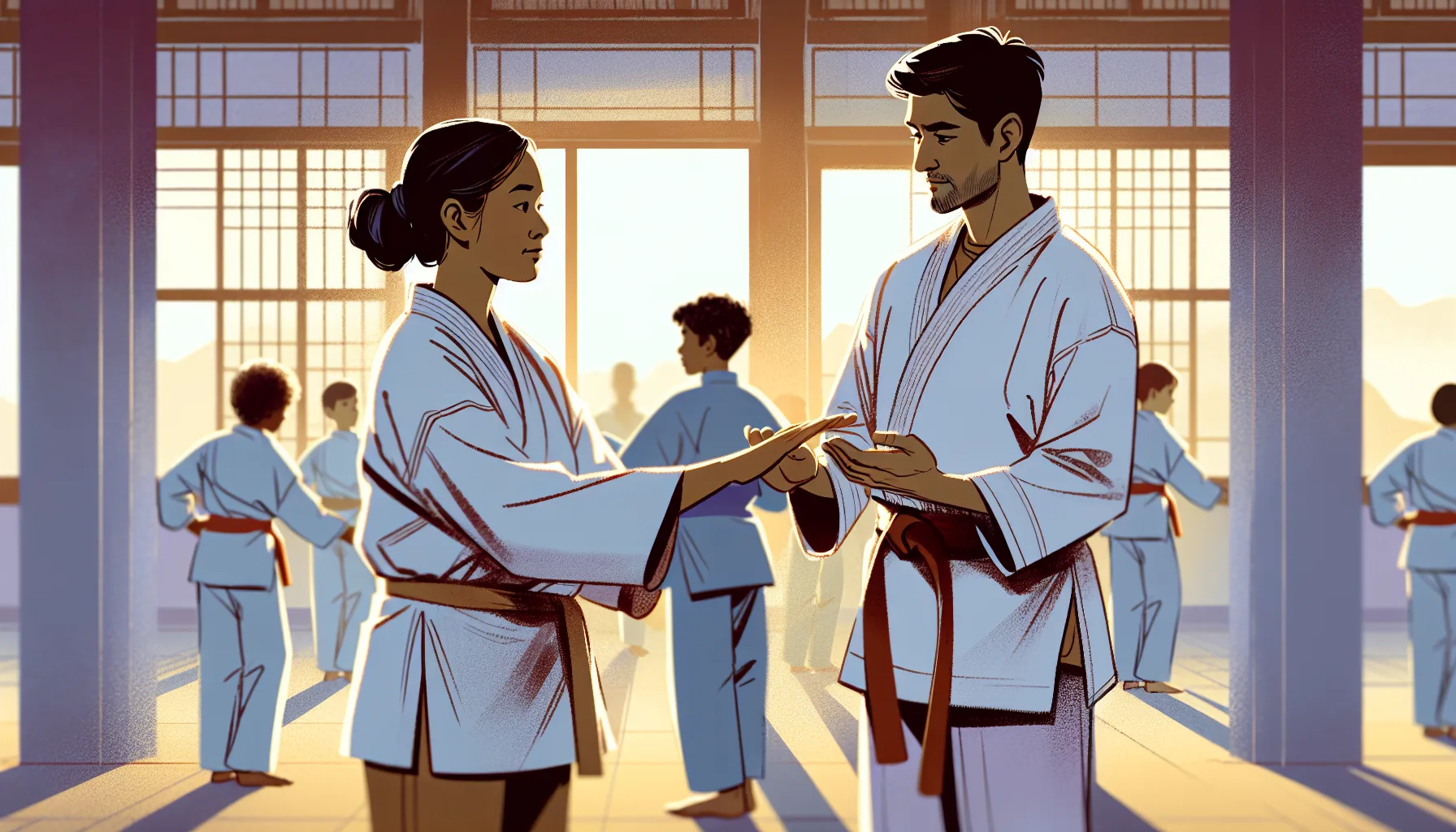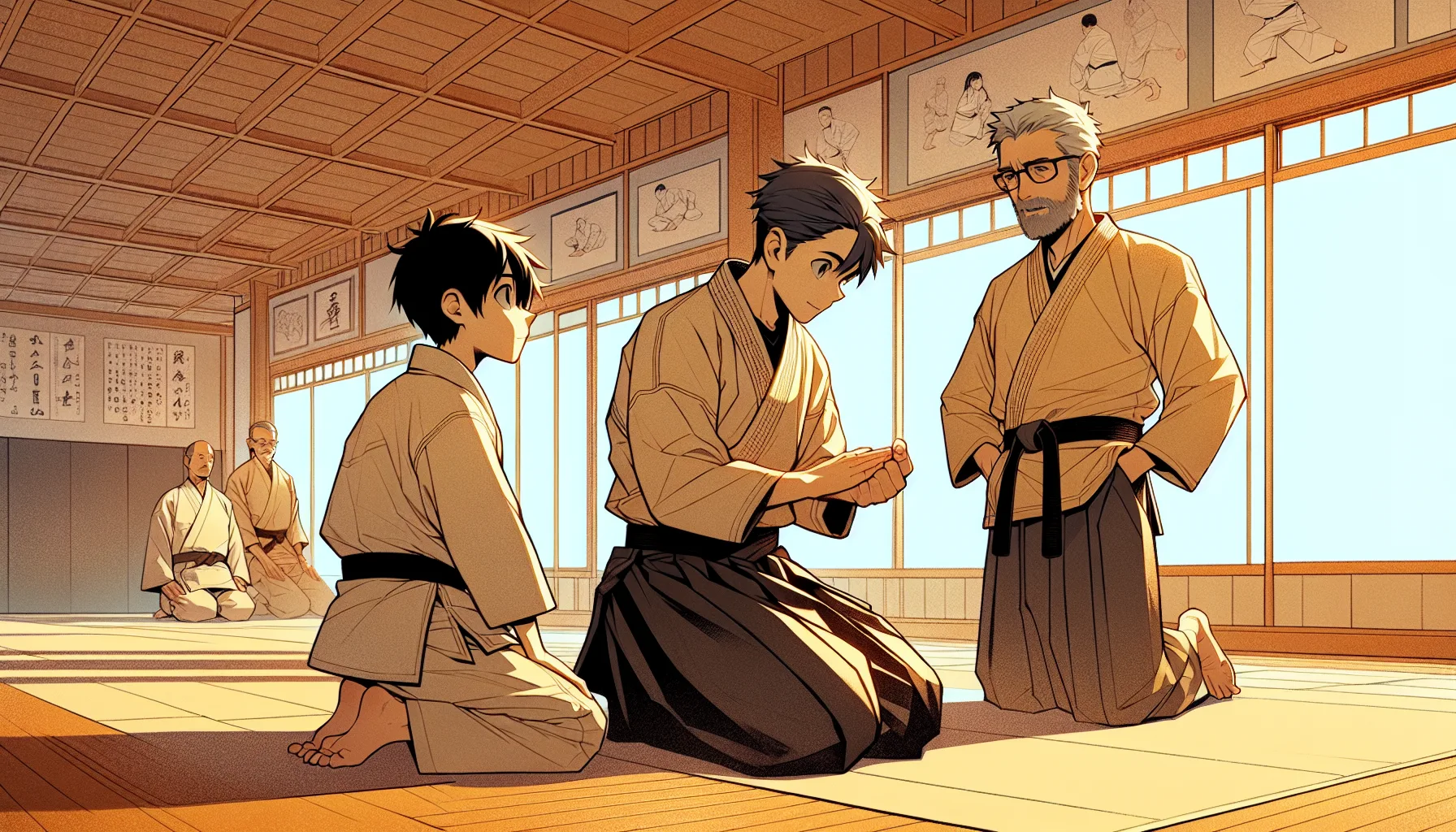
IAMA's junior instructors teach younger students under supervision. Explaining a technique exposes whether you actually understand it, and being responsible for a child's progress changes how a teenager behaves. It produces leadership through service, which is hard to manufacture in a programme built only around the student.
There is a paradox at the centre of good leadership development that most programmes for young people fail to resolve.
You cannot teach leadership by making someone feel like a leader before they have earned it. The hollow affirmation of "you are a natural leader" produces nothing except mild embarrassment in the children who are perceptive enough to notice the gap between the claim and the reality. Real leadership development requires real responsibility, in a real context, with real consequences.
The junior instructor pathway at Inception Academy is built on exactly this principle. It gives senior students a specific, meaningful role: teaching younger students. The responsibility is genuine. The context is demanding. And when a technique is taught poorly or a younger student's confidence is handled carelessly, the consequences are immediately visible.
What does the junior instructor role actually involve?
A junior instructor is typically a senior coloured belt, often a brown belt at various tip levels, who has been assigned specific responsibilities within the dojo structure. These responsibilities vary depending on the student's experience and maturity, but they generally include:
Demonstrating techniques for lower-ranked students. Working with small groups of junior students on specific drills. Providing corrections on basic technique under the supervision of the senior instructor. Modelling the dojo culture: the bowing, the posture, the attention, the forms of address.
What is important to understand is that these are not honorary positions. They are working roles. The junior instructor is expected to show up, to be prepared, to understand the material well enough to explain it to someone who does not yet understand it, and to manage the interaction with younger students with patience and clarity.
That last requirement is the hardest one. And it is the one that produces the most growth.
Teaching as the Deepest Form of Learning
There is a principle in education research sometimes called the protege effect: the act of preparing to teach material, and then teaching it, produces deeper and more durable learning than studying the material for your own purposes.
The mechanism is partly cognitive. When you prepare to teach something, you identify gaps in your own understanding that you would not have noticed if you were only studying for yourself. You have to organise the material clearly enough to explain it. You have to anticipate the questions a novice might ask, which forces you to examine your own assumptions.
But in the dojo context, the mechanism is also physical. A junior instructor who is demonstrating a technique for younger students must execute that technique at a level of quality sufficient to model it effectively. Sloppy technique cannot be dressed up with confident words. The teaching demand pulls the quality of the instructor's own practice upward.
Senior students who have been given junior instructor responsibilities consistently show faster technical development. Not because they are practising more, but because the teaching demand changes how they practise and how they engage with their own training.
What It Teaches About Leadership
The conventional understanding of leadership focuses on direction: telling people what to do, setting goals, making decisions. That model of leadership has its place, but it produces a thin understanding of what leadership actually requires.
The dojo experience of leadership through teaching produces something different. It produces leaders who understand that their primary job is to make the people they are leading more capable. Who understand that the quality of their own example matters more than the quality of their instructions. Who have learned, from the immediate feedback of a confused seven-year-old, that clarity is a skill and it has to be earned.
Junior instructors at Inception Academy learn, often with some difficulty, that being right about something and being able to explain it are completely different capabilities. They learn that patience is not a virtue you either have or lack, but a practice that can be developed. They learn that the younger student's confusion is information about the clarity of the explanation, not a deficiency in the student.
These are leadership lessons that most adults in management roles have never had to learn as explicitly. The junior instructor pathway delivers them directly and repeatedly.
Responsibility Without Coddling
One of the distinctive things about the junior instructor pathway is that it extends genuine responsibility without excessive hand-holding.
Senior students are expected to manage their assigned role. If something goes wrong, if a technique is being taught incorrectly, if a junior student is being handled without care, Sensei or Shihan will step in. But the junior instructor is not pre-managed. They are given the responsibility and expected to exercise it.
This is the experience that most young people are not getting in any other context of their lives. The protective structures around children today are, in many ways, appropriate: the world has genuine risks that need managing. But the consequence is that many teenagers reach late adolescence without ever having had to carry a responsibility that was theirs and no one else's.
The junior instructor role provides a bounded, safe version of that experience. The stakes are real: a younger student's development is genuinely affected by how well or poorly the junior instructor does their job. But the consequences are contained and recoverable. If a junior instructor makes a mistake, the senior instructor is there, the younger student is not harmed, and the junior instructor has something specific to learn from.
That combination of real stakes, bounded consequences, and immediate learning is the ideal structure for developing genuine responsibility.
The Relationship Between Junior and Senior
One outcome of the junior instructor pathway that deserves specific attention is the relationship it creates between senior and junior students.
In most youth activities, the relationship between older and younger participants is incidental, driven by proximity rather than purpose. In the dojo, the relationship between a junior instructor and the students they work with is structured and intentional. The junior instructor has a defined responsibility to the junior students. The junior students have a defined relationship with the junior instructor, they call them Sempai, they follow their guidance, they observe their example.
This structure creates something unusual: a mentoring relationship between children, embedded in a shared practice, with clear roles and clear purpose.
The effects are visible at both ends. Junior students who have a positive relationship with a Sempai they admire tend to be more engaged and more persistent in training. Senior students who have juniors looking up to them rise to that responsibility. The dojo culture of mutual support and development is reproduced through these relationships in ways formal instruction cannot replicate.
At Inception Academy, Zen Do Kai Freestyle has always understood the dojo as a community, not just a class. The junior instructor pathway is one of the primary mechanisms through which that community is maintained and renewed.
What Parents Should Know
If your child is approaching senior belt levels, the junior instructor conversation is worth having with the instructors at your dojo. It is not something to push, it should be offered when the student is ready, but it is worth knowing that the pathway exists and what it involves.
The signs that a student is ready for junior instructor responsibilities are specific: consistent technical quality, patience with their own learning, and the beginning of awareness of other students' experience in the class, not just their own.
Not every student will take this pathway, and not every student needs to. But for those who do, the experience is among the most significant developmental contributions the dojo makes.
Parents often report that the change is visible at home. Children who have taken on junior instructor responsibilities carry themselves differently. They are more patient with younger siblings. They are more conscious of their own example. They speak about other people's needs and experiences with more attention. In some real sense, they have learned what it means to be responsible for others.
That is not a small thing to get from a Tuesday evening in a dojo. But it is what the pathway is designed to produce, and it reliably does.
If you want to talk about the junior instructor pathway, or you have a child who is approaching the senior belts and you want to understand what the full progression looks like, come in for a free trial or reach out directly. We are happy to talk through the pathway and what it would mean for your child.
For more about how we develop leadership within our curriculum, see our page on the 12 psychological attributes that structure progression from white belt to black.