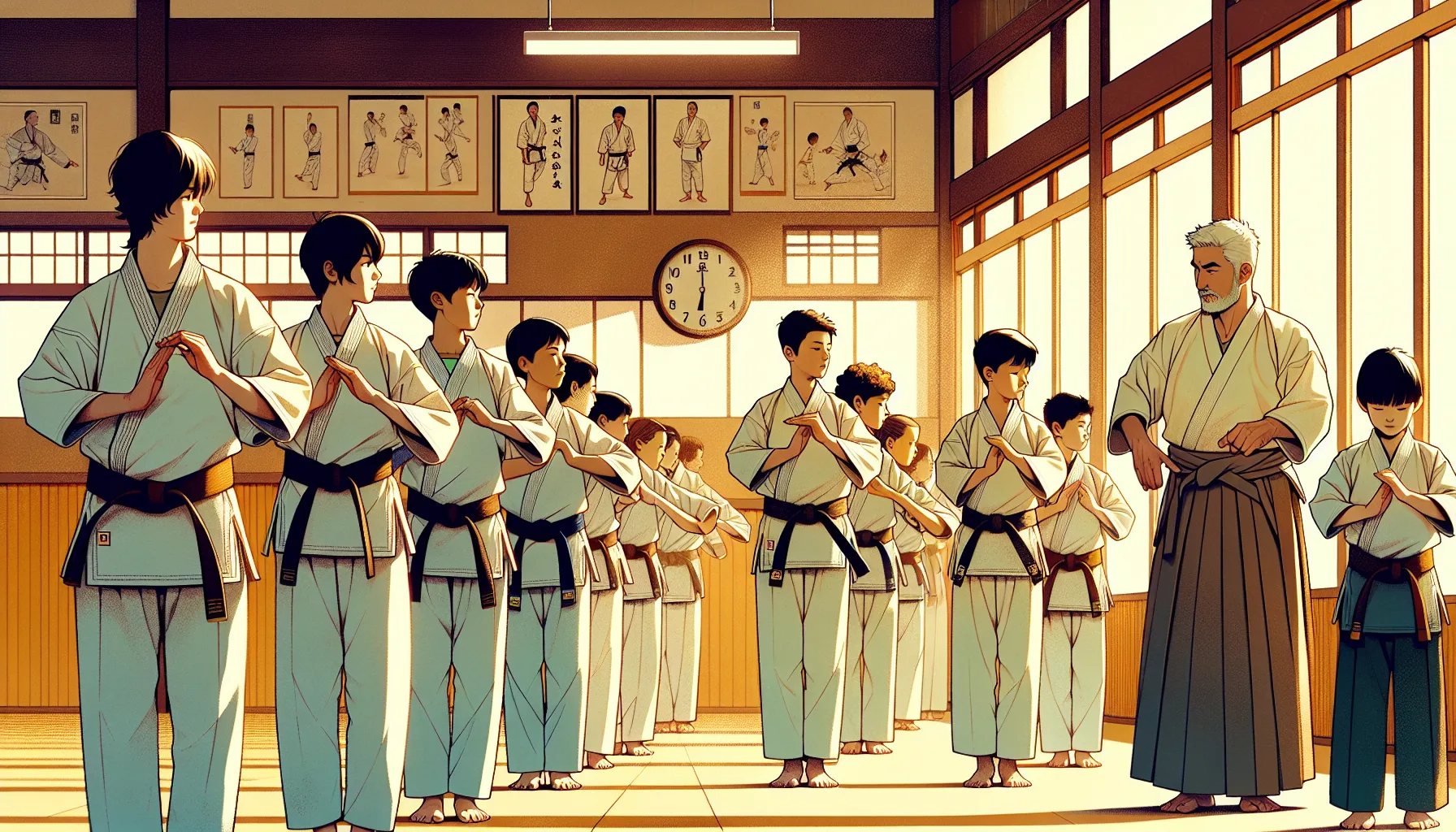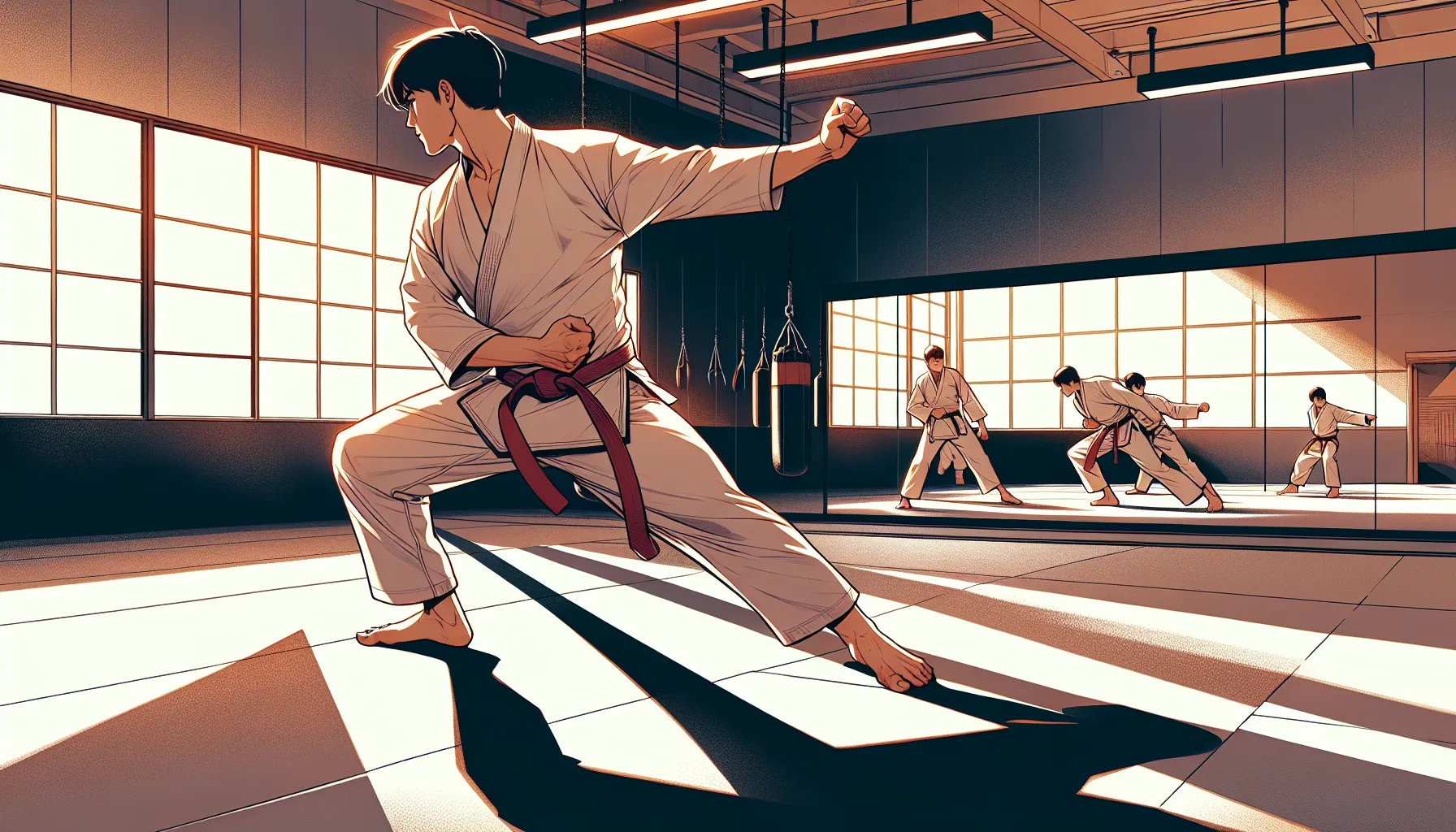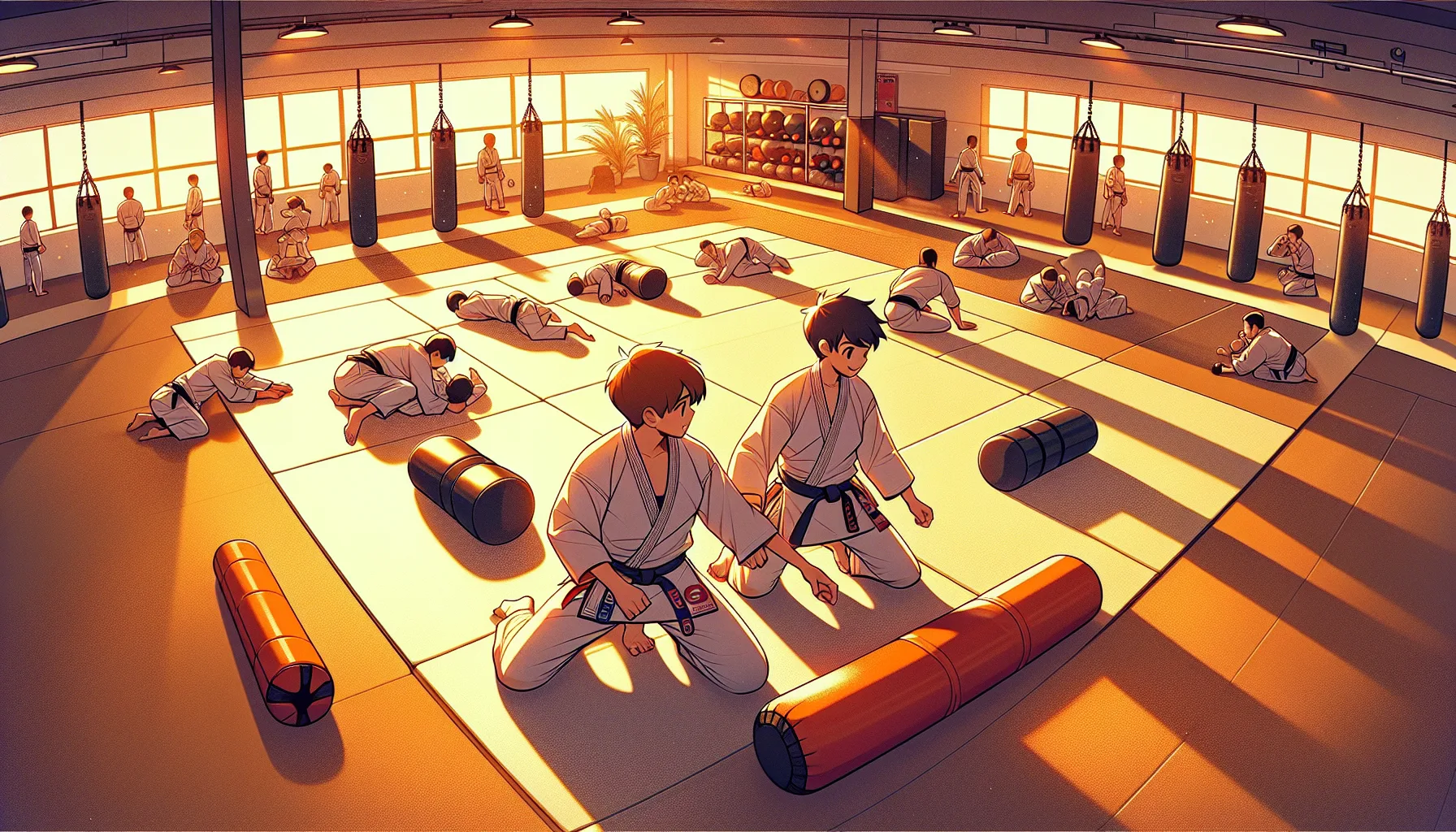
Children at IAMA train one curriculum at three levels. Juniors, four to seven, build coordination, listening and stance. Intermediates, eight to twelve, add striking combinations, grappling and controlled sparring. Seniors, thirteen and up, train the full system including weapons and Krav Maga self-defence.
Parents often ask me what their child is actually going to learn at Inception Academy. Not the abstract answer (discipline, confidence, self-defence), but the concrete one. What techniques? In what order? Why those and not others?
It is a good question, and it deserves a direct answer.
The BJMA Zen Do Kai system is a structured curriculum. There is a clear sequence of skills, a rationale for the progression, and a defined standard for what each belt level represents. This article walks through that curriculum in practical terms.
What are the three age groups?
At IAMA, we divide students into three groups based on age, not just belt rank. This reflects the reality that children develop physically, cognitively, and emotionally at different rates, and that a curriculum which works well for a twelve-year-old may be inappropriate for a five-year-old.
Juniors (4 to 7 years) are in the early stages of developing fundamental movement skills. At this age, the motor cortex is still establishing basic coordination patterns. The curriculum for this group focuses on gross motor skills: how to stand, how to move, how to fall safely, how to punch and kick with basic form. The goals are engagement, confidence, and laying the physical foundations for everything that comes later.
Do not expect a Junior to emerge from their first year as a self-defence expert. That is not what this phase is for. A Junior who has learned to listen to instruction, to follow a structured routine, and to try hard even when something is difficult has achieved something genuinely valuable. The physical skills will follow.
Intermediates (8 to 12 years) are in a very different developmental position. They have the motor capacity for complex technique, the cognitive ability to understand tactical concepts, and the emotional maturity to begin genuine partnered training with contact. This is the phase where the curriculum broadens substantially.
Intermediates develop proper striking combinations, begin grappling work, and start sparring in a controlled, supervised format. The emphasis shifts from basic form to functional application. Techniques are now tested against a partner who is trying to make them not work.
Seniors (13 and up) train alongside adults in a curriculum that covers the full breadth of the Zen Do Kai system. The distinction between senior students and adult beginners is primarily one of experience, not capability. Seniors who have trained through the Junior and Intermediate programmes arrive at this stage with a substantial foundation and are often ahead of adult beginners in technical skill.
The Striking Curriculum
Striking is the foundation of the Zen Do Kai system, and it is introduced from the very first class. That does not mean young children are punching each other. It means they are learning the fundamental mechanics: how to make a fist correctly, how to generate force from the hips rather than just the arm, how to stand in a balanced guard position.
The striking curriculum draws on karate and boxing, selecting elements from each based on practical effectiveness. From karate, the system takes clean linear techniques, body mechanics, and the discipline of form. From boxing, it takes guard structure, footwork, and the principle that technique must work under pressure, not just in a static drill.
At foundational levels, students learn single techniques executed cleanly. As they progress, single techniques become combinations: jab-cross, cross-hook, kick combinations that link upper and lower body. At advanced levels, students develop the ability to chain strikes fluently in response to an opponent's movement, not just a pre-set sequence.
The goal is not a practitioner who can perform a beautiful kata. It is a practitioner who can strike accurately and powerfully when it matters.
The Grappling Curriculum
Grappling is introduced progressively, beginning with basic breakfalls, moving through clinch work, and eventually covering takedowns and ground-based control.
The breakfall instruction comes first for a practical reason: before you can grapple, you need to know how to fall without getting hurt. Ukemi, the Japanese term for falling technique, is one of the genuinely life-saving skills that martial arts training provides. Students who train proper breakfalls for years develop a reflexive ability to manage unexpected falls that has real-world value beyond the dojo.
Clinch work teaches students what to do when punching range collapses and you are suddenly in close contact with an opponent. This is one of the most common dynamics in real encounters and one of the most poorly covered in striking-only systems. The Zen Do Kai curriculum covers it directly: how to control the clinch, how to use it to set up a takedown, and how to create distance when that is the better option.
Ground work develops the ability to control and escape from ground positions. The emphasis in a self-defence context is different from sport jiu-jitsu: the priority is to get back to standing, not to submit an opponent on the ground. Students learn positioning, escapes, and the critical awareness that the ground is a dangerous place in a real encounter.
Weapon Awareness
At more advanced levels, the Zen Do Kai curriculum includes weapon awareness training. This is not about teaching students to use weapons. It is about developing the ability to recognise when a weapon is present, to create distance, and to manage a weapon-involved situation if escape is not immediately possible.
This section of the curriculum is covered primarily with senior students who have developed the base skills and maturity to engage with the material appropriately. It is taught with the same emphasis on practicality and situational awareness that runs through the rest of the system.
Scenario-Based Training
Techniques practised in isolation are necessary but not sufficient. A student who can execute a perfect combination on a pad but freezes when a training partner does something unexpected has learned a drill, not a skill.
The Zen Do Kai curriculum includes scenario-based training to address this gap. Students practise responding to unpredictable initiations, managing stress responses, and applying their technical skills in situations that approximate real-world encounters more closely than formal drilling does.
For children, this is calibrated carefully. The scenarios are age-appropriate, the intensity is managed, and the goal is to develop confidence and adaptability, not to frighten students. For older students and adults, the scenarios can be more demanding, providing genuine stress-inoculation that prepares the nervous system for the real thing.
The Belt Progression
The BJMA Zen Do Kai belt system maps technical curriculum to psychological development. Every belt represents both a defined set of physical skills and a set of character attributes the training is designed to develop.
This dual structure is not cosmetic. The character attributes are not just listed on a wall and mentioned occasionally. They are woven into how classes are run, how feedback is given, how students are expected to treat each other, and how progression is assessed. A student who has the technique but not the character does not advance.
For a full breakdown of the values framework, see our curriculum values page.
What Black Belt Actually Means
Black belt in the Zen Do Kai system is not a destination. It is a credential that says: this person has covered the full foundational curriculum, has demonstrated it under pressure, and has the character to be trusted as a practitioner.
A Zen Do Kai black belt is not the end of the journey. It is the beginning of serious study. The difference between a first-degree and a fifth-degree black belt like Shihan Nick Putt is not just additional technique. It is depth of understanding, quality of perception, and the ability to teach what you know, not just perform it.
That trajectory is what we are pointing students toward, from their first class at age four through to their first black belt and beyond.
If you want to see this curriculum in action, the best thing to do is come and watch a class. Or better, bring your child in for a free trial. One session will show you more than this article can tell you.
For a complete picture of what we are building alongside the physical skills, visit our curriculum overview.