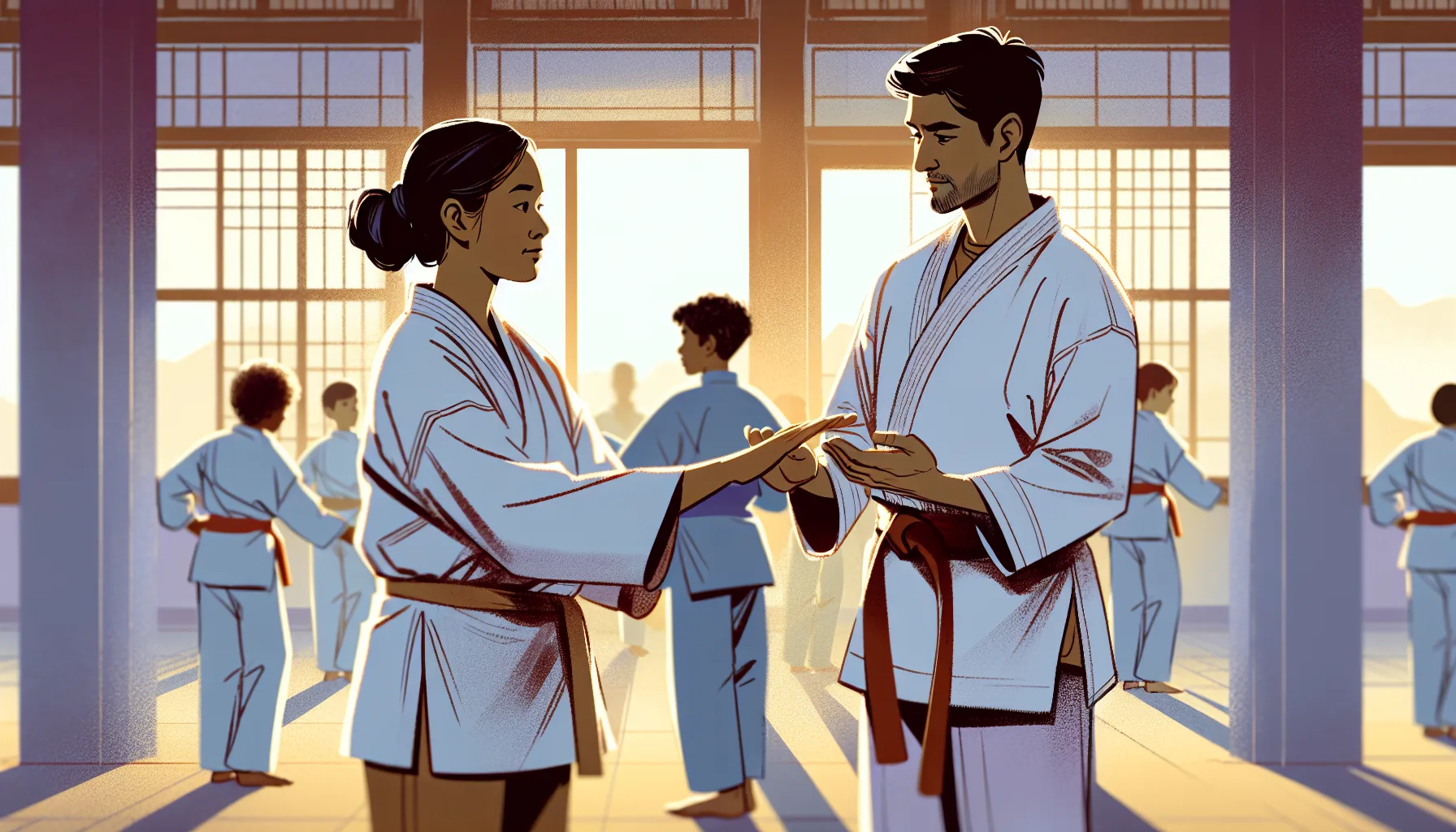
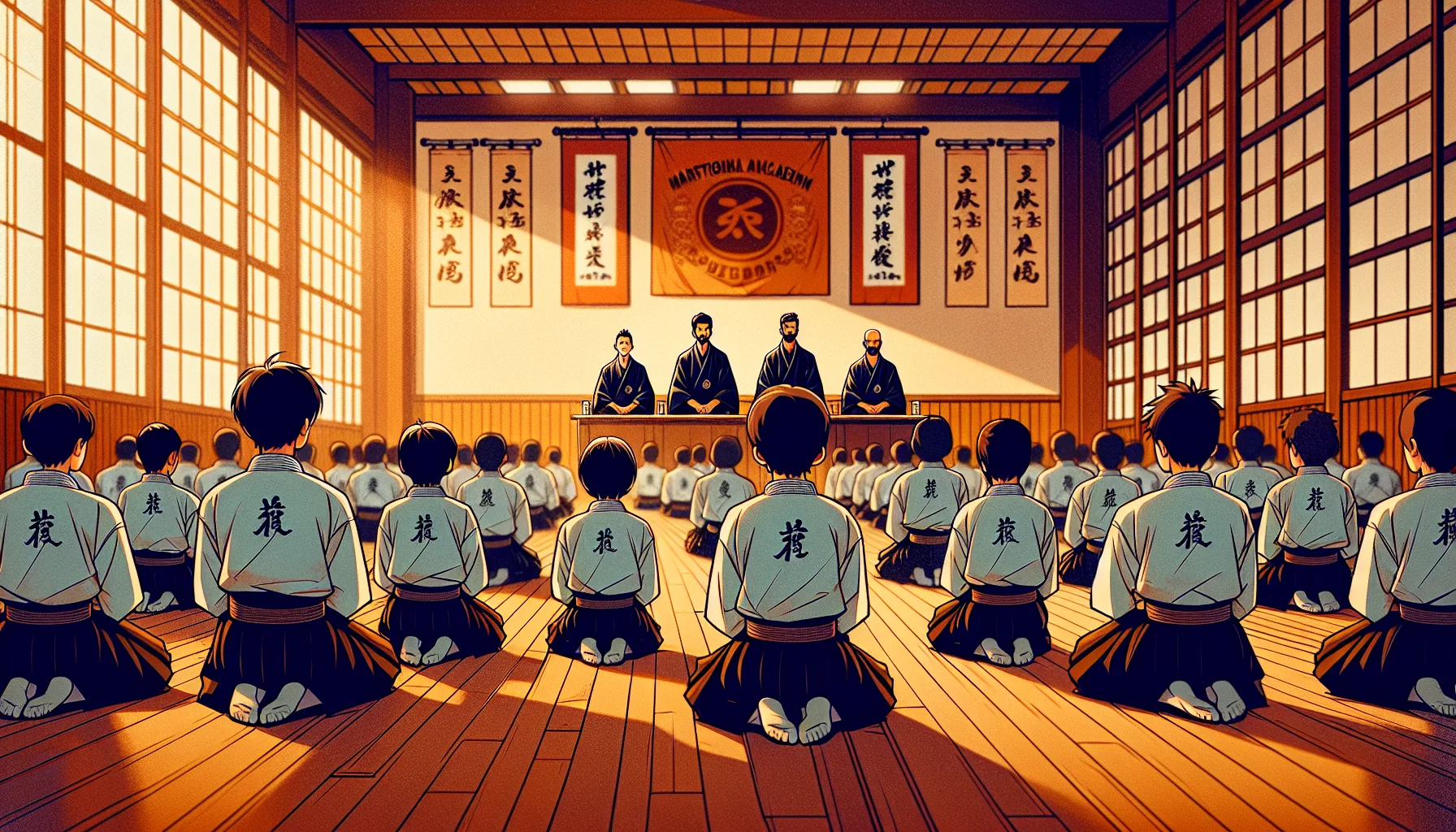
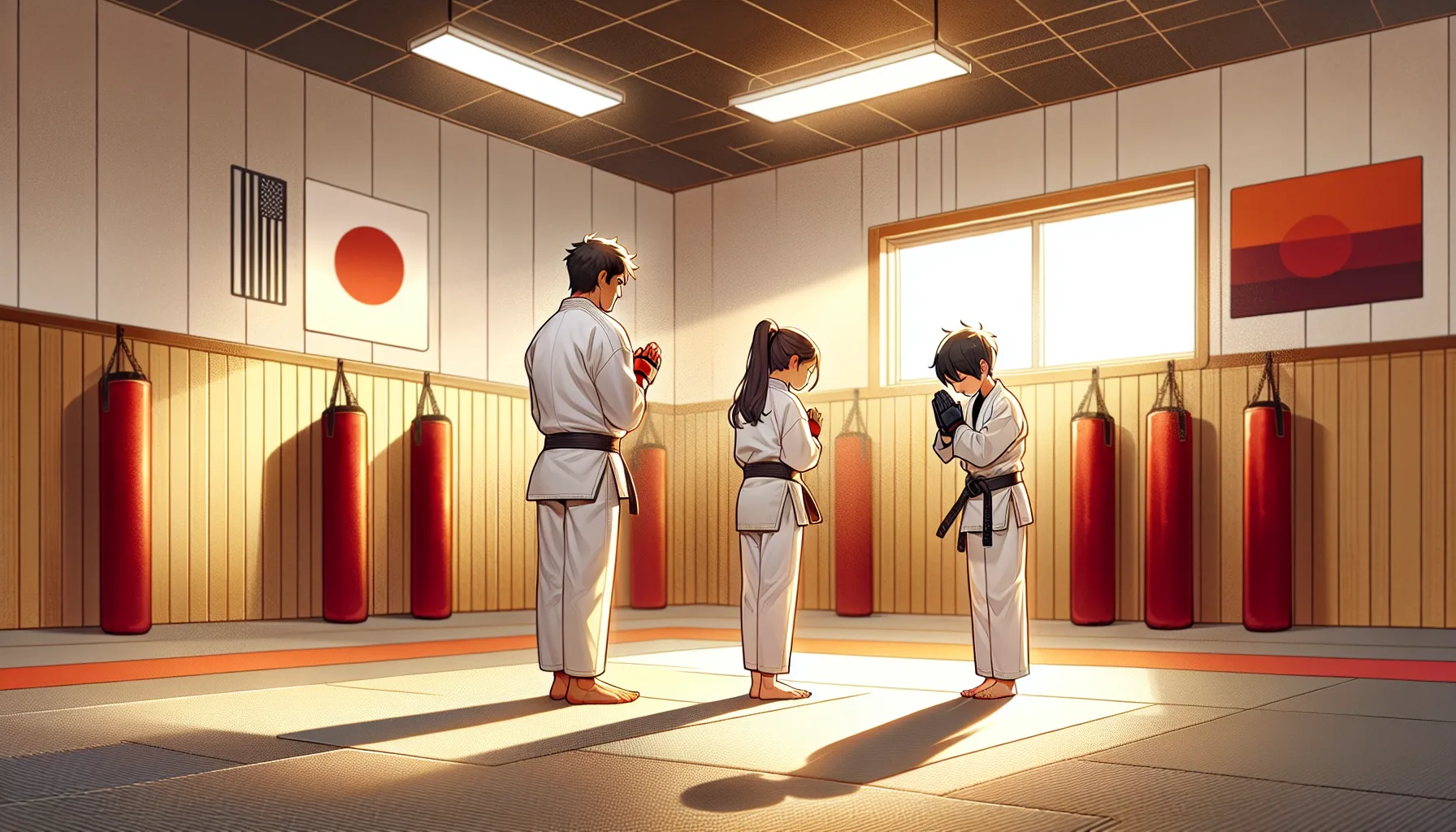
Dojo bonds form differently from other clubs because the difficulty is shared and the mentorship crosses ages. A teenager coaching an eight-year-old, both corrected by the same instructor, creates loyalty a season of matches does not. Children stay for the people long after the novelty wears off.
The word community gets used loosely in marketing, which has drained it of some of its meaning. So I want to be specific about what the dojo community actually is, what it does, and why it matters for child development in ways that most other communities do not.
It is not just people who happen to attend the same building on the same nights. It is a group of people who have shared adversity, shared growth, shared standards, and shared purpose over years. That combination produces something different from membership in most clubs, teams, or organisations.
What makes the dojo community different?
Most communities children belong to (school classes, sports teams, neighbourhood groups) are built on proximity. You are in the same place at the same time, and you develop relationships from there. Proximity-based communities produce genuine friendships. But they are not especially resilient, and they do not produce the same kind of bond as communities built on shared challenge.
The dojo is a community built on shared challenge. Every person in that room has sweated through the same drills, struggled with the same techniques, stood up for the same grading. They know what it costs because they have paid it themselves. That creates a kind of mutual understanding that is hard to find elsewhere.
Research on bonding between individuals consistently shows that shared effortful experience produces stronger bonds than shared enjoyable experience. The explanation is partly neurobiological: the stress hormones produced by challenging shared experience, and then regulated together, create neurochemical conditions that support attachment and trust. This is not a metaphor. The dojo community is formed by a biological bonding mechanism.
Training Partners Are Not Like Teammates
In most team sports, you win together and lose together, but you do not physically handle each other. You do not stand directly in front of a training partner and work through techniques that require trust at close quarters.
In martial arts, you do.
Training with a partner involves a specific kind of trust: you are relying on them to be controlled, attentive, and honest. They are applying force to your body, and you to theirs. If either of you is careless, reckless, or dishonest about your level of control, the other person gets hurt.
This creates a different kind of working relationship from anything children encounter in most other contexts. You learn very quickly, from direct experience, that your training partner's attentiveness affects your safety. And you learn that your attentiveness affects theirs.
The result is a form of mutual responsibility that is not abstract. It is felt, immediate, and real.
Children who train together for any significant length of time develop a particular quality of attention toward each other. They know each other's habits, tendencies, and capabilities in unusual detail. They have seen each other struggle, succeed, and fail under the specific conditions of physical and mental challenge the dojo produces. They know what the other person is made of in a way that goes beyond what most friendships access.
Older Students Mentoring Younger Ones
One structural feature of the dojo that most other children's environments lack is the deliberate mixing of ages and experience levels.
In most school settings, children are sorted by age into cohorts that rarely interact. In sports clubs, age-group divisions separate older and younger players. The normative childhood experience is one of being around people of similar age and roughly similar development level.
The dojo explicitly works against this. Senior students are given responsibility for junior students. The whole structure of rank, and the culture of Sempai toward junior, creates ongoing relationships across age gaps.
For younger children, this means access to mentors who are close enough in age to be relatable, and far enough ahead in the training to be genuinely exemplary. A ten-year-old who sees what a fifteen-year-old brown belt can do has a specific, visible, proximate model for what sustained training produces. Not an abstract adult professional, but a person close enough to them in age that the gap feels bridgeable.
For older children, the mentoring responsibility itself is formative. Having a younger student who looks up to you is one of the most effective developmental pressures there is. It makes abstract values concrete: you cannot talk about the importance of patience while being visibly impatient with a struggling seven-year-old. The younger student reflects back to you, in real time, what your behaviour communicates.
Shared Adversity and What It Builds
The dojo is deliberately demanding. The training is designed to push students to and occasionally past their comfort zones. Gradings are stressful. Some drills are exhausting. Some periods of training are genuinely difficult.
When you go through genuinely difficult experiences alongside other people, repeatedly, over years, you develop something with them that comfortable shared experience cannot produce.
There is a kind of trust that only comes from having been through hard things together. You know that when the going got hard, they stayed. You know they have seen you struggle and have not thought less of you. You know that their presence in difficult circumstances is reliable.
In the dojo, children build this kind of trust with each other from a young age. By the time a student is a senior belt, they have been through multiple demanding gradings, hundreds of challenging classes, and years of shared difficulty with the people around them. Those relationships are substantive in a way that is unusual for children's friendships.
The Adults in the Community
The dojo community includes more than children and their training partners. It includes the adult instructors, who hold a distinctive position in children's social lives.
The Sensei and Shihan of a dojo are not the same kind of adults that most children encounter regularly. They are not parents, not teachers in a school context, not coaches in a conventional sports context. They are highly skilled practitioners of a discipline that the children are invested in, who hold genuine authority in the context of training, and who have maintained a relationship with their students often across many years.
This kind of adult relationship (long-term, expertise-based, structured by shared practice) is increasingly rare in children's lives. Many children spend their formative years in the company of parents, school teachers (who change annually), and activity coaches (who often turn over rapidly). Long-term relationships with non-parental adult mentors are less common than they once were.
The dojo provides them. Shihan Nick Putt has been teaching Zen Do Kai for 35 years. Students who come to Inception Academy as young children may, if they train through to black belt, have a relationship with him spanning a decade or more. That relationship, and what it models about commitment, expertise, and service to a community, is formative in ways that are hard to quantify but easy to see.
Belonging That Is Earned
One more aspect of the dojo community deserves attention: the belonging is earned.
In many contemporary contexts, belonging is offered unconditionally. You are welcome here, regardless. This is, in many ways, admirable and important. Unconditional welcome is what vulnerable people often need most.
But unconditional belonging does not produce the same depth of identification and pride as belonging that is earned. The dojo, by requiring genuine effort and development for advancement within the community, creates a form of membership that students actively claim through their own effort.
When a student earns their next belt, they are not just advancing technically. They are deepening their membership in the community. They have demonstrated, to themselves and to the community, that they belong here, that they have what this community values, and that they are continuing to develop it.
That kind of belonging, earned and ongoing, is what makes the dojo feel like a second family rather than just a club. It is a community you have made sacrifices to join, that reflects back to you something specific about who you are and who you are becoming, and will be there for you as long as you are willing to put in the work.
For children who struggle to find their place, who feel peripheral in school social structures, or who simply need a community that values different qualities than the ones that dominate school culture, the dojo is often transformative.
The only way to understand what the Inception Academy community is actually like is to come and see it. Book a free trial and bring your child for a class. Watch how the students interact. Watch how the senior students treat the juniors. Watch what happens at the end of class.
Then read about the values that structure how we train and what we build, and you will have a complete picture.