In a real dojo you see correction, not just praise. Children are told when a technique is wrong, senior students are visibly better than juniors, and grading can be failed. Parents notice it inside one class: the room is disciplined without being harsh, and the standard is obvious.
There is a term that circulates in martial arts communities: McDojo. It refers to a school that operates like a franchise, one that sells belts, not skill. Where children advance on schedule regardless of performance, where the curriculum is thin, and where the business model depends on parents feeling good rather than children actually developing anything.
McDojos are everywhere. A real dojo is rarer. And the difference matters more than most parents realise when they first walk in the door.
What does a McDojo look like?
The signs are usually there from the start, if you know what to look for.
Classes are large and loosely supervised. Instructors spend more time keeping order than teaching. Belt gradings happen at predictable intervals, every three months or every six, regardless of individual progress. The curriculum, if it can be called that, consists of patterns and moves with no systematic development of underlying attributes. Children earn black belts in two or three years.
The sales pitch is big. The substance is thin.
More importantly, and this is the part parents often miss until much later, the children know it. Kids are not naive about earned versus given. When a belt arrives because time passed, not because ability grew, most children register that on some level. The pride is muted. The motivation hollows out. And within a year or two, many of those children have quietly stopped going.
What a Real Dojo Looks Like
A real dojo has a particular quality in the air. It is hard to describe if you have not felt it, but most parents notice it within the first few minutes of watching.
The children are focused. Not rigid or frightened, but genuinely engaged. They know what they are doing and why they are doing it. When the instructor speaks, everyone listens, not because they have been threatened, but because the instructor has established genuine authority through competence and consistency over time.
The curriculum is progressive and coherent. Each class builds on previous classes. The techniques make sense in relation to each other. There is a visible through-line from white belt to black.
Grading is earned, not scheduled. A student might be ready in four months. Another might need eight. The standard does not bend to the calendar.
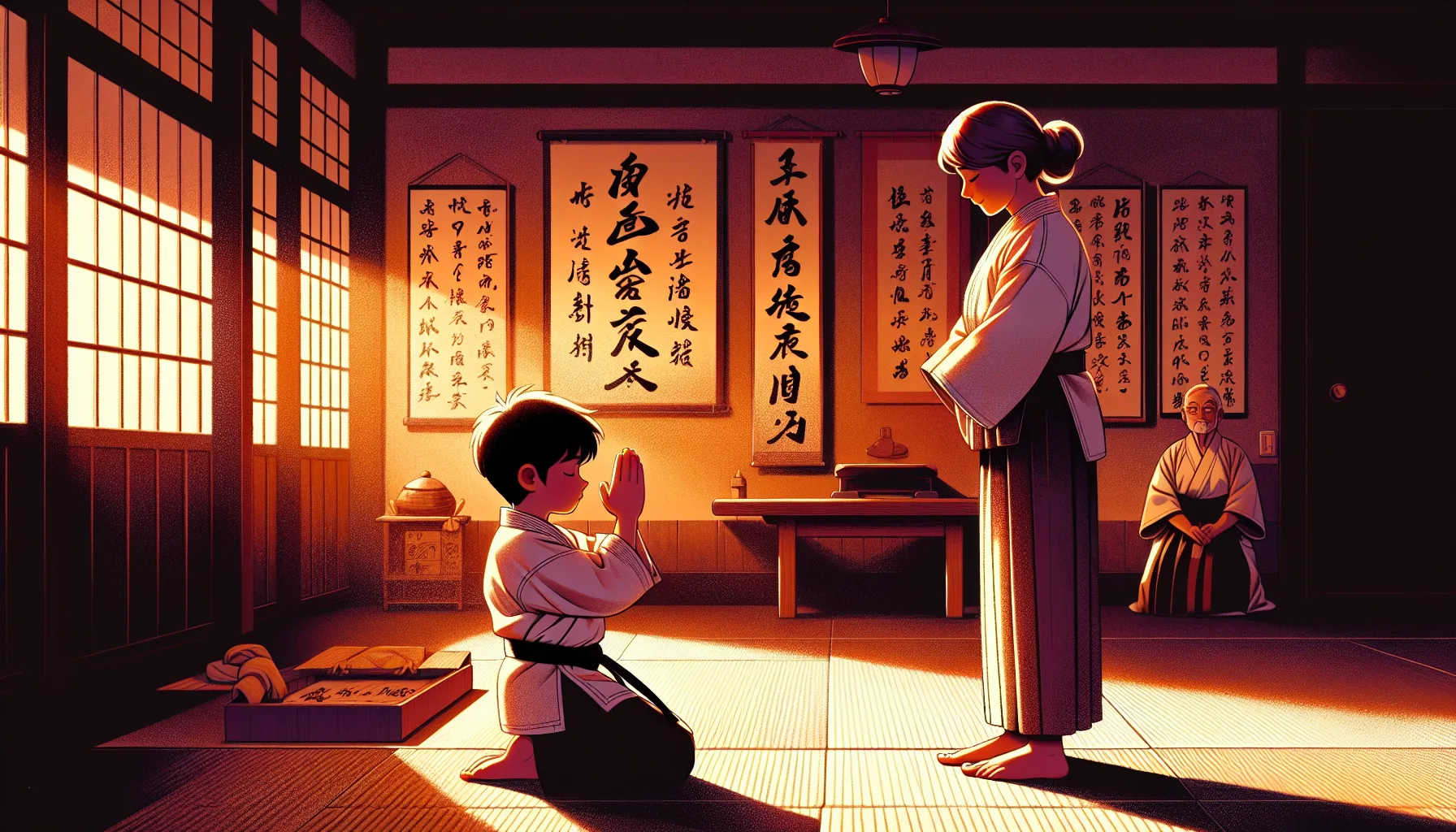
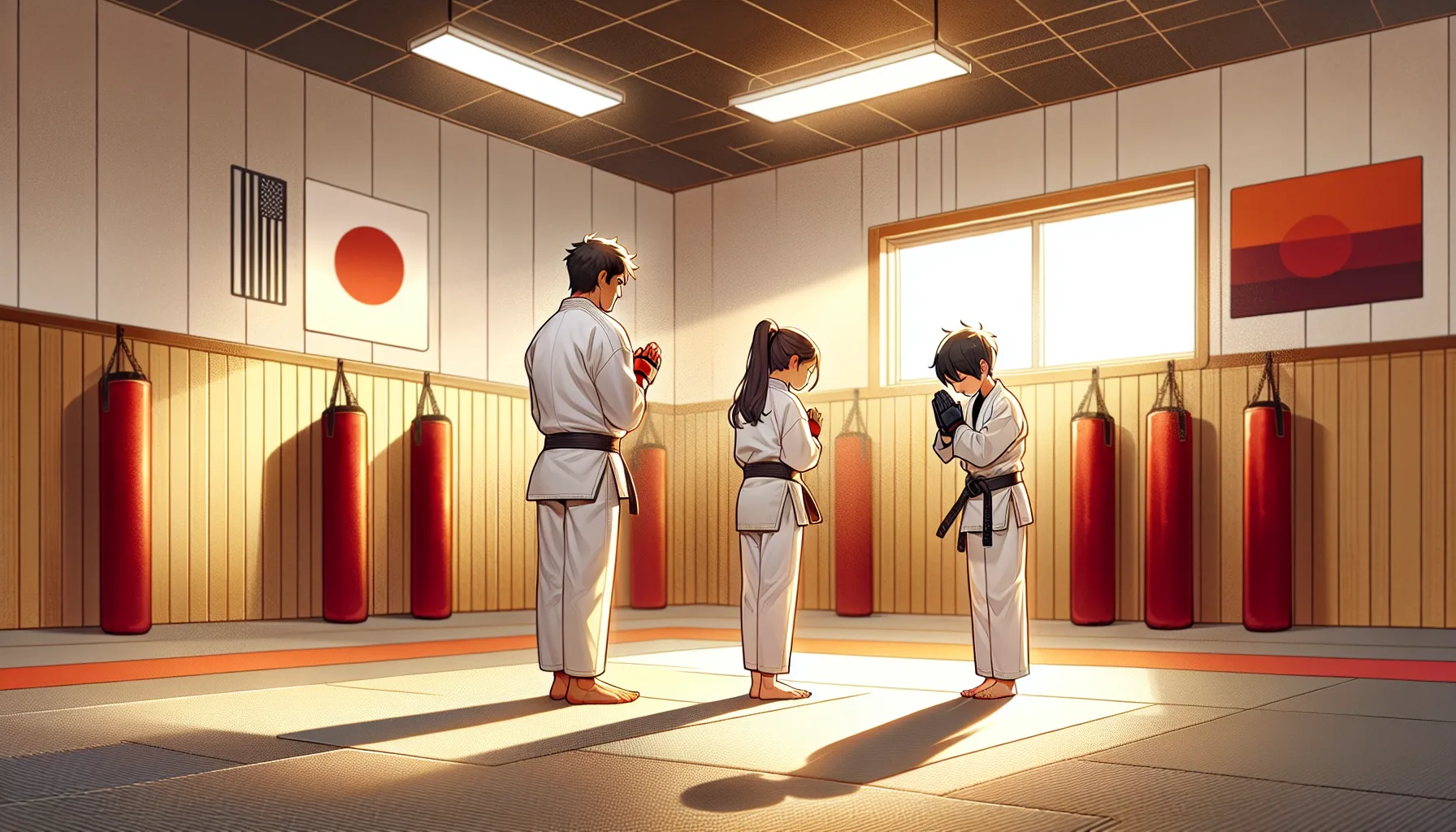
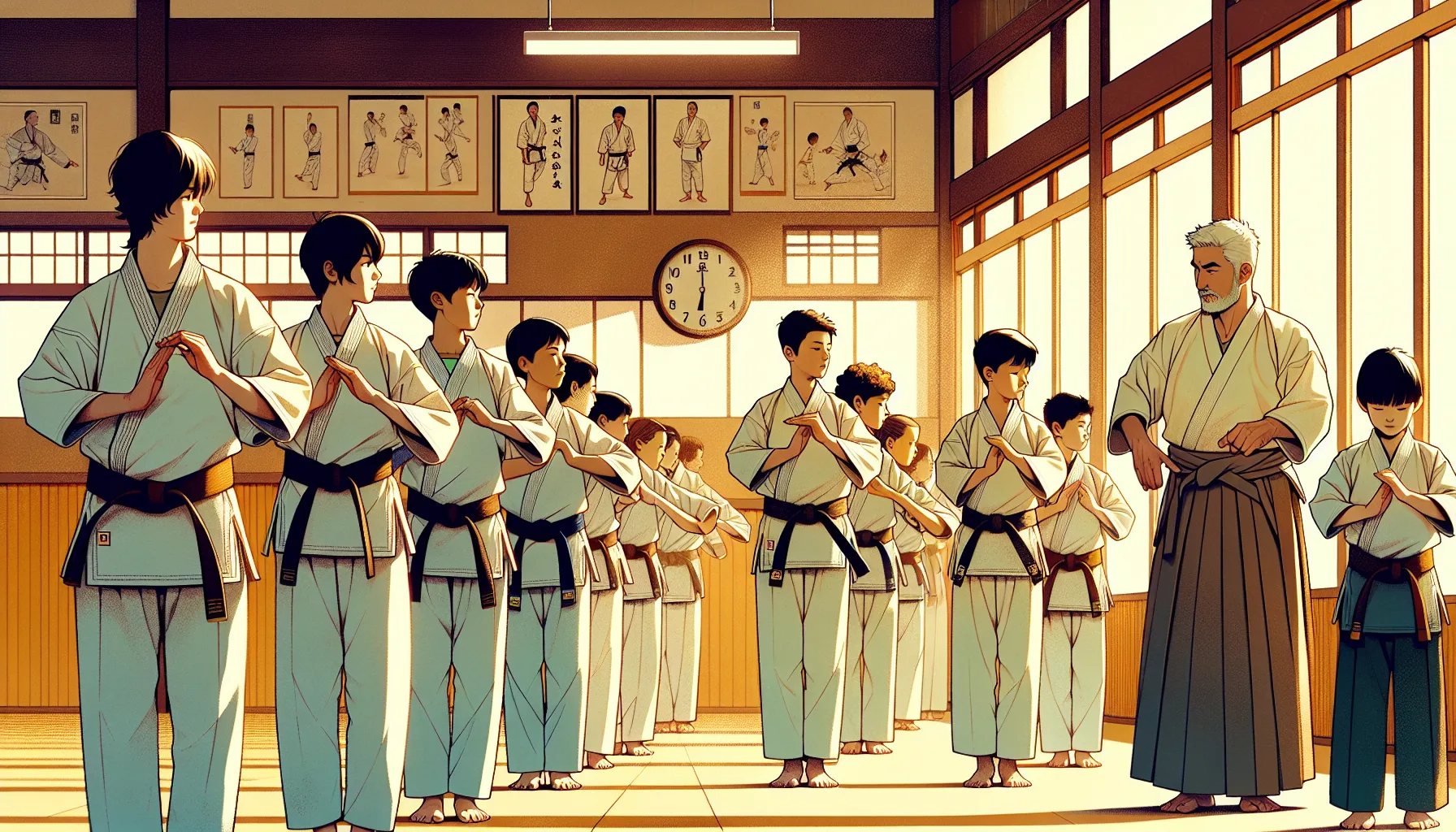
And there are rituals. Bowing in and out. Lining up by rank. Specific forms of address for instructors and senior students. These are not arbitrary formalities. They are the architecture of a culture, and they do developmental work that no amount of clever pedagogy can replicate.
The Rituals and What They Actually Do
Let me be specific about this, because it is one of the least understood aspects of traditional martial arts training.
When a child bows at the threshold of the dojo, they are performing a physical act that marks a transition. Research on embodied cognition is clear: physical gestures reliably shift mental states. The bow is a signal to the nervous system that a different set of rules apply in this space. Attention sharpens. Self-monitoring increases. This is not mysticism. It is basic neuropsychology.
The line-up at the start of class serves multiple functions simultaneously. It establishes the hierarchy of experience in a visible, spatial form. It creates a clear beginning to the session. It gives every child a defined position in a group structure. For children who struggle with transitions, which includes a substantial proportion of children at any given time, the line-up provides a reliable anchor.
The forms of address, calling the instructor Sensei, acknowledging senior students as Sempai, are practice in something that modern children rarely get structured practice in: deference to earned authority. Not blind obedience. Earned deference. The distinction matters enormously, and children learn it through experience more readily than through explanation.
What Changes in the First Three to Six Months
Parents are often surprised by the specificity of what they notice. It is rarely the martial arts skills themselves that prompt the first call or email. It is the other stuff.
At around the six-week mark, most children start carrying themselves differently. The posture changes. There is more uprightness, more physical confidence, without any of the puffed-up bravado that some parents fear martial arts might produce. The physical discipline of the dojo, standing correctly, moving with intention, being aware of the body, translates into everyday bearing.
At around the three-month mark, parents often notice changes in how their child handles frustration. Not that they never get frustrated, but the arc of recovery is shorter. The child encounters difficulty, sits with it briefly, and gets back to work. This is not a coincidence. It is the direct result of weeks of training in which frustration arose, was noticed, and was moved through. The dojo provides a safe and structured context for practising emotional regulation under mild stress.
At around the six-month mark, the changes in social behaviour become clearer. Children who train in a real dojo develop an unusual combination of confidence and respect. They are less easily rattled, less susceptible to peer pressure, and more comfortable in structured adult-led environments. They have learned to be led well, which paradoxically makes them better at leading.
The Trust Variable
There is one more thing that distinguishes a real dojo from a belt factory, and it is the thing that parents most often articulate after their children have been training for a while.
They trust the instructors.
Not in a vague, general sense. In a specific, earned sense. They have watched their child struggle with a technique and seen the instructor find exactly the right cue to unlock it. They have seen their child have a hard day and seen the instructor notice and respond with exactly the right balance of challenge and support. They have seen the grading come and go, and their child not be ready, and the instructor hold the standard without embarrassment or apology, and their child respect that.
That trust is the foundation on which all the other benefits rest. It is what makes a real dojo more than a physical activity. It makes it a developmental environment.
At Inception Academy, Shihan Nick Putt has spent 35 years earning that kind of trust. When he teaches, he is drawing on a depth of knowledge that shows up in the specificity of his corrections and the clarity of his expectations. Parents notice it. Children notice it more.
The Curriculum Behind the Training
What makes the training at a real dojo coherent is not just the techniques, but the values framework that structures progression. At Inception Academy, we teach Zen Do Kai Freestyle, a system developed within BJMA that integrates physical skill development with explicit psychological development at every belt level.
The 12 values we develop from white belt to black are not decorative additions to the martial arts. They are the martial arts. Calmness, Awareness, Perseverance, Self-efficacy, and the rest are trained through the physical practice as much as they are taught through words. The training is the curriculum.
That is what a real dojo provides. Not just kicks and punches. Not just fitness. A carefully constructed developmental environment in which children encounter their own capacity for focus, effort, and self-regulation, and discover, through direct experience, that those capacities are real and growable.
If you are trying to decide whether your child's current club, or a club you are considering, is the real thing, come and watch a class at Inception Academy. See what focused, structured, values-grounded training looks like in practice.
Better yet, book a free trial and let your child experience it directly. One session is worth more than all the research you can do from the outside.