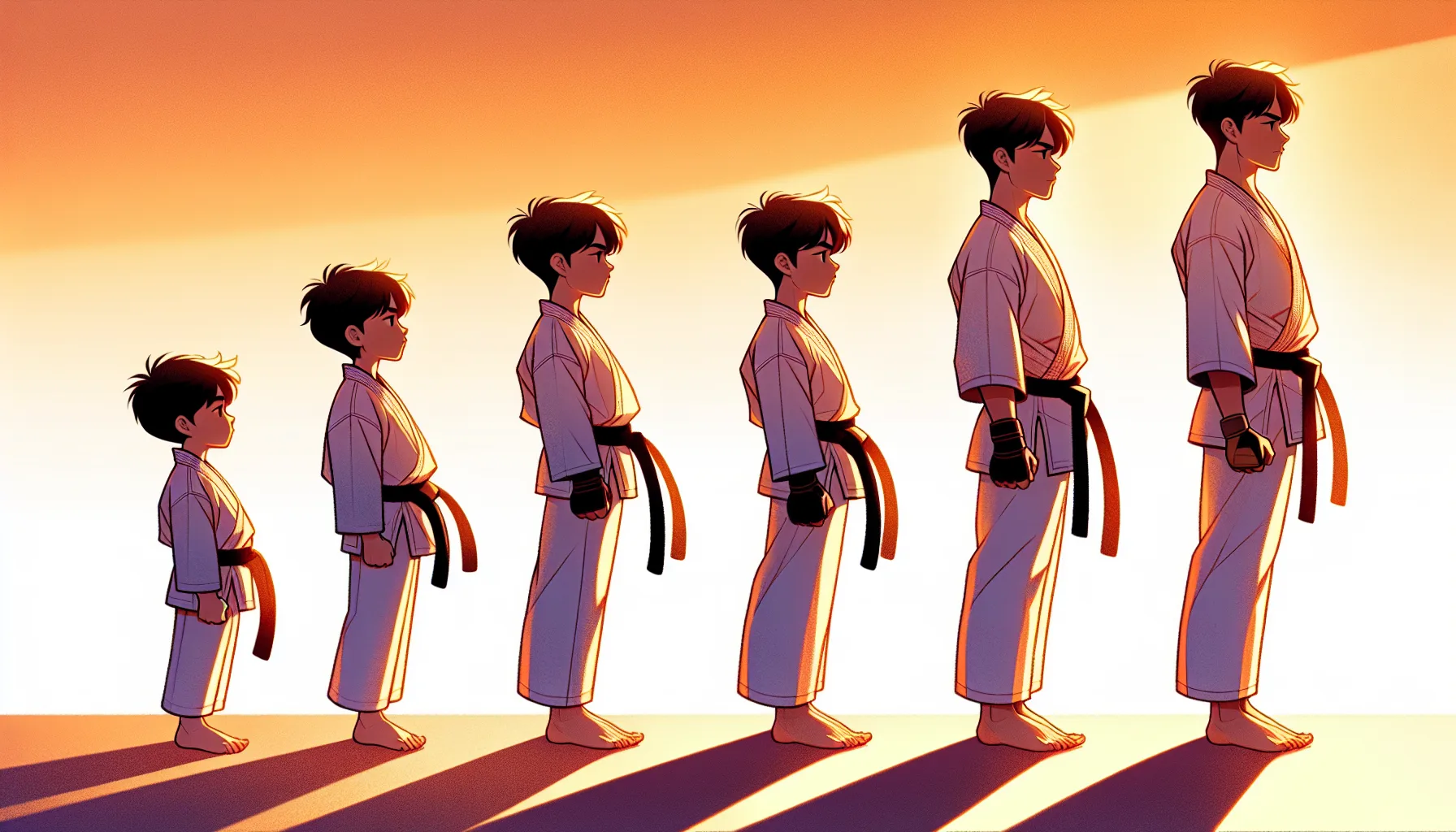
Black belt takes five years or more of consistent training. The hard part is not technique, it is the middle years around green and blue belt, when progress slows and the novelty has gone. Students who get through that stretch usually finish, and parents notice the change long before the belt.
Most children who start martial arts do not reach black belt.
That is not a failure of the system. It is part of how the system works. The journey to black belt is long, genuinely demanding, and not designed for everyone to complete in a short timeframe. The children who reach it are transformed by the process in ways that the children who stop partway through are not.
Understanding what that journey actually looks like, year by year, is the most honest thing I can offer parents who are considering whether to start their child, or whether to encourage a child who is considering quitting.
Why do most children quit?
Before the journey, the attrition.
The data on martial arts participation is consistent across systems and countries: the largest dropout period is in the first three to six months, with another significant wave around the two-year mark.
The first dropout wave happens when novelty wears off. The child who was excited to kick and punch discovers that the training involves a lot of repetition, a lot of correction, and a lot of being a beginner. The dojo environment, which felt cool and novel at first, now feels demanding and, occasionally, frustrating.
This is not a crisis. It is the first real decision point of the belt journey. Children who push through this phase, usually with some parental encouragement to honour the commitment they made, emerge on the other side with something specific: the experience of having stayed when quitting was tempting. That experience is worth more than they know at the time.
The second wave, around the two-year mark, is different. Children who reach this point have developed genuine skill. They know the material. They are often solidly mid-rank, perhaps approaching blue or purple belt. And they hit a plateau: the rate of visible improvement slows, the material becomes more complex and less immediately rewarding, and training demands start to compete seriously with school, sports, and social life.
Children who stay through this phase are the ones who finish. The plateau is not permanent, but working through it requires a level of intrinsic motivation that has usually only developed in students who have been explicitly taught about perseverance and who have experience in riding out difficulty.
That is not a coincidence. It is what the 12 values curriculum we teach at Inception Academy is specifically designed to build.
The White Belt Phase: Months 1 to 6
The white belt period is about building foundations. Not just technical foundations, though those matter, but the foundational habits of a dojo student.
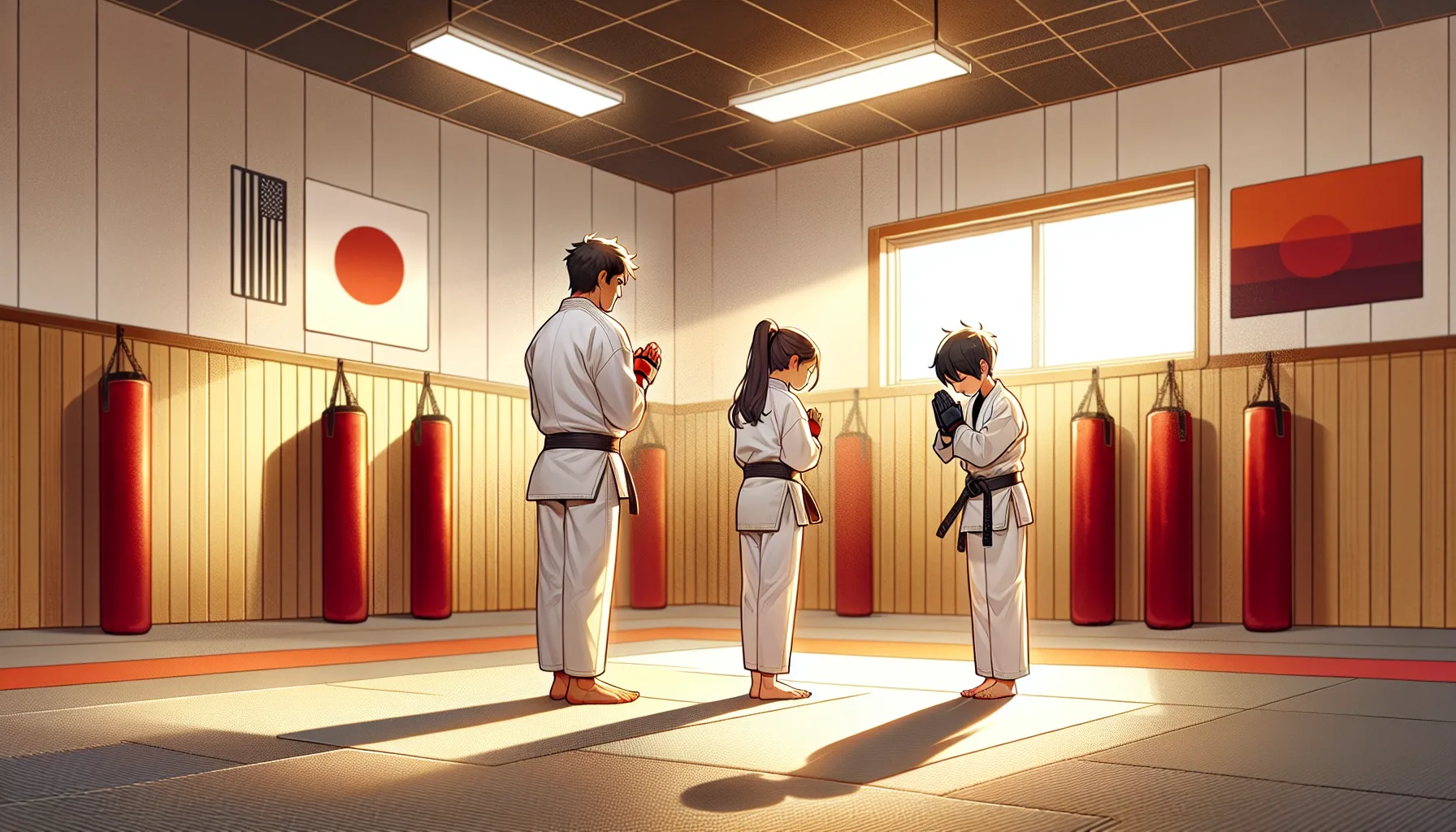
The child learns how the dojo works. The bow at the threshold. The line-up. The forms of address. The expectation of attention during instruction. The convention of working hard during drills without talking. These habits feel unfamiliar at first and normal within a few weeks.
Technically, white belt covers the most basic stances, strikes, and blocks. The movements are simple enough to learn quickly, which means the early sessions produce visible progress. Children leave the first few classes having actually learned to do something. This early momentum matters.
The psychological attribute introduced at white belt is Calmness. This is deliberate. Many children arrive at their first class in a state of nervous excitation, unsure what to expect, managing the mild anxiety of a new environment. The white belt training teaches them to regulate that excitation, to bring themselves down to a state of focused readiness. It is not dramatic, but it is real.
Yellow and Orange Belt: The Building Phase
Yellow and orange belt, roughly covering months 6 through 18, are when the foundational skills begin to cohere. Techniques that were discrete and effortful start to combine. The student is no longer having to consciously think about every component; some of it is becoming automatic.
This is the phase when most parents notice the first real changes in behaviour outside the dojo. The postural improvements are usually visible first. The changes in frustration tolerance and focus come next.
Awareness (yellow belt) and Perseverance (orange belt) are the attributes of this phase, and they are both practised intensively during training. Every drill requires accurate perception. Every plateau requires perseverance.
One thing that surprises parents about this phase is how much their child actually enjoys it. The training is harder than white belt, but the child is more capable. They can feel themselves getting better. The relationship with training partners is developing. The dojo starts to feel like their place.
Green and Blue Belt: The Difficult Middle
Green through blue belt, roughly 18 months to three years, is the hardest part of the journey for most students.
The material is genuinely complex. Combinations are longer, faster, and require more precision. Sparring, if it has been introduced, adds a dimension of real-time decision-making that removes every safety net. The gap between where the student is and where the next grading requires them to be is larger and less obviously bridgeable.
This is also the period when the second dropout wave hits. The novelty is long gone. The skill ceiling feels high. Other activities are competing for the student's time and attention.
Students who make it through the green and blue belt phase are different on the other side. They have a quality that is hard to describe but easy to recognise: a kind of settled confidence. Not arrogance. A quieter thing. They have stayed with something genuinely difficult long enough to see it become manageable, and they know what that feels like.
The attributes of Self-Efficacy (green) and Self-Regulation (blue) are, not coincidentally, precisely the qualities that get students through this phase. The curriculum anticipates the difficulty and provides the tools for managing it at exactly the right time.
Brown Belt: Preparing for the Summit
Brown belt, which at Inception Academy spans five tip levels over roughly one to two additional years, is the preparation stage for black belt. Students at this level are senior enough to have junior instructor responsibilities. They are experienced enough to train with genuine quality. They are close enough to the end to feel it.
The attributes of the brown belt phase, Integrity, Courage, Humility, Discipline, Compassion, are those of a person who is preparing to take on real responsibility. They are not beginner virtues. They require the foundation of everything that came before them.
Brown belt is also when the training becomes most physically and technically demanding. The techniques are sophisticated. The standards are high. The grading criteria are detailed and uncompromising.
Parents often notice something specific about their brown-belt children: they have become genuine mentors to younger students. They are patient with beginners in a way that they were not capable of being two years earlier. They have been beginners, been confused, been frustrated, and emerged, and that experience has produced genuine empathy.
Black Belt: The Beginning
A black belt in a real system is not an end point. It is a beginning.
At Inception Academy, reaching black belt means that a student has demonstrated technical proficiency across the full Zen Do Kai curriculum, has shown the 12 psychological attributes in training and in grading, and is ready to take on genuine responsibility within the dojo community.
Shihan Nick Putt is a 5th Dan, which means he has continued developing for decades beyond his initial black belt. The black belt is the graduation from novice training, not the completion of development.
What does a child look like who has gone from white belt to black? The technical answer involves a specific set of skills and knowledge. But the actual answer is this: they carry themselves differently. They approach difficulty differently. They are less reactive, more patient, more genuinely confident than they were five years earlier.
They have also learned something that most adults are still learning: that sustained effort, applied consistently over years, compounds. That the person you are at the end of a long, difficult process is not the same person who started. And that the difference was made by the choices made during the process, especially the choices made in the moments when quitting was the easier option.
That is the real graduation. And it is worth every push-up.
Whether your child is seven years old and thinking about starting, or fifteen and halfway through the journey, the path forward looks the same: show up, put in the effort, and let the training do what it is designed to do.
Book a free trial at Inception Academy and start the journey. Or, if your child is already training somewhere and you want to understand the full belt progression, come in and talk to us about how our curriculum maps development from white belt to black.