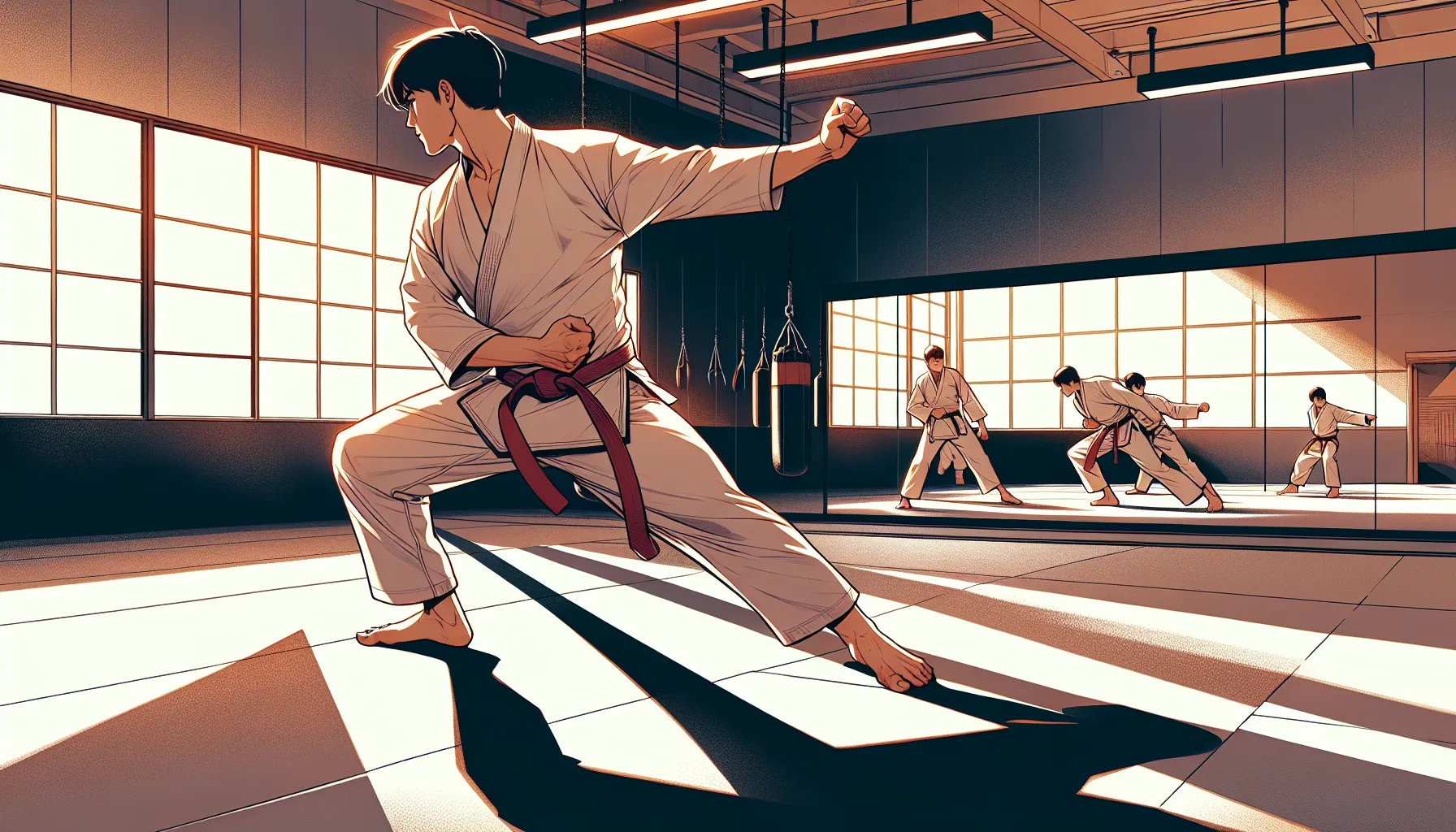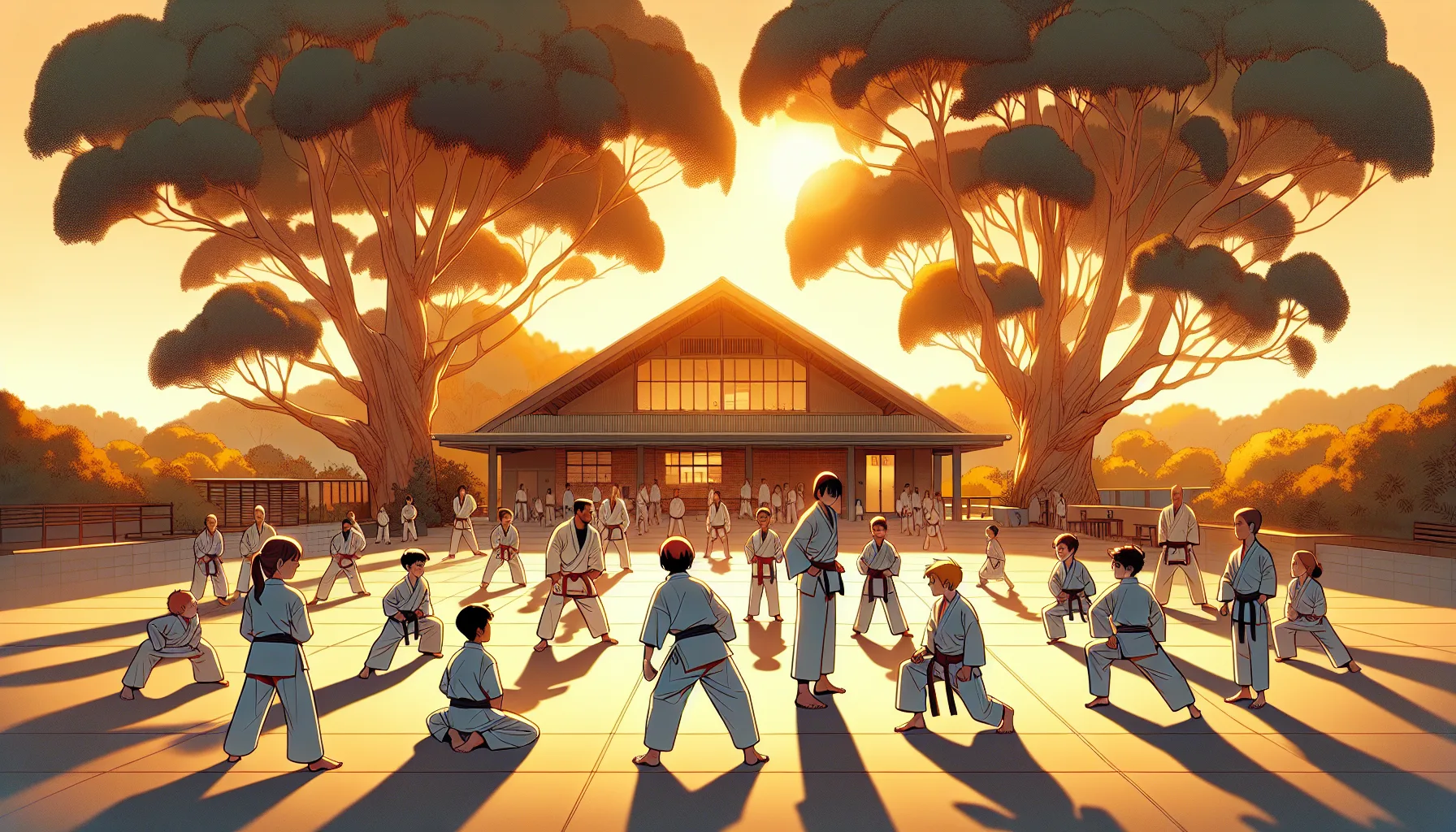
Zen Do Kai was founded in Australia by Bob Jones and built for practical self-defence rather than sport or tradition. Its principle is to take what works from any style and integrate it, which is why the curriculum spans striking, grappling, weapons and Krav Maga in one system.
Most martial arts arrive in Australia and New Zealand as imports. Karate came from Okinawa. Taekwondo from Korea. Judo from Japan. These are excellent systems, developed over generations, and there is much to respect in all of them. But they were built for a specific cultural context, a specific time, and a specific set of assumptions about what a fight looks like and who is likely to be in one.
Zen Do Kai is different. It was built here, by an Australian, for Australian conditions, with an explicit rejection of the idea that a single style could ever be truly complete.
Who was Bob Jones and how did BJMA begin?
The founder of Zen Do Kai, Bob Jones, started training in the 1960s at a time when Australian martial arts culture was dominated by traditional Japanese and Korean systems. He was good, by all accounts very good, but he was also asking a question that traditional instructors did not always welcome: what happens when the technique does not work?
What happens when the opponent does not behave like an opponent in a kata? What happens when the situation is chaotic, the attacker is larger, and the stylistic constraints of your chosen art become a liability rather than an asset?
Jones trained across multiple systems to find out. He studied karate, boxing, wrestling, and a range of other disciplines, not to become a dilettante, but to identify what actually worked and what was preserved by tradition for reasons that had more to do with culture than combat effectiveness. From that process of systematic testing and refinement, he built Zen Do Kai and the broader Bob Jones Martial Arts (BJMA) system.
The name itself signals the philosophy. "Zen Do Kai" translates roughly to "the best of everything in the way of the warrior." It is not a claim to have discovered the ultimate truth of combat. It is a commitment to continuous refinement: always seeking the best available answer, regardless of which tradition it comes from.
What Freestyle Actually Means
The term "freestyle" gets misused in martial arts. Sometimes it is used to justify a lack of rigour. Sometimes it is marketing language for a school that has not committed to any coherent system. In the context of Zen Do Kai, freestyle means something specific and demanding.
It means that the curriculum is built around functional principles rather than stylistic loyalty. Every technique included in the system must pass a practical test: does it work under pressure, against a resisting opponent, in conditions that approximate real-world encounters? If it does not, it does not belong in the system, regardless of how old it is or which tradition it comes from.
This is harder to teach than a fixed style. A traditional karate system has a defined syllabus: these kata, these kihon, this progression. An instructor can deliver it with confidence because every element has been refined over decades. A freestyle system requires instructors who understand the underlying principles well enough to adapt, to explain why, and to help students develop genuine understanding rather than just pattern-following.
At IAMA, our chief instructor Shihan Nick Putt brings that depth of understanding to every class. With 35 years of BJMA Zen Do Kai experience and a 5th Dan grading, he teaches the system as it was intended: principled, adaptive, and always grounded in what actually works.
The Curriculum Structure
Zen Do Kai is not a collection of random techniques from different systems. It is an integrated curriculum with a coherent structure. Students progress through a graded belt system, and each level introduces new material while reinforcing and deepening what came before.
At the foundational levels, students develop core striking skills: punches, kicks, and the footwork to deliver them with power and precision. These fundamentals draw heavily from karate and boxing traditions, because those traditions have spent a long time solving the problem of how to hit hard and accurately.
As students progress, the curriculum broadens. Grappling skills are introduced, including takedowns, groundwork, and the ability to manage a clinch. Weapon awareness enters the picture. Scenario-based training tests whether students can apply their skills under stress, not just in a drill context.
Throughout this progression, the emphasis is on developing complete practitioners. A student who can only strike is incomplete. A student who can only grapple is incomplete. The goal is a practitioner who can read a situation, choose the appropriate response from a full toolkit, and execute it under pressure.
For a detailed breakdown of what students learn at each stage, see our Zen Do Kai curriculum page.
Why It Was Revolutionary
In the 1970s and 1980s, the idea that you might take techniques from karate, boxing, and wrestling, and combine them into a single coherent system, was genuinely controversial in martial arts circles. The traditional schools had a vested interest in maintaining the purity of their systems. Cross-training was often viewed with suspicion, even hostility.
Bob Jones pushed through that resistance, not because he was anti-tradition, but because he was pro-results. He wanted to produce people who could actually protect themselves, not people who looked impressive in a kata competition and then froze when a real threat appeared.
History has largely vindicated his approach. The rise of mixed martial arts competition from the 1990s onward demonstrated repeatedly that practitioners from single styles were at a systematic disadvantage against well-rounded fighters. The lesson that Jones had been teaching for decades was confirmed in front of global audiences: completeness wins.
Zen Do Kai never needed MMA to validate it. But it is worth noting that what looked radical in 1970 looks obvious now.
What It Means Today
The world your child is growing up in is not the same world Bob Jones trained in. The specific threats have changed, the context has changed, and the range of experiences a young person might face has expanded in ways that even a thoughtful system designer in the 1970s could not fully anticipate.
But the core insight remains entirely valid. A single style, no matter how good, is a partial answer to a complex question. A system built on principles of functional effectiveness, continuous refinement, and integration across disciplines is better prepared to meet the full range of what the real world presents.
That is what Zen Do Kai offers. Not a perfect system, because no such thing exists, but a principled, tested, genuinely complete approach to martial arts training. One that respects tradition where tradition has earned respect, and moves past it where the evidence points elsewhere.
At Inception Academy, we teach the BJMA Zen Do Kai system as it was designed to be taught: rigorously, adaptively, and always with an eye on what it is actually preparing our students to do. Self-defence is the practical application. Character development is the long-term goal. The two are not in tension. In a well-designed martial arts system, they are the same project.
If you want to see what Zen Do Kai training looks like in practice, book a free trial for your child. One session is enough to understand why this system is different.
For more on how our curriculum is structured and what values we develop alongside technical skill, see our curriculum overview.