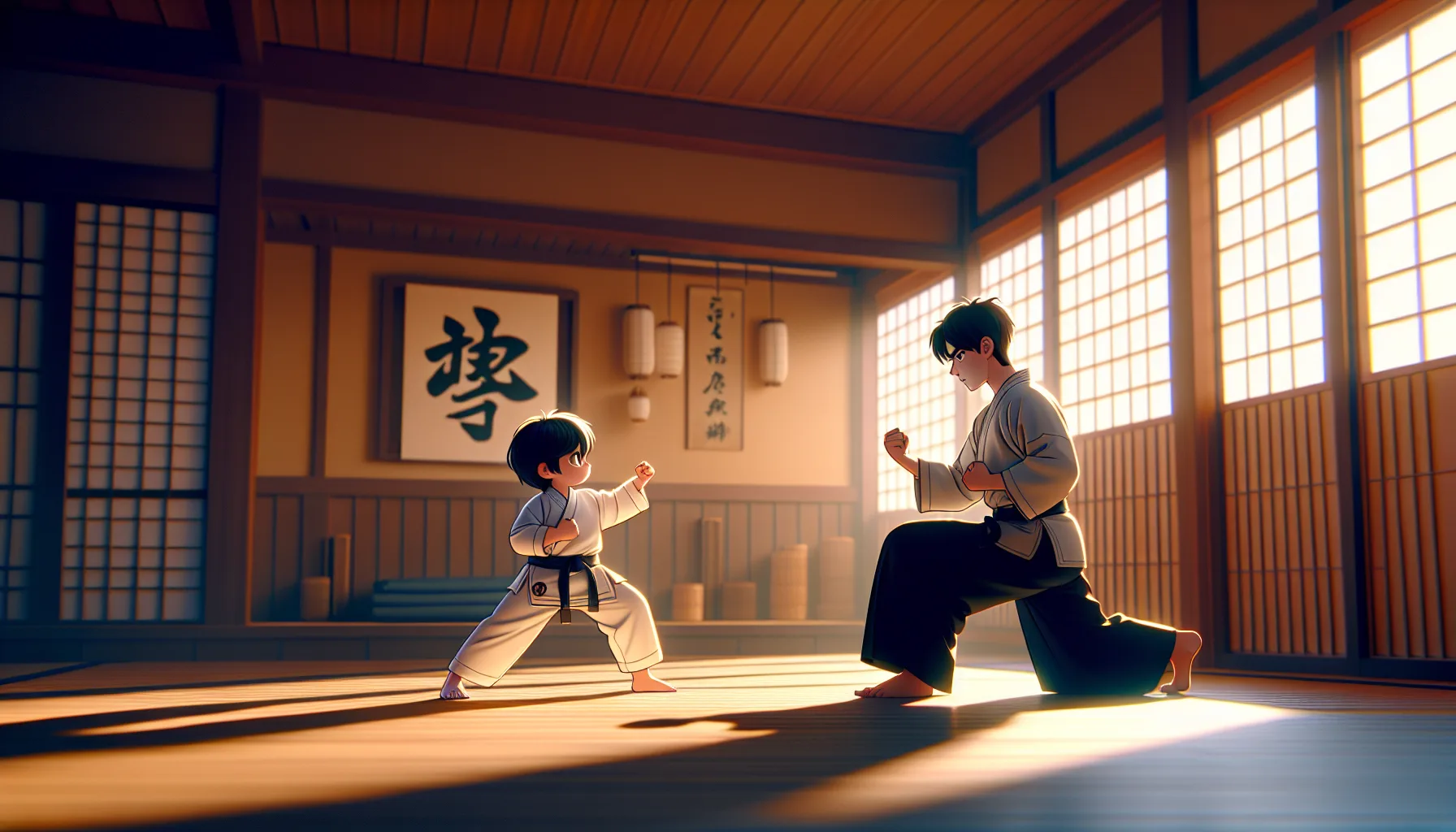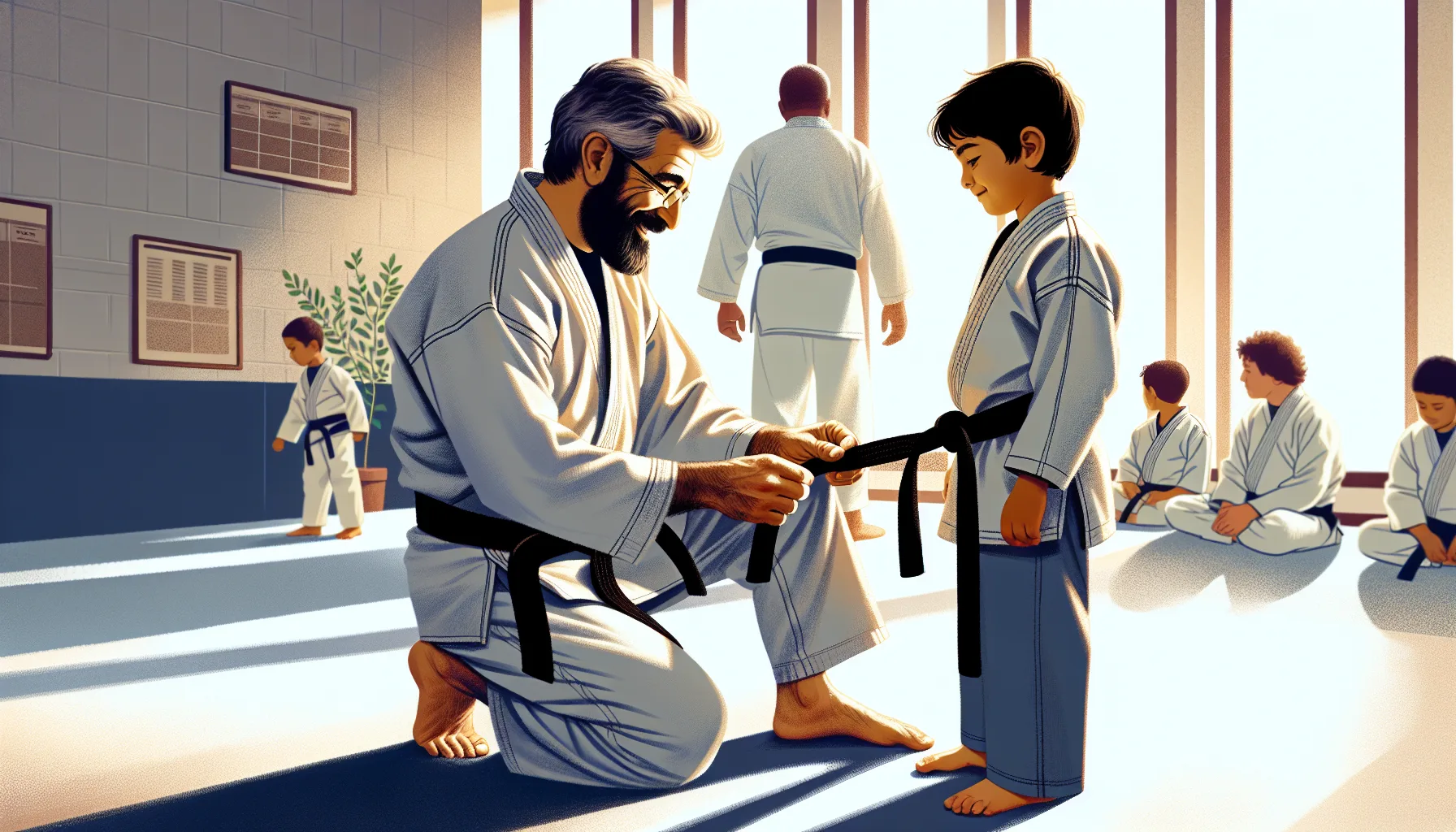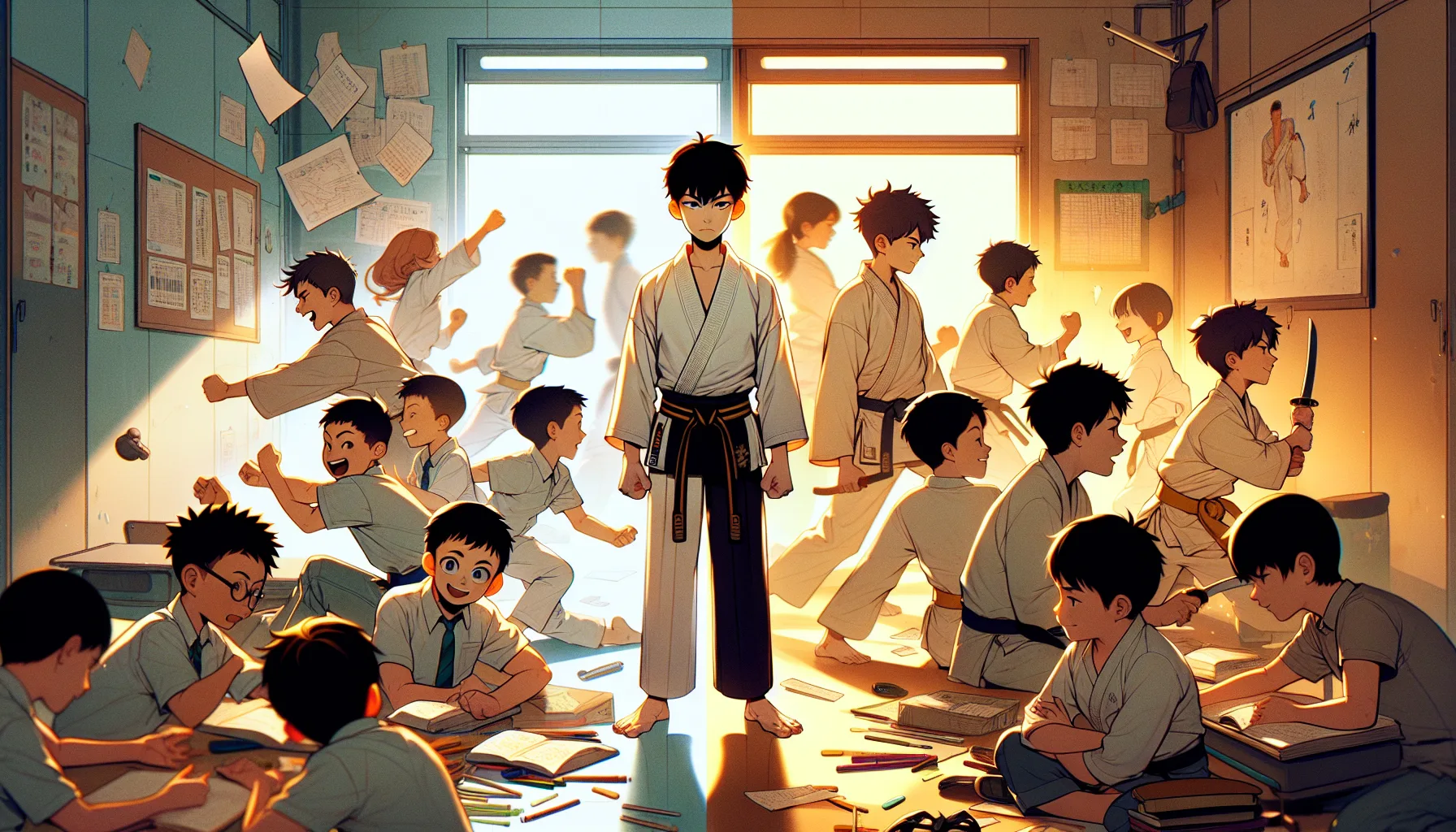
Schools largely removed immediate consequence a generation ago. The dojo restores it: instruction is followed straight away, effort is visible, and rank is earned against an external standard. Children develop self-regulation because the environment requires it constantly, not because anyone lectures them about it.
I want to be careful here, because what I am about to say could easily be misread as an attack on teachers or schools. It is not. Teachers are doing demanding, important work under increasingly difficult conditions. Most of them are good at it.
But the school environment has changed significantly over the past thirty years, and one of the things that has changed is the role of structured discipline in children's daily experience. The consequences of that change are real, and they are showing up in children's behaviour, in their relationships, and in their capacity to handle difficulty.
The dojo fills a specific gap. It does not replace school. It provides something school has largely stopped providing.
What has actually changed in schools?
The shift has been gradual and, in many ways, well-intentioned.
Corporal punishment disappeared, which was correct. Rote drilling and rigid memorisation gave way to more flexible, inquiry-based learning, which has genuine advantages for certain kinds of cognitive development. The emphasis on children's autonomy, voice, and self-expression increased. Teachers were repositioned as facilitators rather than authorities.
These changes were driven by real research and real concerns. The old model had genuine problems. Some of those problems, particularly around the treatment of children who did not fit the dominant norm, were serious.
But in addressing those problems, schools also moved away from several things that had developmental value. Clear behavioural expectations with reliable consequences. Explicit instruction in deference to authority. The experience of structured challenge under expert guidance. The expectation of focus, not as a courtesy to other students, but as a skill worth developing in itself.
The result, in aggregate, is a generation of children who are in many ways more confident and more articulate than previous generations, but who are less practised in directing their own attention, tolerating frustration without external support, and operating within hierarchical structures.
What the Research Says About Self-Regulation
Self-regulation is one of the strongest predictors of life outcomes we have in developmental psychology. More predictive than IQ. More predictive than socioeconomic status. More predictive, in most studies, than most of the things we spend enormous educational resources trying to improve.
Self-regulation involves several related capacities: directing attention voluntarily, inhibiting impulses, managing emotional responses, persisting on difficult tasks without external motivation. These capacities are trainable. They develop in response to the right kinds of experience. And they are not developing as robustly as they should in many children today.
The neuroscience here is relevant. These capacities are primarily mediated by the prefrontal cortex, which is the last brain region to fully mature, continuing development into the mid-twenties. But the prefrontal cortex, like any neural system, develops through use. Children who are given structured practice in attention, inhibition, and persistence develop stronger prefrontal function over time.
Children who are not given that practice develop more slowly.
Why the Dojo Is Structurally Well-Suited to This
The dojo does not accidentally produce self-regulation. It is structurally designed to produce it.
Clear expectations with reliable consequences. In the dojo, expectations are explicit and consequences are consistent. If you do not listen during instruction, you will not be able to execute the technique. If you do not put in the effort, the improvement will not come. If you do not demonstrate the required attributes at grading, you will not advance. These are not threats. They are the honest mechanics of how the training works.
The consistency matters as much as the expectations themselves. Children develop self-regulation most effectively in environments where they can predict outcomes. The unpredictability of consequence, not the strictness of expectation, is what produces anxiety and dysregulation. A strict but consistent environment is less stressful for most children than a lenient but unpredictable one.
Graduated challenge calibrated to the individual. The belt system provides a progression of challenge that is matched to each student's current level. The gap between where a student is and what is required of them is always achievable, always requires effort, and always produces growth when effort is applied. This is the precise set of conditions that research on optimal experience identifies as producing real engagement and intrinsic motivation.
Physical embodiment of abstract skills. This is one of the most important advantages the dojo has over most educational environments. In the dojo, self-regulation is not just discussed or described. It is practised physically. Maintaining posture under fatigue is self-regulation. Continuing a drill when you want to stop is self-regulation. Receiving a correction without becoming defensive is self-regulation. Staying focused during the fourteenth repetition of a combination is self-regulation.
The physical practice creates a felt sense of these capacities that abstract instruction cannot replicate. Children who have physically experienced staying focused under pressure have something different from children who have merely been told to focus.
Consequence that teaches without catastrophising. When attention lapses in the dojo, there are immediate consequences that are instructive without being devastating. You lose the drill. You have to repeat the combination. Your partner gets the better of you on that exchange. These consequences are real and clear, but they are contained. There is no lasting harm. You try again.
This is the feedback structure that builds learning. Real consequences, immediate enough to be informative, bounded enough to be safe.
The Respect and Authority Piece
One of the things modern schools have largely moved away from is the expectation of genuine deference to authority. The reasons are understandable: there were abuses of authority, and children's perspectives and experiences deserved more weight than they were historically given.
But there is a developmental cost to children who grow up without any structured experience of appropriate deference to expertise.
Learning to be led well is a skill. It requires recognising real competence in another person, placing yourself in a position of guided learning, following instruction before you fully understand the rationale, and discovering, through the experience, that the instruction was worth following.
Children who have not had this experience are disadvantaged when they encounter it in adult life, in every professional context, in relationships, in any situation that requires them to be a genuine learner. They tend to either over-comply, which produces a different set of problems, or reject authority wholesale, which limits their access to expertise they genuinely need.
The dojo, with its explicit hierarchy of Sensei, Sempai, and student, provides structured practice in the right kind of deference. Not blind compliance. Earned trust. Children learn to follow Shihan Nick Putt's instruction not because they are required to, but because they discover, repeatedly, that following his instruction produces results that their own improvisation does not. The authority is validated by the expertise.
That is the form of authority relationship that children need practice navigating.
What Parents Notice in Their Children
The changes are not subtle. Parents who have children training at Inception Academy for six months or more regularly report specific shifts.
Better performance in school, not because of any direct academic content, but because the capacity to sit, focus, and persist transfers. A child who has practised sustained attention twice a week for six months brings that practised capacity to every other environment.
Improved handling of frustration. The dojo provides weekly, structured practice in encountering difficulty, staying with it, and finding a way through. That practice generalises.
Greater comfort in adult-structured environments. Children who train in a real dojo are better at following adult instruction, better at reading the expectations of structured situations, and more comfortable in contexts where adults are in charge. This makes them easier to teach, easier to coach, and more effective in any group setting.
These are not incidental benefits. They are the direct product of a training environment refined over decades to produce exactly this kind of development.
The psychological discipline curriculum at Inception Academy makes this explicit. Every class is training in focus, persistence, and self-regulation, as much as it is training in technique.
The Gap Is Real
Modern children are not worse than previous generations. They are different, shaped by a different environment. Many of the environments they inhabit are genuinely enriched compared to previous generations: more information, more opportunity, more adult responsiveness to their needs and interests.
But they are also, on average, less practised in structured self-direction than previous generations were. Less experienced in sustained focus. Less familiar with the feeling of effort required before reward arrives.
The dojo addresses that gap directly. It does what it does not because it is trying to replicate what schools used to do, but because it has always done it, and the doing has always produced children who are more capable and more resilient than they were when they started.
That is what good martial arts training has always been about. The techniques are the vehicle. The character is the destination.
If your child struggles with focus, frustration tolerance, or simply needs a structured environment where they are genuinely challenged, book a free trial at Inception Academy. Come and see what structured, expert-led training looks like. Then watch what happens to your child over the following months.
For more on the values framework underlying our training, read about the 12 psychological attributes we develop at Inception Academy.