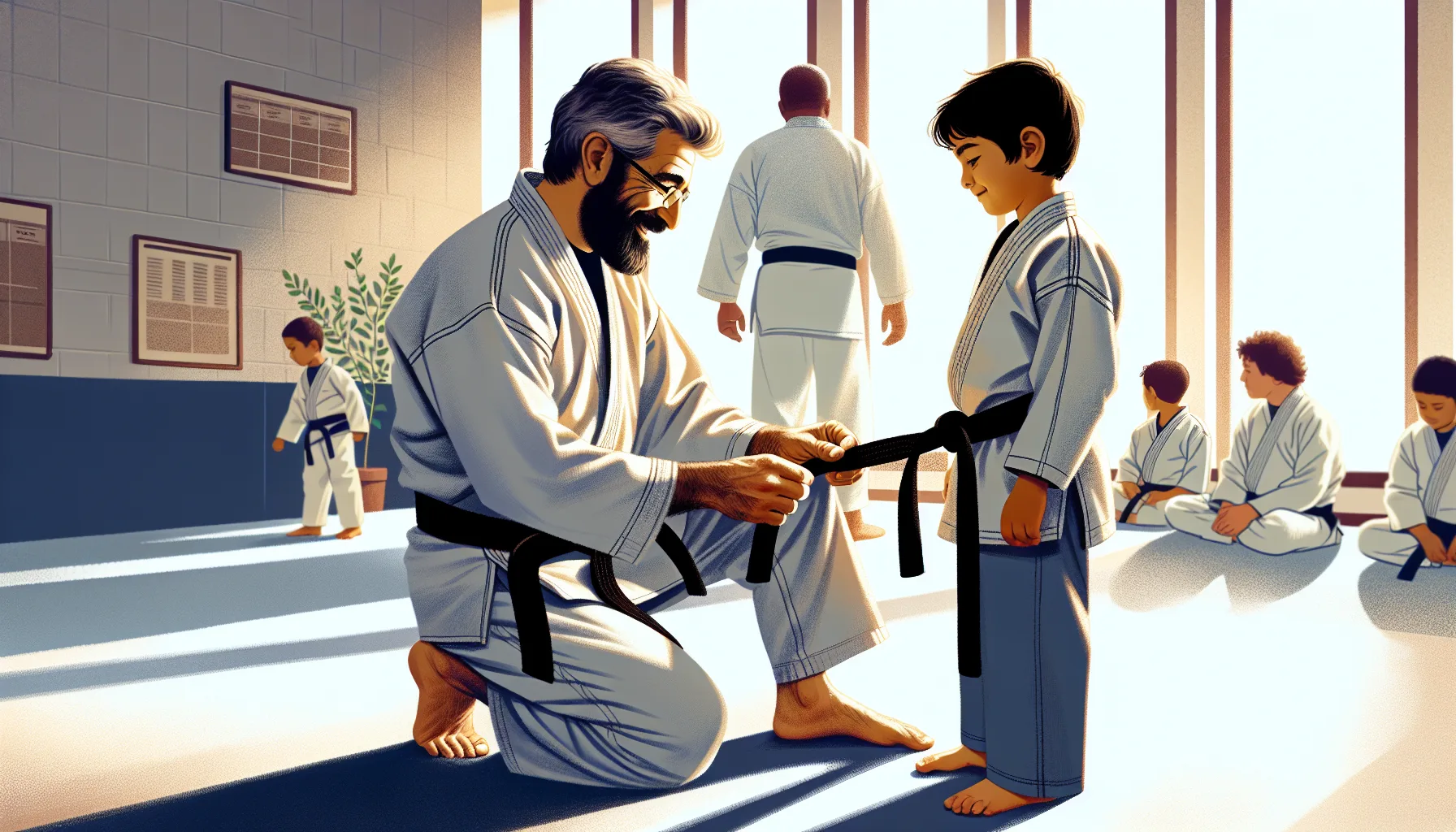
Children do not need to understand a rule before they follow it. Compliance comes first and understanding follows, because the structure gives them stable ground from which sense can later be made. Waiting for a four-year-old to agree with a rule teaches them that rules are negotiable.
Comprehension is not prerequisite for compliance.
That sentence will be uncomfortable for some readers. Good. Sit with the discomfort for a moment before deciding what you think, because the instinct to reject it is precisely the instinct I want to examine.
The modern approach to children, particularly in parenting and education, has moved heavily toward explanation before expectation. We explain the rule before we enforce it. We offer the rationale before we ask for the behaviour. "We do not hit because it hurts other people." "We sit still because the teacher needs everyone listening." "We share because it is kind."
The intention behind this is sound. We want children to understand the world they are navigating. We want them to internalise values rather than merely performing compliance. We want them to become thoughtful, reasoning people.
The result, often, is negotiation.
When comprehension becomes the prerequisite for compliance, every instruction becomes a debate. The child learns, quickly and accurately, that compliance is contingent on being convinced. That they are entitled to understand, and agree with, any expectation before they are required to meet it. That authority is conditional on their satisfaction with the explanation.
This is not a theoretical problem. It is the lived experience of parents and teachers across the country, every day.
How does the dojo do this differently?
When Sensei says "line up," students line up. When the instruction is "fifty push-ups," students do fifty push-ups. When the direction is to repeat a combination drill for the eighth time, students repeat the combination drill for the eighth time.
There is no negotiation phase. There is no requirement that the student first understands why this particular exercise at this particular moment serves their development. The compliance comes first. The understanding comes later. Sometimes much later. Sometimes years later.
A white belt who is told to keep their guard up does not need to understand the biomechanics of head protection to comply with the instruction. They need to keep their guard up. The understanding of why, the felt experience of what happens when you drop your hands, the gradually developing sense of how guard position relates to distance management and timing, all of that comes through months and years of doing the thing they were told to do before they understood it.
The student who complies and practises discovers the reason through the doing. That is not a failure of education. It is how the deepest kind of learning actually works.
This Is Not Blind Obedience
I need to make the distinction here clearly, because it is the distinction that matters.
Blind obedience is compliance within a system that has not earned trust, where the authority serves itself rather than those it leads, and where the outcomes of following instruction are not consistently positive. Blind obedience is dangerous, and the instinct to protect children from it is correct.
What I am describing is trust-based compliance within a system that has earned that trust. The distinction is critical.
In a system where the authority figure has demonstrated genuine expertise over years and decades, where the outcomes of following instruction are consistently positive, where the hierarchy exists to serve the student's development rather than the instructor's ego, compliance without immediate comprehension is not blind. It is rational. It is, in fact, the fastest path to learning.
At Inception Academy, Shihan Nick Putt has 35 years of Zen Do Kai experience and a 5th Dan grading. When he gives an instruction, it is backed by a depth of knowledge that is simply not available to the student receiving it. The student who trusts that instruction and executes it is making a reasonable decision based on evidence they have accumulated through their own training experience: that following Shihan's direction produces results.
The student who demands a full explanation before they will comply is, paradoxically, placing more trust in their own incomplete understanding than in the demonstrated expertise of someone who has been doing this for three and a half decades. That is not critical thinking. It is a failure to accurately assess the relative quality of the information sources available.
What Skill Acquisition Research Actually Shows
This is not just a philosophical position. The research on how people acquire complex skills backs it up.
Expert instruction frequently requires the learner to do things they do not yet understand. A piano teacher corrects hand position before the student understands the biomechanical reasons for optimal finger placement. A swimming coach insists on bilateral breathing before the swimmer understands the efficiency gains over single-side breathing. A physiotherapist prescribes exercises that feel counterintuitive until the body adapts and the patient discovers why the movement pattern matters.
The pattern holds in every domain of skilled performance. The expert sees things the novice cannot see, prescribes actions the novice does not yet understand, and the novice who complies discovers the reason through the doing. The novice who demands an explanation first learns slower, because they are attempting to process the instruction cognitively before they have the physical or experiential vocabulary to understand it.
In martial arts, this is particularly pronounced. The body learns through repetition, not through explanation. You cannot explain a hip rotation into understanding. You cannot lecture someone into correct timing. The instruction "rotate your hips through the strike" is meaningful to a student who has done it a thousand times. It is nearly meaningless to a student hearing it for the first time, no matter how carefully you explain the mechanics.
Compliance produces the repetitions. Repetitions produce the understanding. The sequence matters.
Why This Applies Especially to Children
Children are neurologically wired to learn through structured practice before conceptual understanding. This is not a limitation to be worked around. It is the natural architecture of development.
Developmental psychology is clear on this. Procedural learning, the learning of how to do things, develops before declarative learning, the understanding of why things work that way. Children learn to walk before they understand balance. They learn to speak before they understand grammar. They learn to ride a bicycle by doing it, not by having the physics of angular momentum explained to them.
Demanding that children understand before they comply reverses the natural learning sequence. It asks them to engage their weakest cognitive system (abstract reasoning about causation) before engaging their strongest (embodied, procedural, practice-based learning). It is, from a developmental psychology standpoint, backwards.
This does not mean that children should never be given explanations. It means that the explanation is not the entry point. The entry point is the doing. The explanation is the reflection that comes afterward, when the child has enough experiential data to make the explanation meaningful.
A six-year-old who has been bowing to Sensei for three months does not need a lecture on the cultural history of the bow to understand respect. They are learning respect through the practice of it. The conceptual understanding will arrive when their cognitive development is ready for it, and when it arrives, it will be grounded in lived experience rather than abstract instruction.
The Authoritarian Objection
I know what some readers are thinking: this sounds authoritarian.
It does, if you do not distinguish between authoritarian systems and authoritative systems. Diana Baumrind drew that distinction in the 1960s and it has held up ever since.
Authoritarian systems demand compliance to serve the authority. The obedience is the point. Questions are punished. The hierarchy exists because it exists, and its justification is circular: you comply because I said so, and I said so because I am in charge.
Authoritative systems expect compliance to serve the learner. The compliance is the scaffold for the learning. Questions are welcome, in their proper time. The hierarchy exists because the domain requires it, and its justification is functional: you comply because the instructor's expertise will get you where you want to go faster than your own improvisation.
The dojo is authoritative. The hierarchy exists because martial arts training requires it. You cannot safely teach a child to spar without their reliable compliance with safety protocols. You cannot develop technique without reliable compliance with drilling structure. You cannot build the kind of deep, embodied skill that martial arts demands without the student's willingness to do things they do not yet understand, repeatedly, under expert guidance.
The compliance is not the destination. It is the scaffold that enables everything else.
The Broader Life Skill
Here is where this extends well beyond the dojo.
Adults who cannot comply with reasonable direction from legitimate authority, who need to understand and agree before they will follow, are limited in every professional and personal context they enter. The new employee who needs the rationale for every workplace procedure before they will follow it. The university student who cannot follow a professor's instruction because they have not yet been convinced of its necessity. The athlete who second-guesses every coaching decision rather than executing and discovering the wisdom in it later.
These are not people exercising admirable critical thinking. They are people who never learned the skill of trusting legitimate expertise, of complying first and comprehending second, of understanding that their own assessment of a situation is not always the most accurate assessment available to them.
The capacity to trust, comply, and discover the reason through the experience is a skill. Like any skill, it develops through practice. Like any skill, the earlier it is practised, the more deeply it is embedded.
The dojo develops this skill through every class, every drill, every interaction with the hierarchy of Sensei, Sempai, and student. The environment is structured, safe, and oriented toward the student's development. What it produces is not passive compliance but a warranted trust in the value of expert guidance.
Compliance First. Comprehension Follows.
The sequence matters. Structure first, understanding second. Practice first, theory second. Compliance first, comprehension second.
This is not because understanding does not matter. It is because understanding that is built on a foundation of experience is deeper, more durable, and more genuinely the child's own than understanding that is handed to them as a precondition of participation.
The child who has spent two years training in the dojo, who has complied with thousands of instructions they did not fully understand at the time, who has discovered through their own experience that the instructions were worth following, that child does not merely believe that the system works. They know it, in their body, through their own accumulated evidence.
That is a different kind of knowledge from the child who was explained everything before being asked to do anything. It is harder won and more deeply held. And it transfers to every other domain of their life.
The psychological discipline curriculum at Inception Academy is built on this principle. Every class is structured so that compliance with the training produces the understanding that justifies the training. The children do not need to know that in advance. They discover it through the doing.
If you want to see what structured, trust-based compliance looks like in practice, book a free trial at Inception Academy. Watch a class. Notice how the children respond to instruction, and notice what that instruction produces. Then decide whether the sequence of compliance before comprehension produces the kind of development you want for your child.
For more on the hierarchy that makes this possible, read about respect, hierarchy, and why your child needs both.