The final stanza describes someone effective and humble at once, the same person in every room. That is the martial artist the curriculum aims at: capable enough to be dangerous, disciplined enough never to need it, and unchanged by who happens to be watching.
This is the fourth and final article in a series examining Kipling's "If" through the lens of dojo training. In part one, we looked at composure under pressure. In part two, ambition and resilience. In part three, the will to persist when everything says stop. This final instalment addresses the culmination: the complete person that emerges when those qualities are present together.
The final stanza of "If" is different in tone from the first three. The earlier stanzas describe specific capacities: managing emotions, handling success and failure, persisting through exhaustion. The fourth stanza describes something more integrated. A person whose character is consistent, whose presence is steady, whose engagement with the world is both complete and principled. It describes, in precise terms, the martial artist the dojo is designed to produce.
What does consistent character across contexts look like?
Kipling wrote about talking with crowds and keeping your virtue, walking with kings and keeping the common touch. The essential quality here is consistency. The person whose character does not change depending on the audience. The person who behaves the same way whether they are among those they wish to impress or those they consider beneath their notice.
The dojo tests this directly and repeatedly.
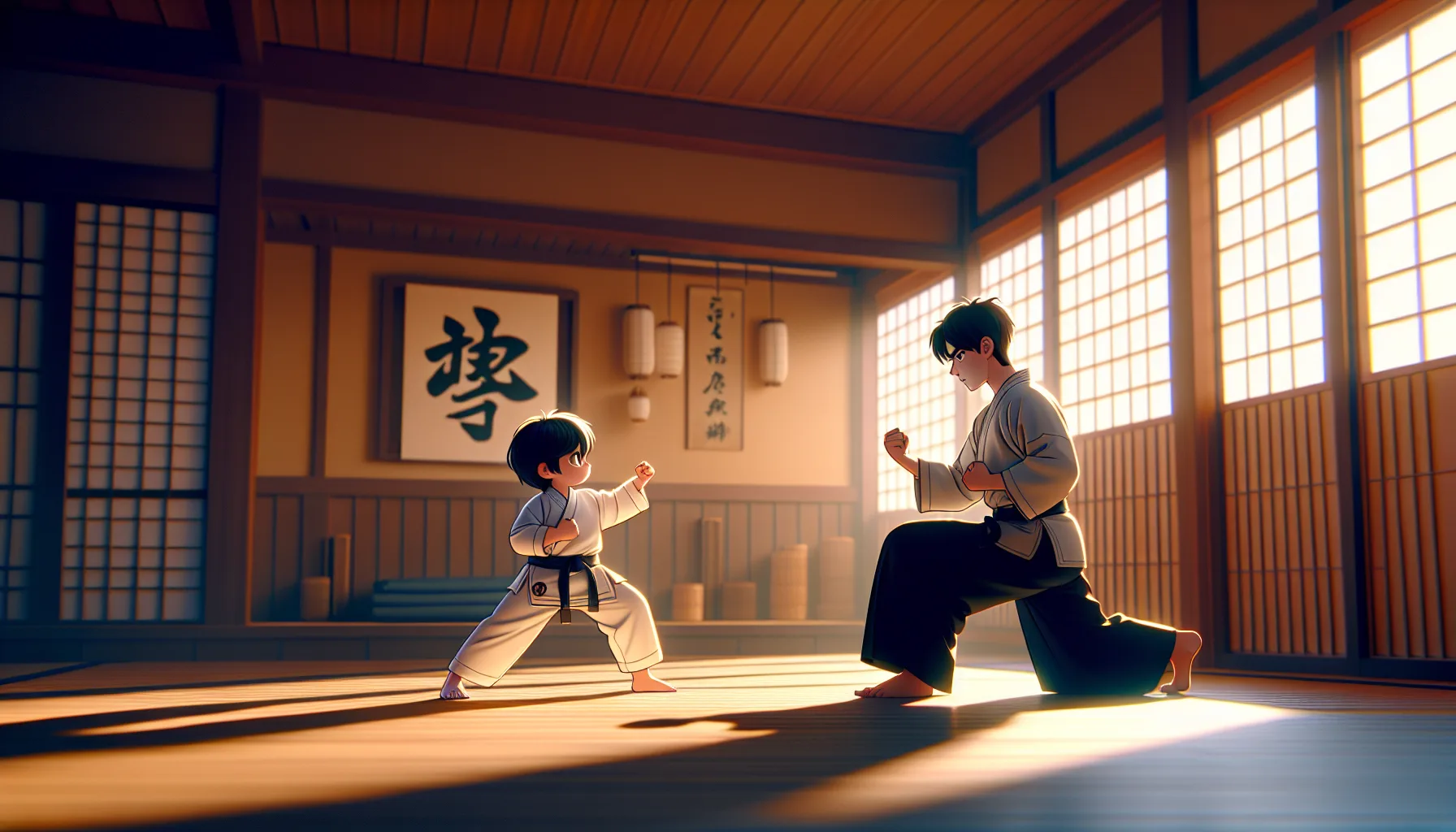
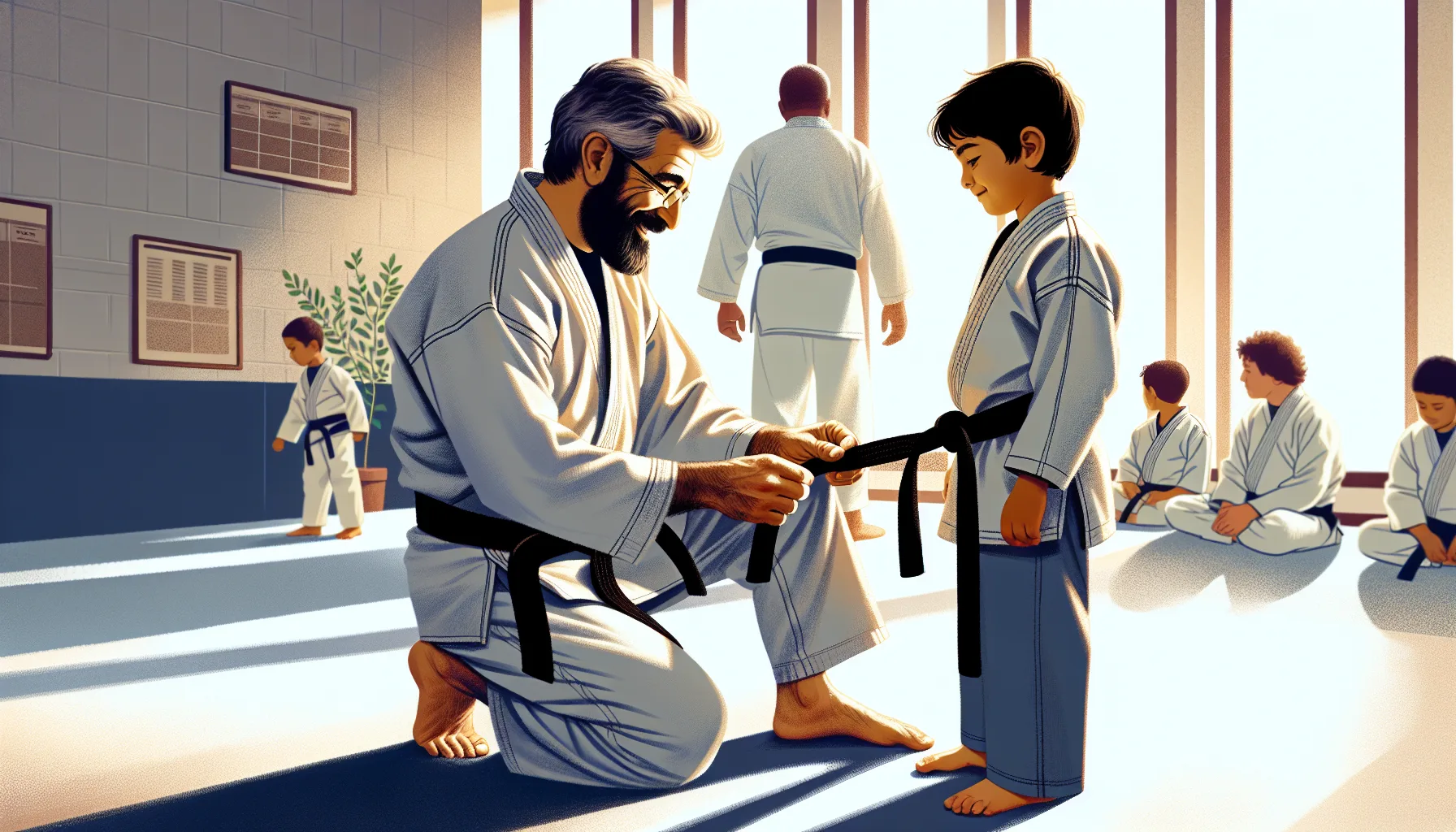
In every training session at Inception Academy, students train with partners of different levels. A brown belt works with a white belt on basic techniques. A senior student drills with someone half their age. The same person who receives detailed correction from Shihan Nick in one moment is expected to offer patient, clear instruction to a newer student in the next.
This is not charity work. It is a core training requirement. Senior students are assessed on their capacity to adjust their intensity for junior partners without condescension. The brown belt who hits the white belt at full power because "they need to toughen up" has missed the point entirely. The brown belt who goes through the motions with obvious boredom has also missed it. The correct approach requires genuine engagement with a less experienced partner, meeting them where they are, providing enough challenge to help them improve, and doing so with the same seriousness the senior student brings to their own sparring.
Junior students, in turn, are expected to train with senior partners without intimidation. Not without nervousness, which is natural, but without the kind of avoidance or submission that comes from treating rank as something to fear rather than something to respect. The junior student who can spar with a brown belt, take correction from them, and keep working is developing confidence that does not depend on being the best person in the room.
This capacity to move between roles within a single session, to lead and to follow, to adjust your approach for every partner you face, is the consistency Kipling described. It is the person whose character holds steady regardless of context.
I see this quality transferring directly into life outside the dojo. The student who can train with a white belt on Monday and spar with a senior black belt on Thursday, bringing appropriate engagement to both, is the student who can talk comfortably to the principal and to the year seven student on the playground. The underlying skill is the same: treating every person as worthy of your genuine engagement, without performing differently for different audiences.
Emotional Resilience Without Emotional Numbness
Kipling wrote about neither foes nor loving friends being able to hurt you. This line is easy to misread as a recommendation for emotional detachment. It is not. Detachment is not resilience. Detachment is a wall. Resilience is the capacity to receive both criticism and praise without being destabilised by either.
The dojo develops this through the consistent experience of honest, direct feedback.
At Inception Academy, correction is constant. It is public. It is specific. When Shihan Nick tells a student their stance is too narrow, or their guard is dropping, or their timing is off, he is not offering an opinion. He is identifying a technical problem that needs to be fixed. The feedback is impersonal in the best sense of the word: it is about the technique, not about the student's worth as a person.
Students who train in this environment for an extended period develop a different relationship to feedback. The instructor's correction is not an attack. The training partner's success against you in sparring is not a threat to your status. The junior student's rapid progress is not a competition to be won. These are simply data points, information about where you are and what needs to change.
This orientation is useful and alarmingly rare. Most environments, including many schools and workplaces, produce people who are either crushed by negative feedback or dismissive of it. The dojo, because correction is so frequent and so normalised, produces people who can hear difficult things about their performance, process them without emotional collapse, and use the information constructively.
The same mechanism applies to praise. A student who is told their kata was excellent but whose guard still drops in sparring needs to hold both of those realities simultaneously. The praise does not mean the work is finished. The criticism does not mean the praise was false. Holding this kind of complexity is what Kipling meant. It is the emotional steadiness that comes from knowing yourself well enough that external input informs you without defining you.
Valuing Others Without Depending on Them
Kipling wrote about all men counting with you, but none too much. This is the balanced relationship to other people that comes from genuine self-knowledge. The martial artist who values their training partners, who respects their instructors, who cares about the progress of their juniors, but whose sense of self does not depend on any of them.
In the dojo, this quality is developed through the experience of being tested alone. Grading is the clearest example. The student steps onto the mat and performs. Their instructor has prepared them. Their training partners have helped them drill. Their parents are watching from the side. But in that moment, the student's preparation is either sufficient or it is not. Nobody else can perform the kata for them. Nobody else can spar in their place. The result depends on what the student has built through their own training, over months and years.
This is not loneliness. It is psychological independence. The student who has faced a grading panel with nothing but their own preparation to rely on knows something about themselves that cannot be acquired any other way. They know they are capable of meeting a challenge on their own terms. That knowledge changes their relationship to everyone around them, not by making others less important, but by making the student's sense of self less contingent on approval.
The practically important consequence is this: a student with real self-knowledge can maintain healthy relationships without becoming enmeshed in them. They can disagree with a friend without fearing the loss of the friendship. They can receive an instructor's criticism without interpreting it as rejection. They can lose a sparring round without losing confidence. The internal foundation is stable enough to absorb these inputs without cracking.
Filling the Unforgiving Minute
Kipling wrote about filling the unforgiving minute with sixty seconds' worth of distance run. Every martial artist who has sparred knows exactly what this means.
A two-minute sparring round is an unforgiving minute. There is no pause button. There is no opportunity to stop and reconsider your strategy from a comfortable distance. Your opponent is moving, the clock is running, and every second you spend unfocused is a second you have wasted and a second your partner can exploit.
Grading assessments are unforgiving minutes. The panel is watching. The techniques must be performed now, not when the student feels ready. The student who has prepared fully uses every second of the assessment productively. The student who has not prepared discovers, in real time, the cost of insufficient effort.
But Kipling's insight goes beyond these obvious examples. Every moment in the dojo where the student chooses full effort over half effort is practice in filling the available time completely. This is not about frantic activity. It is about intentional, focused, complete engagement with the present moment.
The dojo trains present-moment awareness as a byproduct of physical training, and this is one of the most underappreciated aspects of martial arts practice. You cannot drill a combination effectively while thinking about what happened at school. You cannot spar while mentally elsewhere. The physical demands of the training require the student's full attention. There is no other option. A distracted student gets hit, loses their place in the kata, or performs the wrong technique. The feedback is immediate and unambiguous.
This enforced presence, repeated over hundreds of sessions, produces a person who is actually capable of being fully where they are. Not as a mindfulness aspiration, but as a trained default state. The student who has spent years practising complete engagement on the mat brings that capacity to the exam hall, to the job interview, to the difficult conversation. They know, from extensive practice, how to give a moment everything they have.
The Culmination
Kipling's final lines describe the result of all these qualities combined. A person who is composed, resilient, persistent, humble, emotionally steady, psychologically independent, and fully present. This is not a superhuman ideal. It is a description of someone who has been developed through structured challenge, honest feedback, graduated difficulty, and consistent practice over time.
That is what the dojo produces. Not in every student, and not overnight. The process is long and it requires commitment from the student, from their family, and from the instructors who guide them. But the structure of martial arts training, done well and sustained over years, produces the character Kipling described over a century ago.
The techniques are the vehicle. The character is the destination.
The Complete Picture
Over the course of this series, we have examined four sets of qualities: composure, resilience, will, and integrity. These are not four separate attributes that a student develops in isolation. They are interlocking capacities that reinforce each other and, together, form the architecture of a well-developed person.
Composure without resilience produces someone who is calm until things genuinely go wrong. Resilience without will produces someone who recovers from setbacks but never pushes through them in the first place. Will without integrity produces someone who persists doggedly but cannot be trusted. Integrity without composure produces someone whose principles collapse under pressure. All four are required. All four develop together in the dojo because the training demands all of them simultaneously.
A single sparring round requires composure (staying calm under physical pressure), resilience (recovering when a technique lands against you), will (continuing to engage when you are tired and outmatched), and integrity (maintaining respect for your partner and the rules of the bout regardless of the outcome). The dojo does not develop these qualities one at a time. It develops them together, because life does not present them one at a time either.
This is what Inception Academy's values framework is built around. Not a list of aspirational words on a wall, but a structured curriculum that develops observable, transferable character qualities through the medium of physical training. Kipling's poem, written in 1895, remains one of the best descriptions of the end product. The dojo remains one of the most effective methods for getting there.
The poem ends with the words "you'll be a Man, my son." Read in the context of our training, the point is not about gender. It is about completeness. The fully developed person, capable and humble, resilient and composed, persistent and principled. That is what we are building, one training session at a time, in a community hall in Halswell.
This concludes the four-part Kipling series. If you have read all four articles and something in them resonated with the kind of training environment you want for your child, come and see it for yourself. Book a free trial at Inception Academy. The first session costs nothing except the willingness to try.
For more on the values framework that underpins our curriculum, read about the 12 psychological attributes we develop from white belt to black.