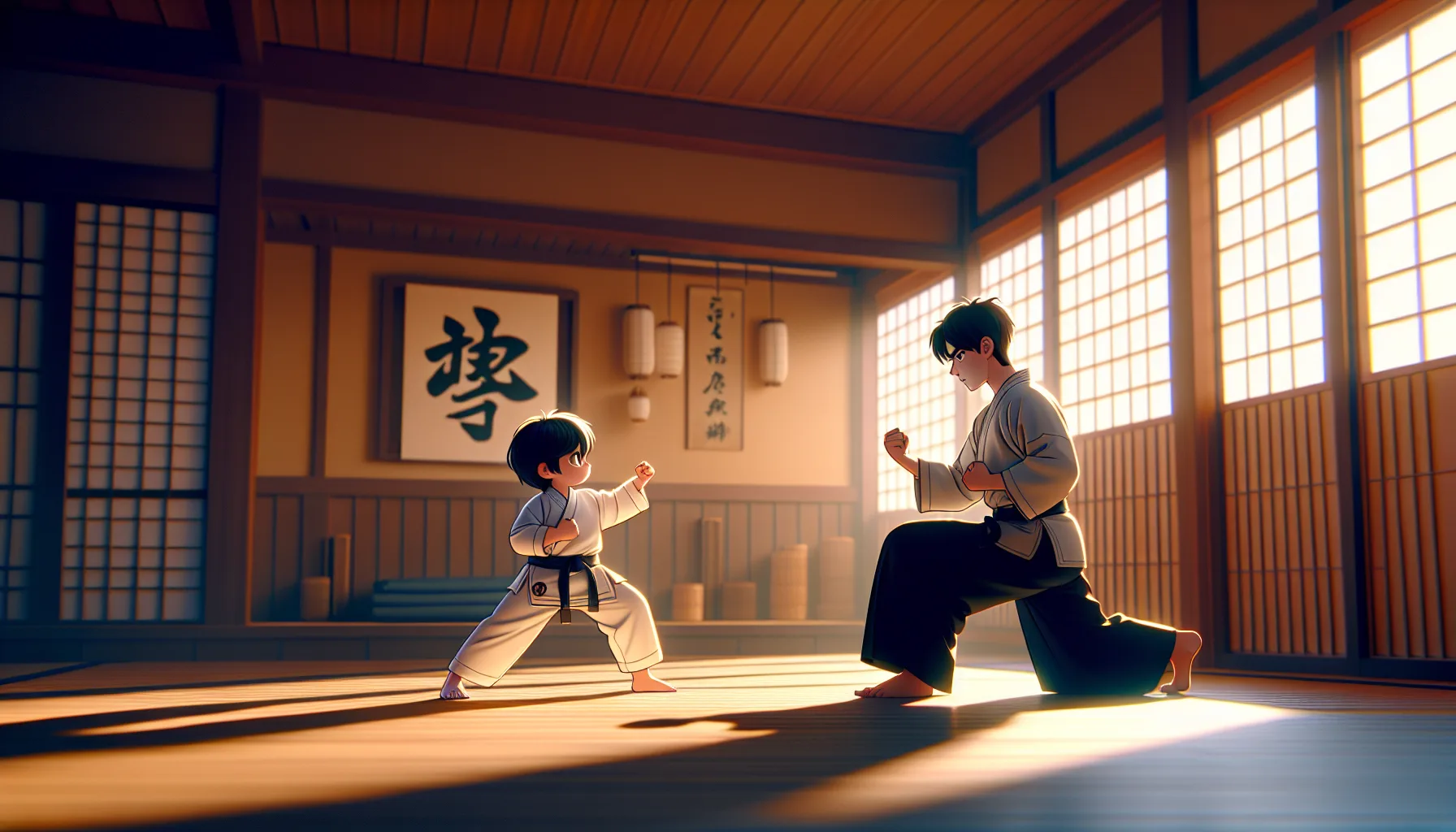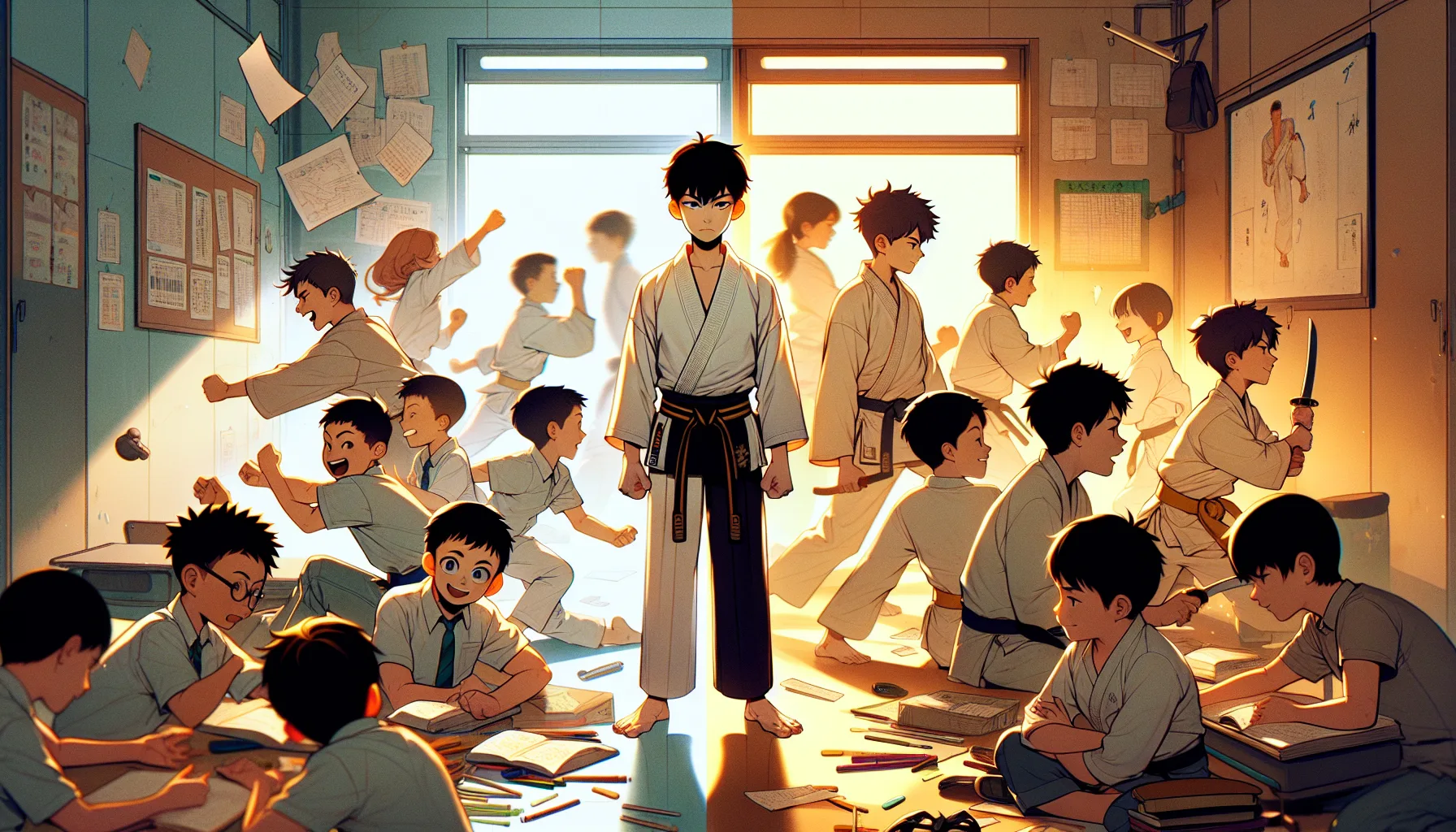
Kipling's first stanza describes composure, self-trust and patience under provocation. These read as character traits but behave like trainable skills. Sparring puts a child under controlled pressure repeatedly, and the ability to keep thinking while someone is trying to hit them transfers to everything else.
Rudyard Kipling's poem "If" is one of the most widely quoted pieces of writing in the English language. It has been printed on posters, read at funerals, framed in offices, and recited at school assemblies for over a century. Most people can recall at least a line or two, even if they have not read it since childhood.
What strikes me about the poem, and what prompted this series, is how directly applicable it is to what happens in a martial arts dojo. Not metaphorically. Not as a loose analogy. The specific qualities Kipling describes are the same qualities that structured martial arts training develops, deliberately and systematically, in students of every age.
This is part one of a four-part series. Each article will examine one stanza of "If" through the lens of dojo training. Not because Kipling was writing about martial arts (he was not), but because the character qualities he identified as essential for a well-lived life are the qualities that emerge from sustained, demanding physical training under a structured system.
The first stanza.
What does keeping your head actually require?
The poem opens with one of its most recognisable lines, about keeping your head when everyone around you is losing theirs. In the dojo, this is not poetry. It is Tuesday evening.
Sparring produces exactly this situation. Two students face each other. The pressure rises. One partner begins to escalate, throwing harder, moving faster, abandoning technique in favour of intensity. The question the other student faces is immediate and physical: will you match the escalation, or will you maintain your composure?
The student who panics abandons structure. Their guard drops. Their footwork collapses. They swing wildly or freeze entirely. Both responses are natural. Neither is useful. The student who maintains composure keeps their guard, continues to move, reads the situation, and responds with controlled technique. They are not calm because nothing is happening. They are calm because they have trained to function under pressure.
This is a learnable skill. Research in cognitive psychology, particularly work on stress inoculation, shows that repeated exposure to controlled stressors builds the capacity to function under pressure. The mechanism is not mysterious: the nervous system learns, through experience, that the stressor is survivable and manageable. Each exposure reduces the magnitude of the stress response and increases the student's capacity to think and act while it is occurring.
At Inception Academy, we build this deliberately. Sparring intensity is progressive. Newer students work at light contact with clear rules and close supervision. Over time, as their technical and emotional capacity develops, the intensity increases. By the time a student reaches senior grades, they have hundreds of hours of experience maintaining composure under genuine physical pressure. That capacity does not switch off when they leave the dojo.
Trusting Yourself While Remaining Open to Doubt
Kipling's next line addresses self-trust in the face of others' doubt, while still making allowance for that doubt. This is a remarkably precise description of something I observe in students preparing for grading.
The doubts before a grading are real and specific. Can I remember the kata sequences? Will my techniques hold up under the panel's scrutiny? What if I freeze during sparring? What if I fail in front of my parents?
The student who has trained consistently discovers something important on grading day: their body knows what their mind is doubting. The kata flows because it has been drilled hundreds of times. The techniques land because the motor patterns are established. The sparring holds together because the student has done this before, many times, in training.
That experience, the discovery that preparation translates into performance, builds real self-trust. Not arrogance, not bluster, but a quiet confidence grounded in evidence. The student knows they can perform under pressure because they have done it. This is very different from being told they are capable. It is experiential knowledge, and it is robust in a way that encouragement alone cannot produce.
But Kipling was careful to include the second half of that line: making allowance for doubt. In the dojo, this manifests as the capacity to receive correction without defensiveness. It is one of the more subtle skills we develop, and one of the most important.
A student who trusts their own capability but cannot accept feedback is unteachable. A student who accepts every piece of feedback but has no confidence in their own judgement is fragile. The balance Kipling described, trusting yourself while remaining genuinely open to correction, is the sweet spot. It is the student who can perform a technique with confidence and then, when the instructor identifies an adjustment, incorporate that feedback without interpreting it as an attack on their competence.
This balance is particularly relevant for children navigating school and social environments. The child who can trust their own judgement while remaining open to legitimate feedback from teachers and peers is better equipped than the child who either collapses at criticism or dismisses it entirely. The dojo practises this balance every training session, because correction is constant, public, and a normal part of the process.
Patience Without Passivity
Kipling wrote about waiting without being tired by waiting. In the dojo, patience is not passive. It is one of the most active and demanding qualities a student develops.
Consider the white belt. They have been training for three months. Their friends who started swimming or football at the same time are already competing in events. The white belt is still drilling basic stances and learning to tie their belt properly. The first grading is months away. There is no shortcut, no accelerated pathway, no participation certificate. The belt system is sequential, and the only way through it is time, effort, and demonstrated competence.
This is patience with a purpose. The student is not simply waiting for time to pass. They are training, improving incrementally, building the foundation that every subsequent skill depends on. But the results are not immediately visible. There is no scoreboard updating after each class. Progress in martial arts is measured in months and years, not sessions.
The intermediate student experiences this differently but no less intensely. They have been drilling the same combination for weeks. The initial excitement of learning something new has faded. What remains is the repetition required to make it reliable. This is where most students in most activities stop improving, because they move on to the next thing before the current thing is genuinely embedded. The dojo does not allow that. The curriculum demands competence, not just exposure.
And then there is the brown belt preparing for black. This is often a student who has been training for several years. The gap between brown and black is deliberately long at Inception Academy because black belt represents something substantial. The patience required during that period, continuing to train at a high level while the goal remains distant, is a real test of character.
What all three of these examples share is that the patience is active. The student is not passively enduring time. They are working, every session, to improve. The patience is in accepting that the improvement will come on the training's schedule, not theirs. This is a profoundly useful orientation for life beyond the dojo, where most worthwhile outcomes require sustained effort over extended periods.
Responding Rather Than Reacting
The first stanza also addresses the capacity to receive negative input without mirroring it back. Kipling described not dealing in lies when lied about, and not giving way to hatred when hated. The dojo equivalent is immediate and physical.
When a training partner catches you with a clean shot, the untrained response is emotional. Anger. Embarrassment. The urge to retaliate harder. This is reaction: an automatic, unmediated output triggered by the input. It is the response the nervous system defaults to when it has not been trained to do otherwise.
The trained response is different. Acknowledge what happened. Identify what allowed the shot to land (was the guard low? was the movement predictable?). Adjust. Continue. This is response: a considered, deliberate output that accounts for the input but is not controlled by it.
The distinction between reaction and response is central to our psychological discipline curriculum. We train it explicitly, not just in sparring but in how students handle frustration during drilling, disappointment after grading, and conflict with training partners. The capacity to receive a negative stimulus and choose a constructive response rather than a reflexive one is, in my professional view, one of the most transferable skills martial arts training develops.
Children who learn this in the dojo apply it in the playground, in the classroom, and eventually in the workplace. It is the same skill whether the provocation is a clean right cross or a cutting remark from a peer. The mechanism is identical: receive the input, regulate the emotional response, choose a deliberate action.
Humility
The first stanza closes with the instruction not to look too good or talk too wise. The dojo enforces humility structurally, in ways that are difficult to replicate in other environments.
Every student, regardless of rank, trains alongside students of different levels. The black belt helps the white belt tie their obi. The senior student drills basic techniques alongside beginners, because basics never stop mattering. The instructor still trains, still learns, still defers to their own Sensei. This is not performative modesty. It is the lived reality of a hierarchical system where everyone is simultaneously a teacher and a student.
Genuine martial artists do not need to advertise their capability. Their behaviour communicates it. The way they carry themselves, the way they treat junior students, the way they respond to correction, the way they handle both success and failure on the mat: these tell you everything you need to know about their character.
This matters for children especially. In a culture that often rewards self-promotion, the dojo provides a counter-model. Competence demonstrated through action carries more weight than competence claimed through words. A student who trains hard, treats others with respect, and lets their technique speak for itself is living the quality Kipling described. And they are learning, through daily practice, that this approach earns genuine respect in a way that self-promotion never does.
The Character That Emerges
The first stanza of "If" describes the character of someone who has been tested and has developed through the testing. Not someone born with these qualities, but someone who has built them through sustained exposure to challenging conditions.
The dojo provides that testing. Composure under pressure. Self-trust balanced with openness to correction. Active patience. Response over reaction. Earned humility. These are not abstract ideals that we discuss in theory. They are practised, every class, under conditions that make them real.
This is what parents observe when their children have been training for a sustained period. The child who used to lose their temper now pauses before responding. The teenager who used to crumble under academic pressure now approaches exams with the same composed focus they bring to grading. The young person who used to boast now lets their actions speak.
Kipling knew what these qualities looked like. The dojo knows how to build them. That is not a coincidence. Character, like technique, develops through structured practice under conditions that actually demand it.
In part two of this series, we will examine the second stanza: dreams, thinking, triumph, and disaster. The dojo has something to say about all of them.
For more on the values framework that underpins our curriculum, visit our values and character development page.
If you want to see what composure under pressure looks like in practice, come and watch a class at Inception Academy. Better still, book a free trial for your child. The first session costs nothing except the willingness to try.
This is part one of a four-part series examining Kipling's "If" through the lens of dojo training. Parts two through four will follow in the coming weeks.