Neither is better, they develop different things. Team sports teach cooperation, shared responsibility and reading a game. Martial arts teaches self-regulation, individual accountability, and progression measured against a standard rather than against opponents. Choose on what your child needs, and many children benefit from both.
I want to be clear upfront: this is not going to be a piece that concludes martial arts is better for every child than team sports. That would not be honest, and it would not be useful to you.
What I can offer is a genuine comparison of what each offers, from the perspective of child development research and twelve years of observing children in the dojo context. The right answer depends on your child, and by the end of this you should have a clearer picture of which direction fits.
What do team sports do well?
Start here because it matters: team sports develop something that individual disciplines, martial arts included, do not develop the same way. The ability to function as part of a group under pressure, to subordinate individual performance to collective goals, to communicate quickly with peers during competition, and to manage the emotional complexity of shared success and shared failure.
These are not trivial skills. For many roles in life, and for many social and professional contexts, the capacity to work fluidly in a team is more valuable than individual excellence. Children who play team sports from a young age are practising this capacity constantly.
Team sports also provide a specific kind of belonging: the identity of being part of a group. The sense of "we" that comes from shared effort toward a shared goal is a powerful social experience, formative for many children. The child who was on the winning team, who trained together with their teammates and achieved something together, has experienced something individual sport does not replicate.
For some children, particularly social children who are motivated by group belonging and who find peer relationships energising, team sports are an ideal developmental environment.
Where Team Sports Create Challenges
The strengths of team sports are also, for some children, their limitations.
In a team sport, progression is not individual. You play your position for the team at the level the team is at. A child who is significantly ahead of their teammates in terms of skill does not advance more quickly through a structured curriculum. A child who is significantly behind may be carried by stronger teammates or may be a source of frustration for them.
The feedback you receive in team sports is also largely outcome-based: you won or you lost, you scored or you did not. The connection between your individual effort and investment and the outcome is mediated by the performance of everyone else on the field. For children who are trying to build a sense of self-efficacy, the signal that "I am capable and my effort produces results" is harder to extract from a team context.
For neurodivergent children specifically, team sports present additional challenges. The implicit social demands of team play, reading teammates' intentions, managing the emotional dynamics of shared performance, navigating the social hierarchy of the group, require a level of social perception that is genuinely harder for many children with ADHD or autism spectrum presentations. The child who is technically capable but who struggles to be in the right position because they missed the social cue from their teammate ends up looking less capable than they are, and experiencing repeated social correction from peers.
What Martial Arts Does Well
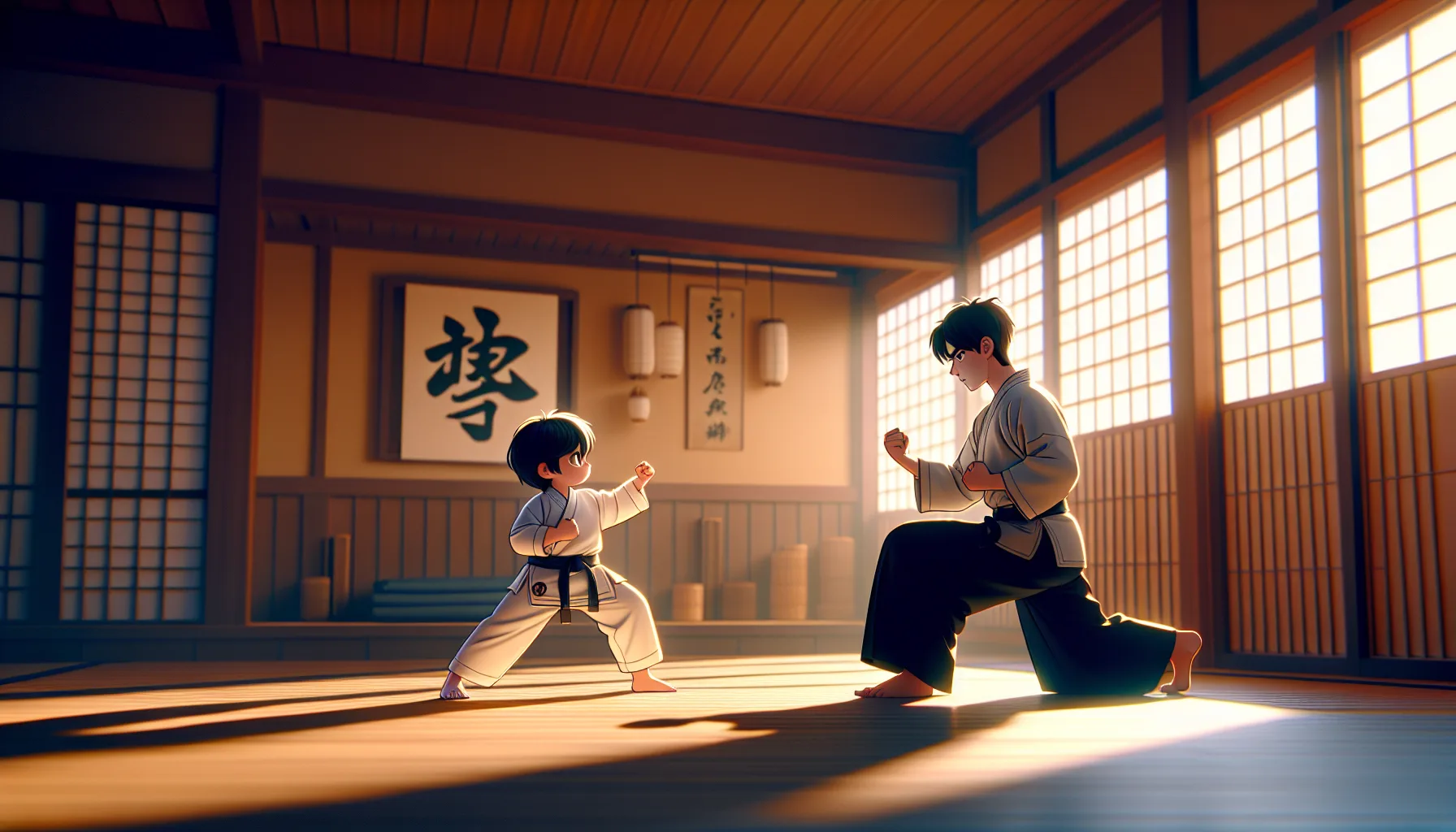
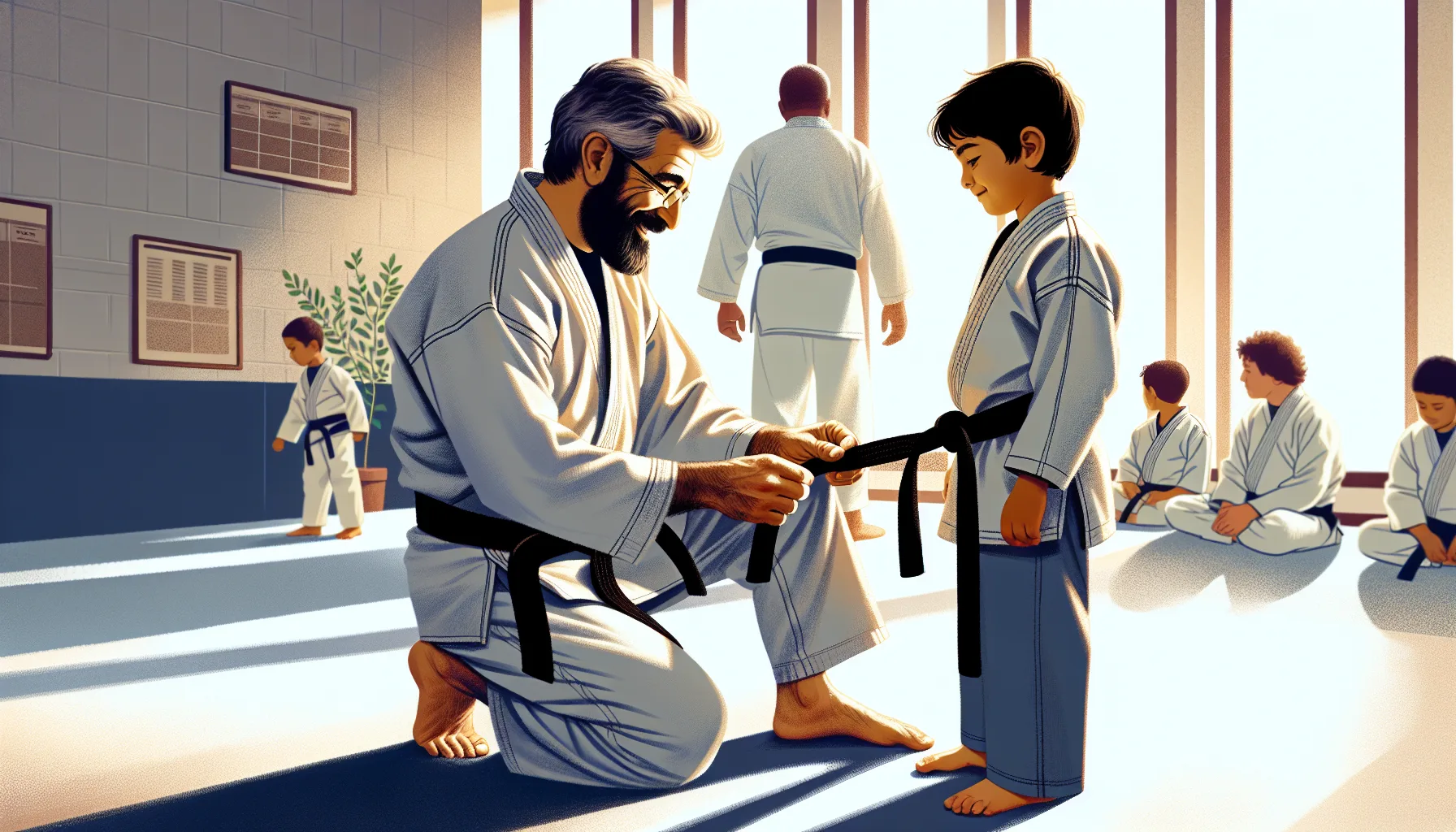
Martial arts training is individual in its progression. You progress at your own rate, assessed against a clear curriculum of specific techniques and psychological attributes. The belt you earn reflects your individual development, not your performance relative to the group average.
This structure has specific psychological advantages. The feedback loop between effort and progress is clear and personal. When a child earns a stripe or a belt, the connection to their own work is unambiguous. There is no teammate whose excellence you can hide behind, and no teammate's weakness that holds you back. The curriculum is yours.
For children who are building self-efficacy, particularly children whose experience of school has included significant gaps between effort and recognised achievement, this individual accountability is genuinely therapeutic. They learn, through direct experience, that what they put in determines what they get out. That lesson transfers.
Martial arts training also builds physical self-confidence in a particular way. In a contact sport where you regularly face direct physical challenge from another person, you are constantly calibrating your own capability under pressure. A child who has spent two years training and sparring knows, from first-hand embodied experience, what they are capable of when tested. That knowledge produces a quality of self-assurance that team sport performance does not directly cultivate in the same way.
The Self-Regulation Dimension
Self-regulation, the capacity to manage your emotional state and direct your behaviour in line with your goals rather than your immediate impulses, is one of the most important developmental outcomes we can work toward in children's physical activity.
Both team sports and martial arts develop it, but through different mechanisms.
In team sports, self-regulation is developed through the demands of team membership: you have to manage your frustration when a teammate makes an error, you have to focus on your role when the game is exciting or frightening, you have to cooperate when you would prefer to act independently.
In martial arts, self-regulation is built more directly: through the demand that you stay composed under physical pressure, through instructor-guided practice of breathing and stillness, through the explicit curriculum of calmness and emotional regulation that runs from white belt upward. The psychological discipline curriculum at Inception Academy treats self-regulation as a core outcome, named explicitly and practised in every session.
For children who already struggle with self-regulation, the more direct approach of martial arts training tends to be more effective than the incidental development offered by team sports. Children with ADHD, for example, often do better in the structured, individual-focused, feedback-rich environment of the dojo than in the complex, socially-mediated environment of team sport.
Physical Development: An Honest Comparison
Both develop fitness, coordination, and physical competence. The kind of competence is different.
Team sports tend to develop sport-specific skills: the coordination of the specific movements involved in that sport, the fitness demands of that game's profile, the spatial awareness relevant to that field or court.
Martial arts tends to develop more general physical competency: full-body coordination across a wide range of movement types, proprioception and body awareness, physical control and the ability to modulate force. These are base physical capacities that support performance in most other physical activities.
For children who are generally uncoordinated or who lack physical confidence, martial arts training often builds the underlying movement competence that makes participation in other sports more accessible. Many parents report that their child's general physical competence in school sports improved notably after a year of martial arts training, even though nothing specifically sport-related was practised.
Which Fits Which Child
Here is the practical summary.
Martial arts tends to suit children who are introverted or who find the social complexity of team environments challenging. It suits children who need clear individual feedback on their own progress rather than the mediated feedback of team performance. It suits children with ADHD, autism spectrum presentations, or other neurodivergent profiles, for the reasons covered in detail in our neurodivergence programme. It suits children who have been bullied, who lack physical confidence, or who have developed a belief that they are not sporty. It suits children who respond well to clear structure and explicit expectation.
Team sports tend to suit children who are socially motivated, who find group belonging energising, and who enjoy the emotional experience of shared competition. They suit children who are already socially competent and who find the implicit demands of team play manageable. They suit children who want the specific experience of being part of a team that achieves something together.
These are not exclusive categories. Many children thrive in both. A child can train in martial arts twice a week and play football on the weekend, and the two activities will support rather than compete with each other. Many of our students at Inception Academy also play team sports, and parents regularly report that the self-regulation and physical confidence developed in the dojo improves their performance in the team sport context.
The Either/Or Trap
One final point. The question of whether martial arts or team sports is "better" often contains a hidden assumption: that a child should be doing one big physical activity and it had better be the right one. This is too narrow.
Children benefit from a range of physical experiences. Movement variety supports physical development. Different social contexts develop different social skills. The child who does only one activity for ten years and the child who samples broadly before settling are having different developmental experiences, and there is no single right answer about which is better.
What I would say is this: if your child is currently in team sports and you are wondering whether they are getting everything they need, the answer is probably that martial arts would add something valuable. And if your child is in martial arts and curious about team sports, there is every reason to explore it.
If you want to see what martial arts offers that team sports do not, the best way is direct experience. Book a free trial at Inception Academy and bring your questions.