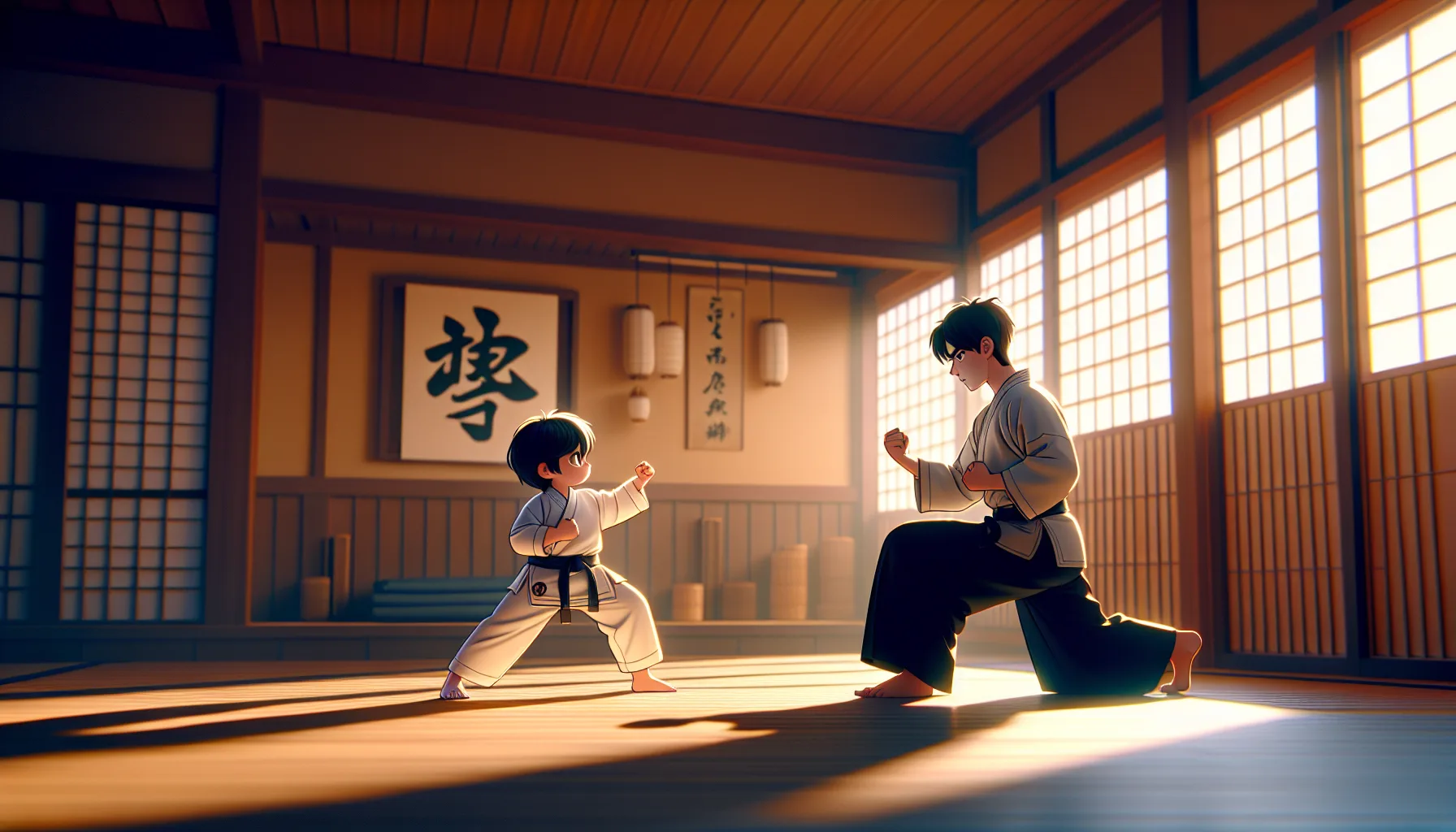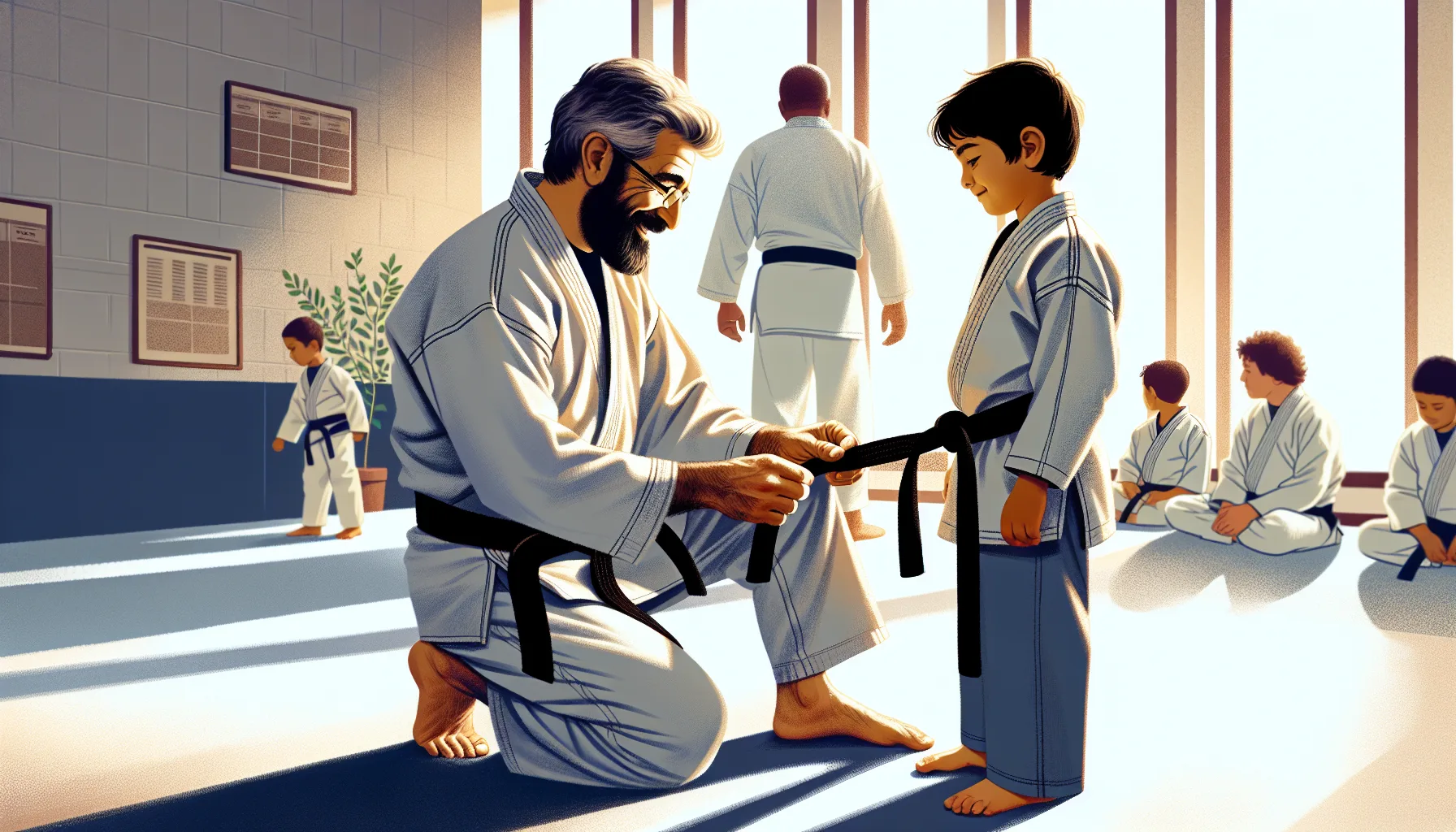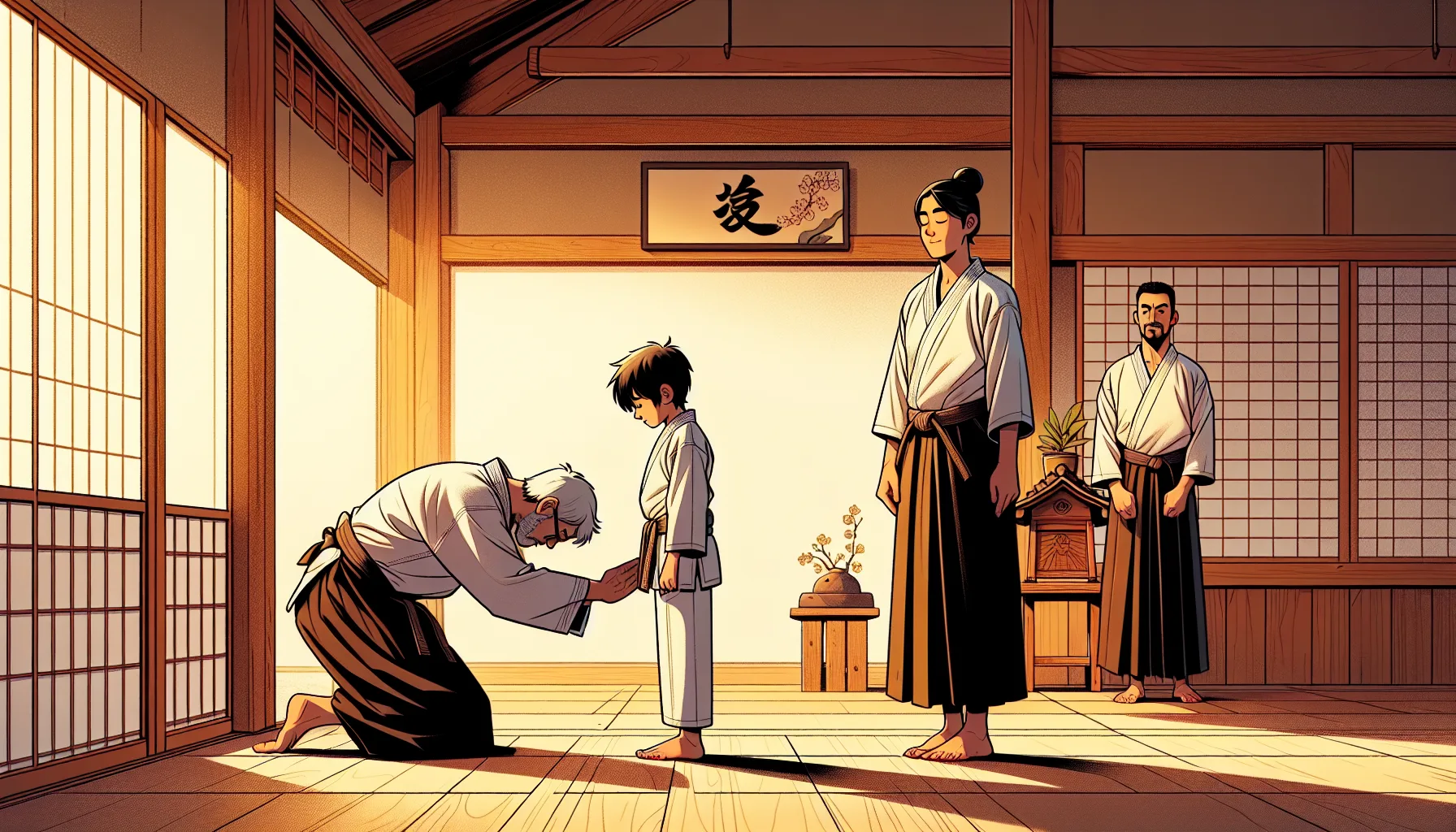
The Sempai, Sensei, Shihan structure is not authoritarian, because the authority is earned and visible. Children learn something they rarely encounter elsewhere: how to be led by someone demonstrably better, and how to hold authority without abusing it once they become the senior student.
Hierarchy is not a popular word in contemporary parenting conversations. It conjures images of rigid authority, silenced children, and the kind of institutional compliance that most thoughtful parents want to move away from.
So let me be direct about what I mean when I say that your child needs hierarchy, and why the dojo's hierarchical structure is one of the most valuable things about it.
Is hierarchy itself the problem?
The experiences that gave hierarchy a bad name involve authority that was not earned, not explained, and not genuinely serving those beneath it. The teacher whose authority derived from position rather than knowledge. The parent whose "because I said so" was not backed by consistent wisdom. The institution that demanded compliance to serve its own interests rather than the interests of its members.
That kind of hierarchy causes real harm. And the reaction against it, the push toward more egalitarian relationships between adults and children, has produced real benefits.
In removing bad hierarchy, we have also removed a great deal of good hierarchy. The developmental cost is real.
Children need to learn how to be led. Not in the passive, compliant sense: they need to learn how to place themselves in a relationship of guided learning with a genuine expert, to follow instruction before they fully understand the rationale, to trust that the person in front of them has knowledge and experience that they do not yet have, and to discover, through the process, that the trust was warranted.
That experience, placing yourself under genuinely competent authority and being well-served by it, is what lets a person benefit from expertise throughout life. Children who have never had a positive experience of being well-led are disadvantaged in every professional, educational, and collaborative context they encounter.
The Dojo Hierarchy in Practice
At Inception Academy, the hierarchy is explicit and visible. Students are addressed by rank. Senior students are Sempai. The instructor is Sensei. The chief instructor, Shihan Nick Putt, holds the title Shihan, which in Zen Do Kai denotes a master instructor with the highest level of teaching responsibility.
These are not just titles. They are functional positions in a social structure that governs how the dojo operates.
When a student bows to Shihan, they are not performing an act of submission. They are performing an act of acknowledgement: this person knows things I need to know. This person has walked the path I am on. This person has earned the right to my serious attention.
When a student calls a senior training partner Sempai and receives their guidance, they are participating in a structure of mutual obligation: the Sempai owes the junior student honest guidance and good example; the junior student owes the Sempai genuine attention and effort.
The hierarchy is relational, not positional. It is defined by obligation, not just authority.
What Earned Authority Looks Like
The critical word in the dojo hierarchy is earned. The authority of Sensei or Shihan is not granted by title. It is built through demonstrated competence, experienced consistently over time.
Shihan Nick Putt has 35 years of Zen Do Kai experience and a 5th Dan grading. When he demonstrates a technique, the depth of embodied knowledge is unmistakable. When he makes a correction, the correction produces visible results. When he sets an expectation, students find, through experience, that meeting the expectation produces the outcomes he described.
Children are remarkably perceptive about genuine versus performed competence. A child who has been in the dojo for a few months has already begun accumulating evidence about whether the instructor's authority is real. By the time they are a senior student, that evidence is extensive. Their deference is not compliance. It is informed trust.
This is the distinction that makes the dojo hierarchy developmentally valuable rather than potentially harmful. It teaches children how to evaluate authority: to look for competence, consistency, genuine care, and to offer their trust in proportion to those qualities.
Sempai: The Middle Layer
One aspect of the dojo hierarchy that is often underappreciated is the middle layer: Sempai, the senior students who are not instructors but who carry genuine responsibility for the juniors around them.
The Sempai relationship gives younger students an experience of hierarchy that is less imposing than the full authority of Sensei. A Sempai is someone who was recently a junior student, who has made many of the same mistakes, who can be visibly seen continuing to learn. Their authority is recent enough that the junior student can see the path that led to it.
For children who struggle with authority, who have had negative experiences with adult authority figures, or who are simply at an age where pushing back against adults is developmentally normal, the Sempai relationship offers a more accessible entry point. Being guided by someone who is only a few years ahead, who clearly remembers being where you are now, is a different experience from being guided by a fully formed adult authority.
And for the Sempai themselves, the role is a practice in the kind of authority worth developing: authority that serves, that explains, that models rather than demands, and that holds standards not by force but by example.
Why Children Push Back, and What to Do With It
Many children, particularly those approaching adolescence, push back against authority. This is developmentally normal. It is part of how individuation works: testing the boundaries of structures, seeing which ones bend and which ones hold, developing a sense of independent identity.
In many environments, this pushing produces one of two responses: the authority collapses (which is alarming to the child, whatever they say in the moment) or the authority becomes punitive (which produces resentment and compliance without understanding).
The dojo offers a third option.
In the dojo, authority holds because it is grounded in genuine expertise and genuine care. When a student pushes back, tests a limit, or tries to skirt an expectation, the response is consistent and clear. The standard does not move. But the response is also not punitive or personal: it is matter-of-fact. This is what we do here. This is why. Try again.
The student discovers that the structure does not flex, but neither is it brittle. They cannot break it, and it does not break them. They can test it, and it will hold, and they can go back to work.
This experience of authority that is genuinely immovable but not unkind is one of the most useful things a child can encounter developmentally. It creates a template for what good authority looks like, a template they will use to evaluate authority for the rest of their lives.
The Values Behind the Structure
The Zen Do Kai curriculum we teach at Inception Academy makes the values behind the hierarchy explicit. Respect appears as a formally taught value at purple belt, but it is practised from the first day. Students learn, both through explicit instruction and through the lived experience of training, that respect in the dojo is not automatic deference: it is a considered response to demonstrated worth.
This framing matters. When respect is presented as automatic deference, children can sense the circularity: you should respect authority because it is authority. That argument does not hold up to a twelve-year-old's scrutiny, and it should not.
When respect is presented as a response to earned authority, it connects to something children can verify through their own experience. I respect Shihan because I have seen what 35 years of dedication to a craft produces. I respect Sempai because I have seen them do the things I am working toward. The respect is grounded in evidence.
That is not just a better argument. It is a more honest relationship, and children learn more in honest relationships than in ones that depend on circular appeals to authority.
The full values framework we teach, from Calmness at white belt through to Altruism at black, shows how respect fits into a larger developmental arc. It is one piece of a coherent structure, not an isolated demand.
What This Means for Your Child
If your child struggles with authority, the dojo is worth trying, not despite its hierarchical structure but because of it.
If your child is compliant to the point of never testing limits, the dojo is also worth trying, because the Sempai and Shihan relationships offer models of what authority worth respecting actually looks like, which will help them distinguish good authority from bad as they grow.
If your child is typical, somewhere between the two, the dojo offers them something rare in modern children's environments: a structured, explicit, and genuine relationship with earned authority that will teach them things they need to know and cannot easily learn anywhere else.
Come and see the dojo hierarchy in action. Book a free trial at Inception Academy and watch how the structure functions in a real class. Most parents find it both more demanding and more warm than they expected.