Most children can start martial arts at four, but readiness matters more than age. Four to seven suits short, movement-based classes; executive function is still forming. Eight to twelve handles real technique and sparring. Thirteen and up trains the full curriculum. If a child cannot follow a two-step instruction, wait.
The question I get asked more often than almost any other: what age should my child start martial arts?
Parents ask it for different reasons. Some have a four-year-old who is energetic and curious and they want to channel it well. Some have a nine-year-old who is starting to struggle socially and they are wondering whether martial arts might help. Some have teenagers who seem to be drifting and they are looking for something that provides structure and direction.
The answer is not simple, and I am going to give you the honest version rather than the one that maximises enrolment.
At what age is a child developmentally ready?
Chronological age is a rough proxy for what it really tracks: developmental readiness. Children develop at different rates, and two children the same age can be at quite different developmental stages in terms of their motor control, attention capacity, executive function, social cognition, and emotional regulation.
That said, there are patterns in child development that are reliable enough to form the basis of how we structure our programmes. And understanding those patterns helps parents make genuinely informed decisions about timing.
Ages 4 to 7: The Juniors Stage
At four, children are in the early stages of developing what psychologists call executive function: the set of cognitive skills that include working memory, inhibitory control, and cognitive flexibility. The prefrontal cortex, which manages these functions, is at a very early stage of development. A four-year-old literally cannot yet reliably stop themselves from doing something they want to do, hold a complex instruction in mind, or flexibly shift between mental sets.
This means that martial arts training at this age has to be structured very differently from training for older children. Long explanations do not work. Complex technique sequences do not work. Extended sitting or sustained focused practice does not work.
What does work at this age is movement-based, playful, and heavily routine-based. Short activities with clear starts and ends. Lots of physical engagement. Simple, direct instructions followed immediately by action. Consistent structure that gives the young child's developing regulatory system the scaffolding it needs.
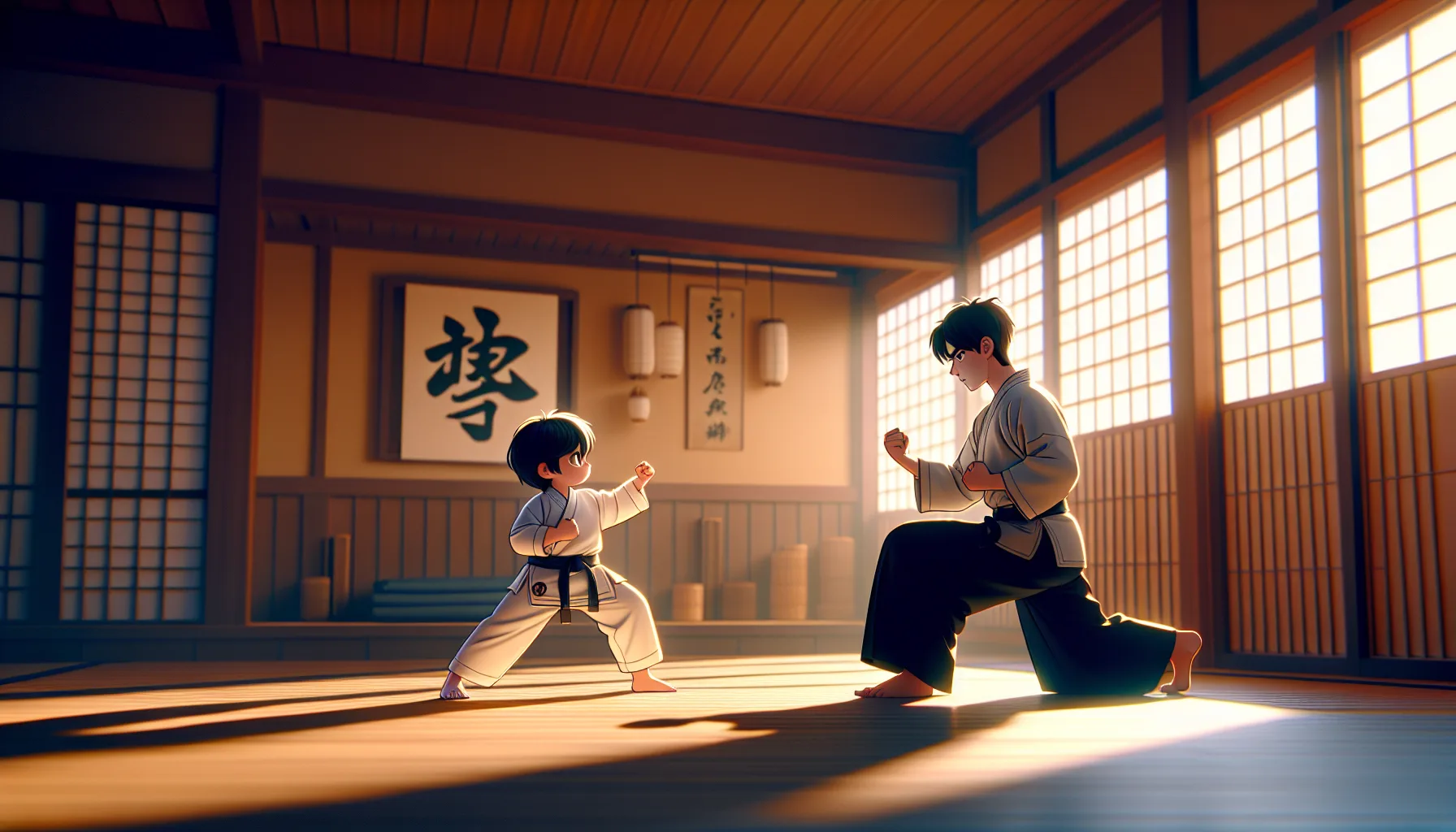
At Inception Academy, our Junior Programme for children aged four to seven is designed specifically around these developmental realities. We are not trying to turn four-year-olds into tiny martial artists. We are using the martial arts context to build foundational physical and psychological capacities: body awareness, coordination, the experience of following structured instruction, the early development of attention and focus.
What four to seven-year-olds get from training: Physical coordination and confidence in their body. Early habit formation around structured physical practice. A positive relationship with effort and challenge. Social exposure in a structured, safe environment. The foundational work of calmness and awareness that the values curriculum begins at white belt.
What to watch for: A child who is genuinely not ready for a structured group environment, who becomes very distressed when asked to follow instructions or who cannot engage with peers without significant support, may do better starting in six to twelve months. Readiness varies. Watching a class before you enrol is always worthwhile.
Ages 8 to 12: The Intermediates Stage
Something shifts around seven to eight that makes a significant difference to what is possible in training. Working memory capacity increases substantially. Inhibitory control becomes more reliable. Children at this age can hold multi-step instructions in mind, understand the principles underlying techniques rather than just copying movements, and engage with genuine self-assessment.
They are also entering a period of increasing social awareness and complexity. Peer relationships become more important and more complicated. Children at this age are actively constructing their understanding of where they fit in the social world, what they are good at, what they are not, and what others think of them.
Martial arts training at this age is particularly valuable because it provides a clear, earned, unambiguous measure of competence: the belt system. In an age when many children are navigating the uncertainty of social comparison and early academic pressure, the belt provides a reliable point of reference. You know what you have done to earn it. The skills it represents are real and visible.
What eight to twelve-year-olds get from training: The full benefit of the technical curriculum, delivered at a pace and with a complexity appropriate to their cognitive development. Genuine development of the psychological attributes in the curriculum framework: perseverance, self-efficacy, self-regulation, respect, integrity. Physical confidence and competence. A social identity that is tied to genuine achievement.
What to watch for at this age: Children who have not started training before eight sometimes have a slightly longer initial adjustment period, because the social dynamics of joining an established group are more apparent to them than to younger children. This passes quickly in a good club, but it is worth knowing about. It is also worth noting that eight to twelve is the stage when children can genuinely begin to articulate what they are getting from training, so their own feedback about whether the experience is working for them becomes more informative.
Ages 13 and Up: The Seniors Stage
Adolescence is a period of profound neurological change, and not only the well-publicised impulsivity and risk-taking. The teenage brain is also undergoing a significant consolidation process: the neural connections that are used regularly are strengthened, and those that are not used are pruned. This means that the habits and practices established in adolescence have unusual staying power. What teenagers repeatedly do, they become good at, in a neurological sense that goes beyond simply logging hours.
Starting martial arts in the teenage years is entirely valid. The physical capability to progress quickly is there. The cognitive capacity to understand the system and engage with it intellectually is fully developed. Many teenagers find the dojo an important counterpoint to the social complexity of adolescence: a place where the rules are clear, the hierarchy is based on genuine skill, and the feedback is unambiguous.
Teenagers who come to training with attitude, and some do, usually find that the dojo's response to attitude is not punishment but simple consistency. The mat does not care whether you think you are above the drill. You still have to do it. That corrective experience, delivered without drama, is one of the more useful things the dojo offers adolescents.
What teenagers get from training: Technical depth that builds quickly given their physical development. A genuine community outside the school peer group. A practice that builds self-regulation during a developmental period when the regulatory systems are under significant strain. A physical outlet for the arousal that adolescence produces. And, for teenagers who find the values explicit enough, a set of frameworks for navigating the ethical and social complexity of their stage of life.
What to watch for with teenagers: Self-consciousness is heightened at this age, and teenagers who feel conspicuous as the new person in an established group sometimes need more explicit encouragement to persist through the first few sessions. The adjustment period is real but typically short. A club where the existing members actively welcome new students makes a big difference.
The "Wait and See" Trap
One more thing worth saying. Many parents default to waiting until the "right time" to start, and the right time keeps being deferred. The child turns five, they will start when they are six. They start primary school, they will start when they settle in. They are settled in, there is too much going on with the school sports season.
There is no optimal time that removes all competing demands. The best time to start is when you decide it is worth starting. If your child is four and genuinely interested, start now with age-appropriate expectations. If they are twelve and you have been meaning to for years, start now. The developmental benefits are available at every age.
What is genuinely not worth doing is starting before a child has any interest, on the theory that they will come to love it eventually. Some children do, but starting under duress produces a negative association that takes real time to overcome. Interest and willingness are genuine prerequisites for the training to take root.
The Bottom Line
The honest answer to "what age should my child start?" is: when they have some genuine curiosity about it and you can commit to consistent attendance. Within that, earlier is generally better for building foundational habits, but it is never too late to start and the benefits are real at every stage.
If you are unsure whether your child is ready, come and watch a class. Observe children at the age of your child. See whether what they are doing looks like something your child could engage with. That direct observation will tell you more than any general guideline.
We run separate classes for Juniors aged four to seven, Intermediates aged eight to twelve, and Seniors aged thirteen and up, each designed around the specific developmental stage. Book a free trial for your child and come and see what is possible at their age.
For more on the psychological framework that underpins our teaching across all age groups, read about our neurodivergence-inclusive curriculum.