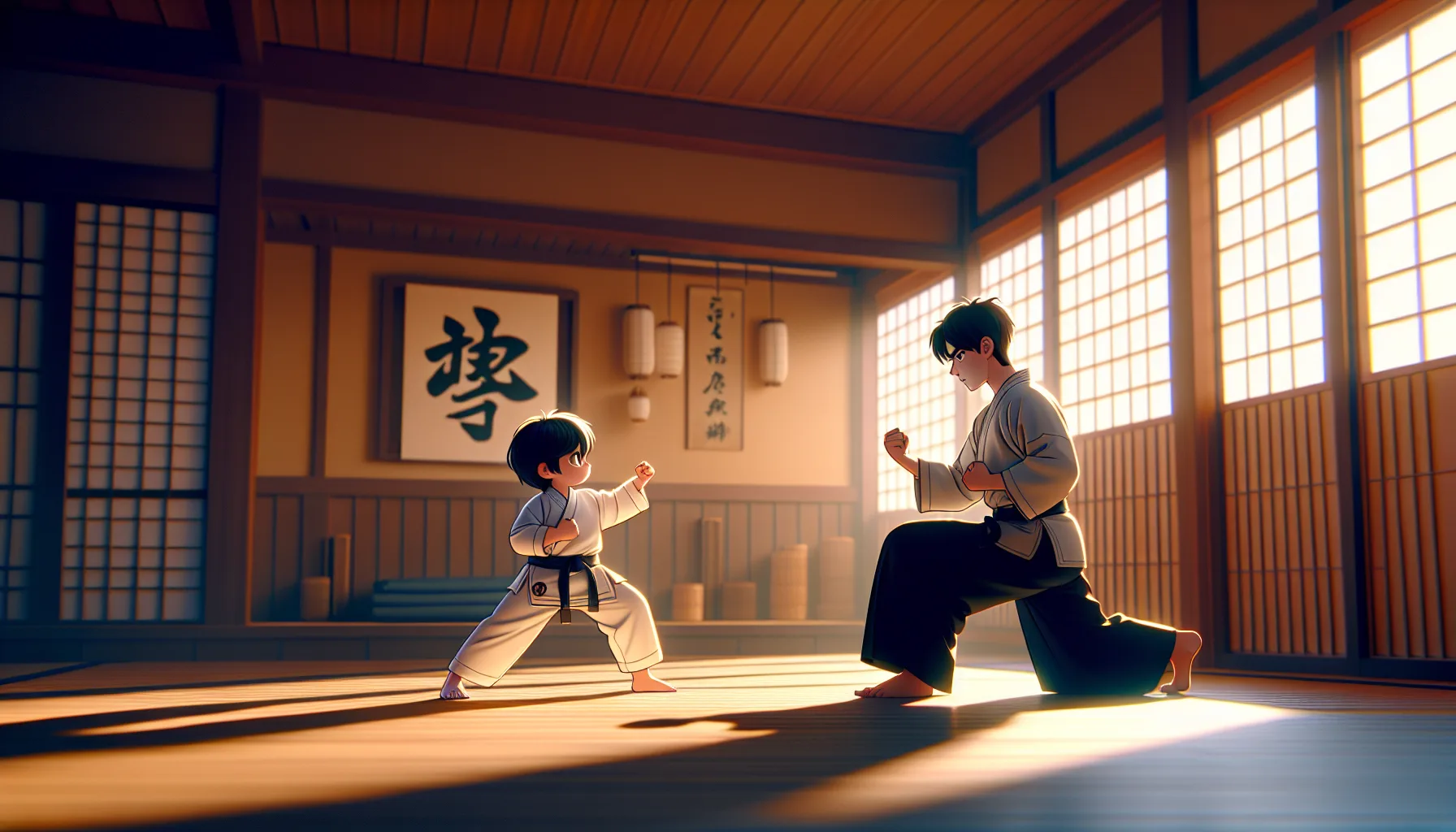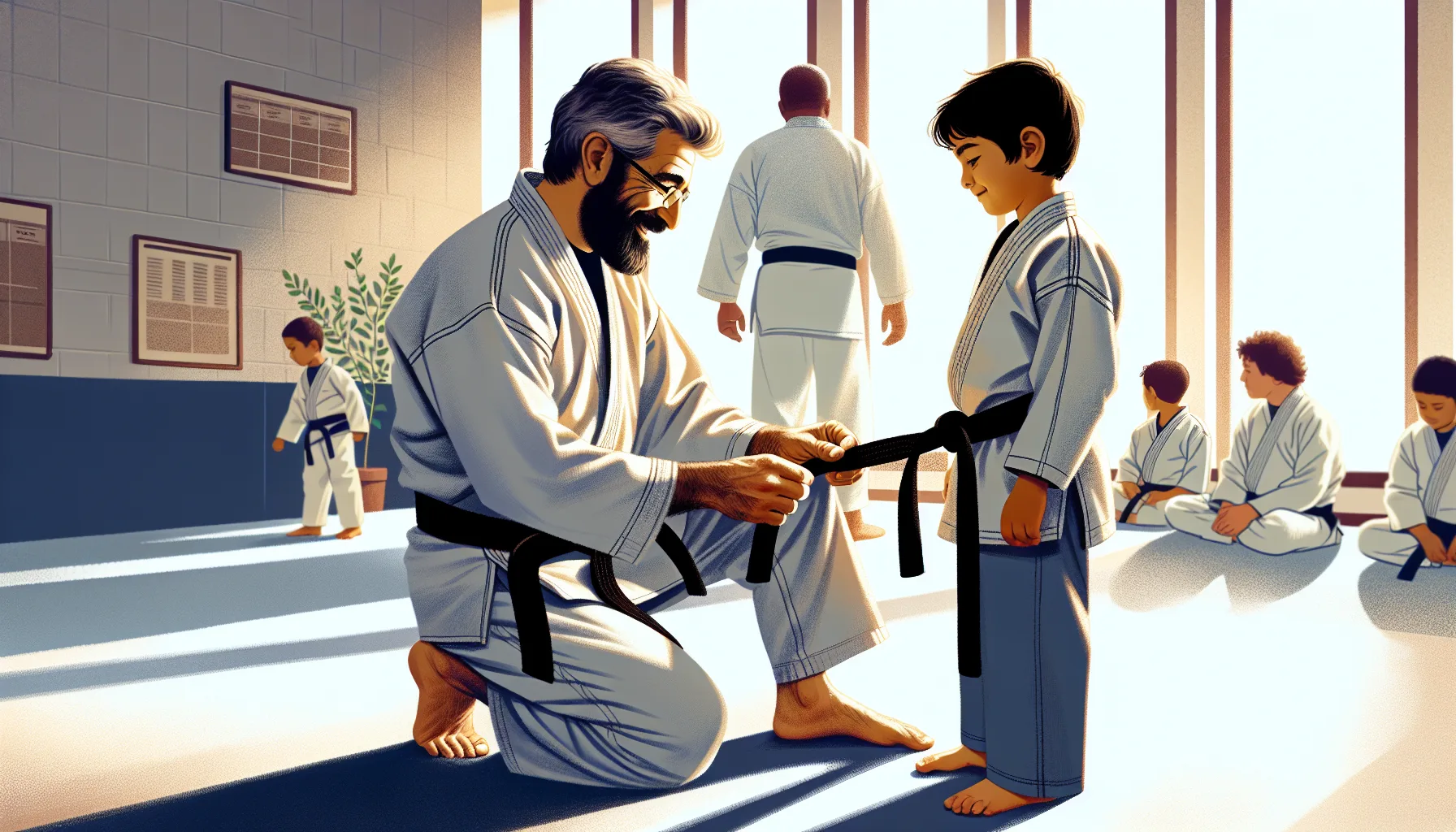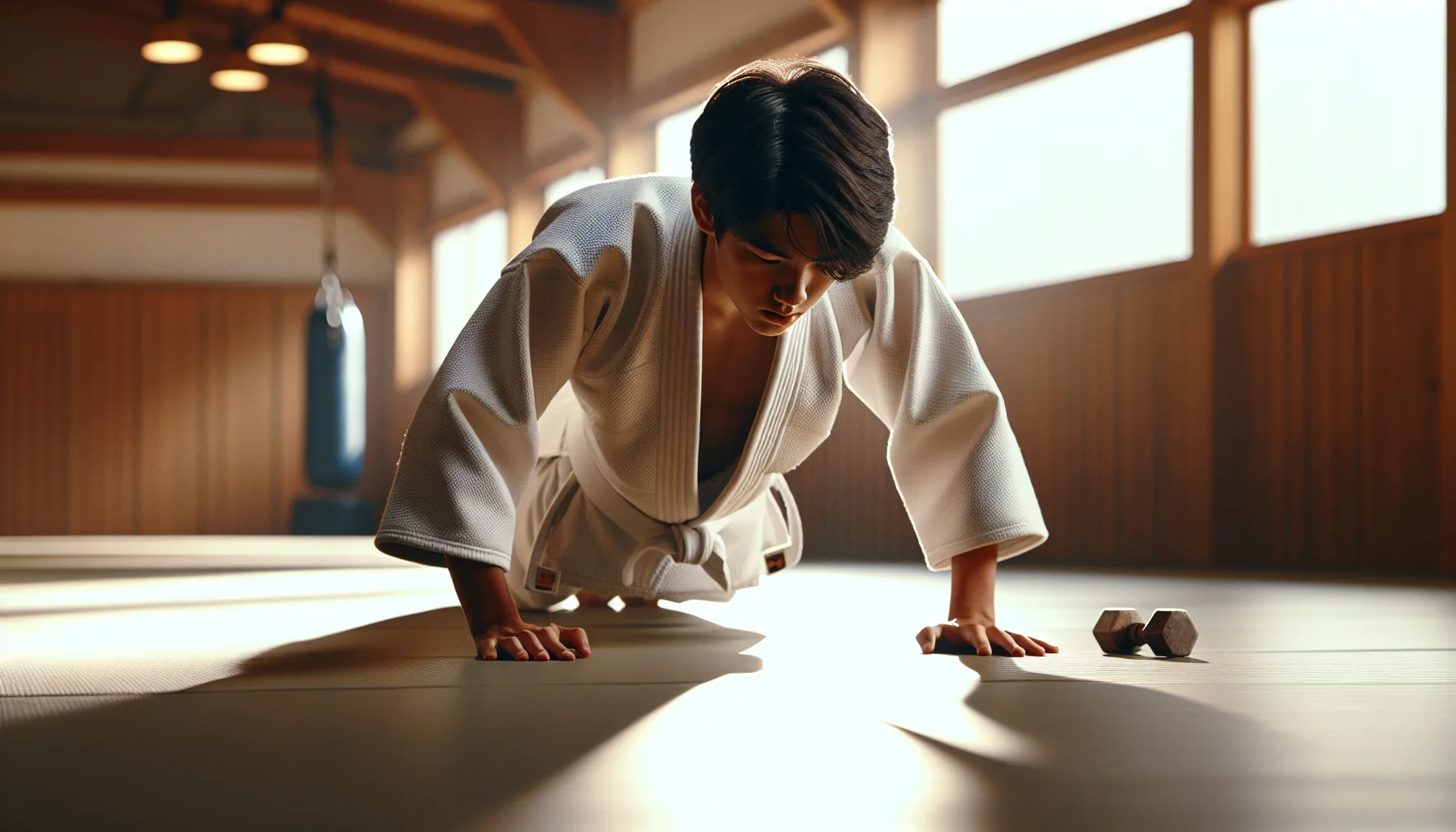
Push-ups in the dojo are conditioning, not punishment. Children learn that discomfort is survivable and that effort produces visible change, which is where genuine confidence comes from. The physical work is the mechanism; the outcome is a child who does not stop the moment something gets hard.
Every few months, a parent asks me about the push-ups.
Usually it comes up because their child complained. "We had to do twenty push-ups because someone was talking out of turn." Or "Sensei made us do burpees when we got the combination wrong." The parent is not sure whether to be concerned.
Here is what I tell them: the physical conditioning is not punishment. It is not arbitrary. And in ten years, your child will thank us for it.
Here is why.
Is conditioning the same as punishment?
The confusion is understandable. When a group of children does push-ups because one child was talking, the surface appearance is that of a punitive response: bad behaviour produces physical discomfort.
But that is not what is actually happening, and most children older than about eight understand this without needing to have it explained.
What is happening is that the group is being reminded, through a shared physical experience, that the dojo is a place where certain standards apply. The push-ups are not suffering imposed by an authority on a wrongdoer. They are a reset. A physical marker that says: we were scattered, now we are focused. The body has been called to attention and the mind follows.
This is, incidentally, consistent with what neuroscience tells us about the relationship between physical state and mental state. Voluntary physical exertion, particularly exercise that requires full-body engagement, reliably shifts neural arousal in ways that improve attention, working memory, and emotional regulation. A group that has just done twenty push-ups together is, on average, better equipped to learn in the next ten minutes than the same group was before.
The push-ups work. Not as punishment. As preparation.
Physical Challenge as Character Building
Beyond the immediate reset function, physical conditioning in the dojo serves a longer-term developmental purpose that is more important than the fitness benefits.
Physical challenge, specifically challenge that is hard enough to require genuine effort and uncertain enough that the outcome is not guaranteed, produces something specific in children. It produces the felt experience of discovering capability they did not know they had.
The first time a child manages something they were not sure they could manage, a set of push-ups they thought was beyond them, a sprint they thought would break them, a combination they thought was too fast, they learn something directly and irreversibly about their own capacity.
Not from being told they can do it. Not from affirmation or encouragement. From actually doing it.
That kind of learning is categorically different from the kind you can produce through praise. Praise works on beliefs that have no direct experiential anchor: you can tell a child they are capable, and they may believe you, but the belief is floating, ungrounded. One bad experience can knock it over.
But the child who has done twenty push-ups when they thought they could only do ten, and who knows that they did it with no help and no cheating, has a piece of knowledge about themselves that is harder to shift. They have evidence.
Over months and years of dojo training, that evidence accumulates. The child who started barely managing five push-ups and is now managing thirty without complaint has watched themselves transform, physically, in a context where the transformation is entirely their own production. No one gave them those push-ups. They earned them.
The Satisfaction of Earned Capability
There is a concept in psychology sometimes called competence, the intrinsic satisfaction derived from developing and demonstrating skill. It is one of the three basic psychological needs identified in Self-Determination Theory, alongside autonomy and relatedness.
Competence satisfaction is not the same as the satisfaction of receiving praise or avoiding failure. It is the satisfaction of genuine mastery, of being able to do something you could not do before and knowing precisely why you can do it now: because you practised.
Children who grow up with abundant external validation but limited opportunity for genuine competence development are, paradoxically, often less satisfied and less resilient than children who face real challenge and develop real capability. The validation, however warmly given, does not fill the same space as competence.
The physical conditioning in the dojo is a direct path to competence satisfaction. It is structured, progressive, and calibrated to the student's current level in a way that consistently places achievable challenge in front of them. Today's push-ups are harder than last month's, but last month's were harder than the month before. The student is always on the growing edge, always encountering difficulty that is just at the boundary of their current capacity.
That is the precise condition under which competence develops most efficiently.
Mental Toughness: What It Actually Is
Mental toughness is one of those terms that gets thrown around in sports and parenting contexts without much precision. Here is what I mean by it in the context of dojo training.
Mental toughness is not aggression or stoicism or the suppression of feeling. It is the capacity to maintain focused, effective action under conditions that would otherwise compromise it: physical fatigue, frustration, uncertainty, discomfort.
It is not a personality trait. It is a trained capacity. And the dojo is one of the most effective environments I am aware of for training it, because the conditions under which it needs to be deployed, physical fatigue, physical discomfort, the pressure of performing in front of others, are regularly present in training.
Every time a child continues a drill past the point where stopping would be easy, they are practising mental toughness. Every time they push through the last few push-ups on a set they thought was finished, they are practising mental toughness. Every time they execute a technique under the observation of an instructor, knowing it will be assessed and corrected, they are practising mental toughness.
The practice accumulates. Children who train in this environment for two or three years develop a different relationship to difficulty than children who have not. Not a fearless relationship: they still feel the discomfort. But a more confident relationship: they have evidence that discomfort is manageable and that continuing through it produces something worth having.
What Physical Conditioning Is Not
A note on boundaries, because the potential for misuse is real.
Physical conditioning in the dojo is not punitive in the sense of being designed to harm, humiliate, or coerce. Push-ups are done with the full group. No child is singled out for physical challenge as a form of personal punishment. The challenge is calibrated so that it is achievable: the goal is always a child succeeding at something hard, not failing at something impossible.
The conditioning is also not about producing a particular body type, losing weight, or meeting an external aesthetic standard. Children at Inception Academy train in a context where their physical development is in service of their martial arts capability, which is in service of their overall development. The push-ups exist because physical strength and endurance support technical quality, and because the process of building them builds character. That is the full story.
At Inception Academy, the psychological discipline curriculum makes this framing explicit. Every element of the training, including the physical conditioning, is understood as serving the development of the person.
The Thank-You Moment
The "thank us later" in the title of this article is not sentimental. It is observational.
Consistently, young adults who trained seriously as children and had the physical conditioning as part of their experience report something specific: that the knowledge that they can push through discomfort and come out the other side has been one of the most useful things they carry.
It shows up in sports, in academic challenge, in demanding work situations, in any context where the temptation to stop when things get hard is present. The person who has done the push-ups has a reference point. They have been past the point where they wanted to stop and come out on the other side, and they know, in their body, that this is possible.
That knowledge, direct and experiential, is what the conditioning is building. Not fitness, though fitness is a welcome side effect. A relationship to difficulty that treats it as navigable rather than catastrophic.
That is worth a few push-ups.
If you want to see the training in action, including the conditioning, and understand how it is structured and why, come in for a free trial at Inception Academy. Watch a class. Then ask the children who have been training for a year or two what they think of it now.
For more on the values we develop through training, including our approach to psychological discipline, see our curriculum pages.