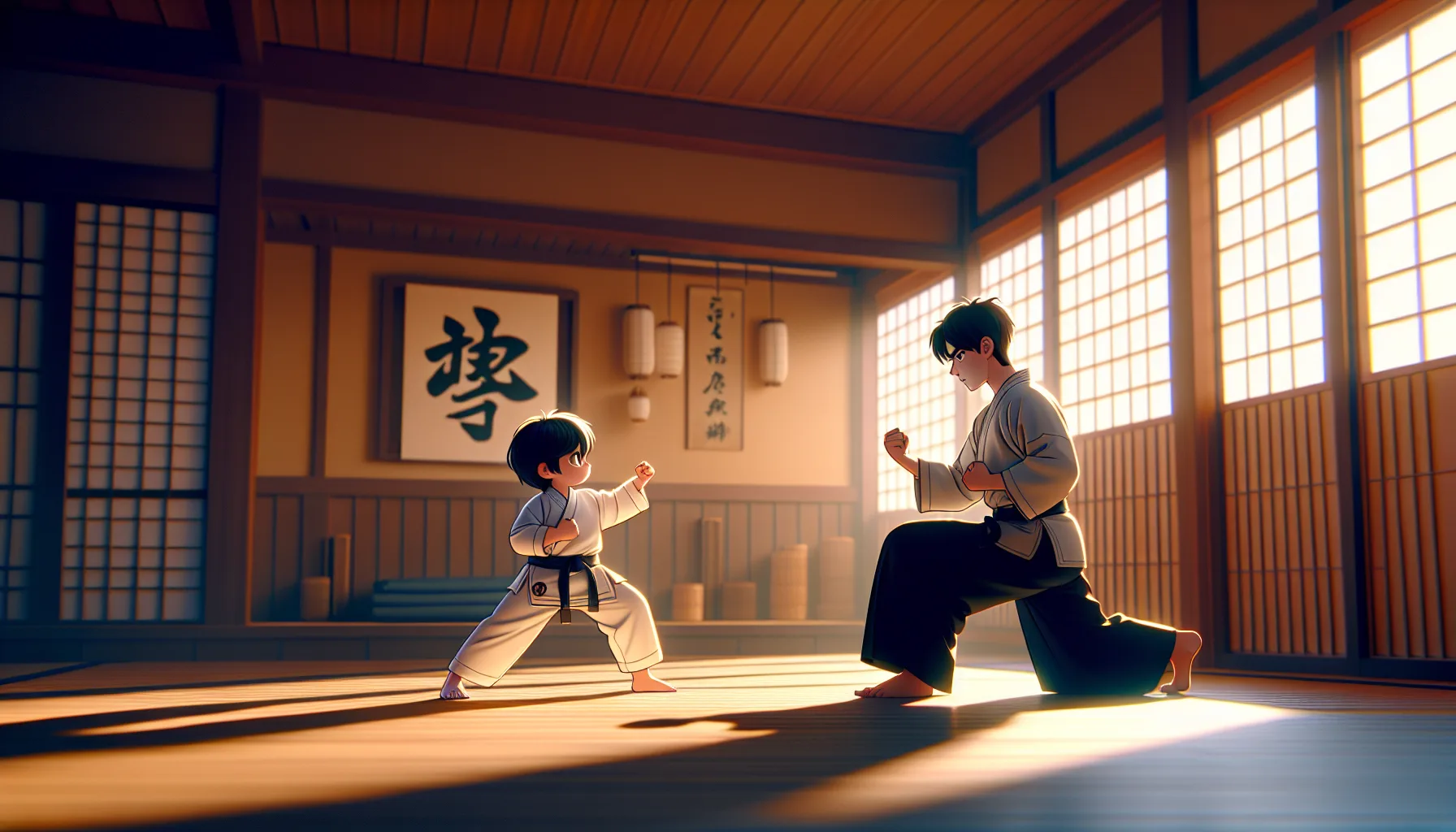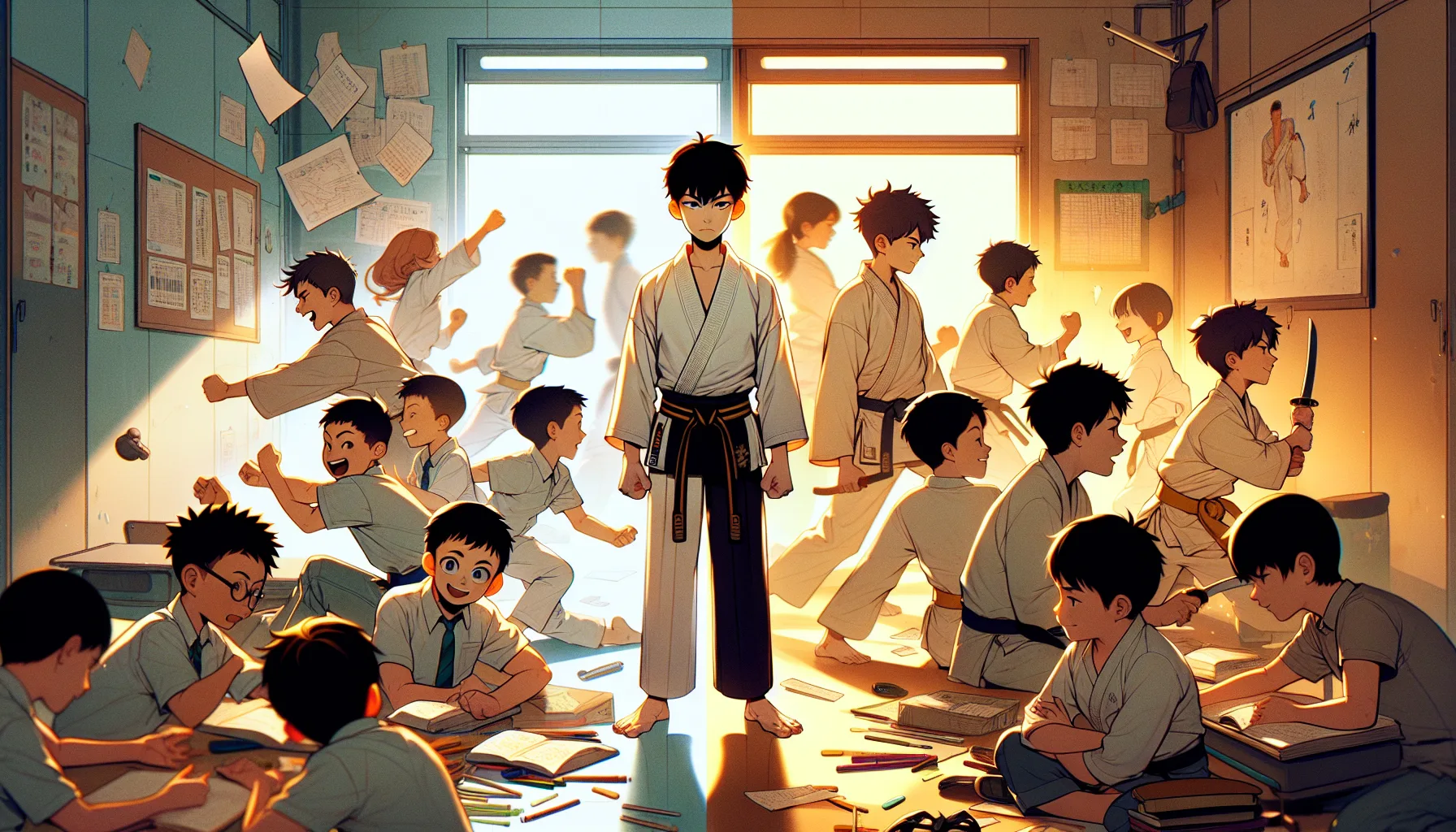
The second stanza sits on the tension between wanting something badly and not being owned by it. Martial artists live this at every grading, aiming at the next belt while accepting it may not come yet. Triumph and disaster both pass, and training continues either way.
This is the second article in a series examining Kipling's poem "If" through the lens of martial arts training. Part 1 explored composure under pressure, the qualities described in the first stanza. Here, we turn to the second stanza, which deals with something different but equally important: the relationship between ambition and resilience, and the hard work of rebuilding when things fall apart.
How do you dream without being mastered by it?
"If you can dream, and not make dreams your master." That tension between aspiration and groundedness is one of the most important things a dojo teaches, though not always in the way students expect.
Every student who walks into Inception Academy has goals. The next belt. A clean execution of a difficult kata. Winning a sparring exchange against a partner who usually gets the better of them. A child might picture themselves performing a jumping kick perfectly in front of the whole class. An adult might imagine finally getting that combination to flow naturally under pressure. Goals like these matter. They provide direction and motivation, and they give training structure.
But the student who becomes fixated on the goal at the expense of the process stalls.
This is not a theoretical concern. It is one of the most common patterns we see. Students train hard in the lead-up to grading. They put in the hours, they sharpen their technique, they come to every session with purpose. Then they pass, and within a few weeks their momentum drops. Training attendance drops. Intensity drops. That initial hunger fades.
What happened? Their dream was the belt, not the capability the belt represents. The belt was an end point rather than a marker along a longer road. When they got there, there was nothing pulling them forward because the thing they were working towards was an object, not a trajectory.
The students who sustain progress over years are the ones who learn, often through this exact experience, that the process is the point. The grading matters because it forces you to consolidate your skills and test them under pressure. The belt matters because it represents a level of competence that has been verified. But neither of those things is the reason you train. You train because training is how you become the person you are capable of becoming. The dream serves the process, not the other way around.
Kipling's next line extends this idea: "If you can think, and not make thoughts your aim." In a martial arts context, this speaks to the student who overthinks. The one who has read every book on technique, who can describe the biomechanics of a front kick in impressive detail, but who freezes when it is time to actually throw one against a moving partner. Thinking is a tool. When it becomes the destination rather than the vehicle, it stops you from doing the thing you are thinking about.
The dojo corrects this naturally. You can analyse a technique for as long as you like, but at some point the instructor says "go," and you have to perform. That cycle of reflection and action, repeated thousands of times, teaches students to use their thinking rather than hide inside it.
Triumph and Disaster as Impostors
"If you can meet with Triumph and Disaster and treat those two impostors just the same." This is one of the most quoted lines in English literature, famously inscribed above the players' entrance at Wimbledon. It is also one of the hardest lessons to actually learn. The dojo is one of the few places where children get genuine, repeated practice at it.
Consider what happens in a typical training week at Inception Academy. A student performs a combination well in drilling and receives praise from Shihan Nick. That same student, twenty minutes later, gets caught cleanly in sparring and spends the next exchange a step behind. The next class, they nail a technique they have been struggling with for weeks. The class after that, they watch a junior student execute it better than they did.
Triumph and disaster, competence and struggle, sometimes separated by minutes rather than months. This compression is one of the dojo's most powerful teaching tools. When you succeed and fail with this kind of frequency, in front of the same people, in the same environment, you start to develop a different relationship with both outcomes. Neither defines you. Both inform you.
The student who passes a grading and walks out believing they have arrived has made triumph their identity. The student who fails a grading and walks out believing they are not good enough has made disaster theirs. Both responses are natural, and both are traps.
What the dojo teaches, through sheer repetition, is a third option: treating outcomes as data. You passed. What specifically went well? What can you build on? You did not pass. What specifically fell short? What do you need to work on? The emotional charge around both results fades over time, not because students stop caring, but because they develop a framework for processing results that does not require either celebration or despair. They learn to extract the useful information and move on to the next session.
This is not emotional suppression. Students are allowed to feel disappointed, and they are allowed to feel proud. But they learn not to stay in either state for long, because the next class is coming and it does not care how you felt about the last one.
Research in sport psychology supports what dojo culture has known for generations: athletes who treat performance outcomes as information rather than reflections of their worth show greater persistence and lower rates of burnout. The mechanism is straightforward. When success does not inflate your self-concept and failure does not deflate it, you remain stable enough to keep working. Stability is the platform for growth.
Holding Your Line When Others Do Not
"If you can bear to hear the truth you've spoken twisted by knaves to make a trap for fools." In the dojo, this line translates less literally but no less powerfully. It speaks to the capacity to maintain your own standards even when the environment makes that difficult.
Every instructor has seen it. A student who trains with excellent form and discipline in a focused class begins to let their standards slip when the energy in the room drops. Their stances get higher. Their technique gets lazy. Their focus drifts. They are calibrating their effort to the room rather than to their own standard.
The student who keeps their technique sharp when the class energy is low, who maintains discipline when their training partner is messing about, who holds their own line regardless of what others are doing around them: that student is practising exactly what Kipling described. The ability to maintain integrity when the context is not supporting it.
This is a transferable skill of enormous value. Every workplace has moments where the culture pulls towards mediocrity. Every school classroom has moments where peer pressure works against effort. Every social group has moments where doing the right thing is not the easy thing. The student who has practised holding their line in the dojo, hundreds of times, against the drag of a room that is not matching their effort, has a real advantage when they encounter these situations outside of it.
At Inception Academy, we name this explicitly. Students hear from us that their standard is their standard, regardless of what the person next to them is doing. We point it out when we see it done well. We correct it when we see it slipping. Over time, it becomes part of how they operate.
Rebuilding With Worn-Out Tools
"Or watch the things you gave your life to, broken, and stoop and build 'em up with worn-out tools." This is what happens when a student fails a grading.
Months of preparation. Genuine effort, visible to everyone in the dojo. The student has trained harder than usual, come to extra sessions, asked for feedback and applied it. They walk into grading day with real investment. And the answer comes back: not yet.
This is hard. I will not pretend otherwise. For a child who has worked towards something for months, being told they are not ready is a significant emotional event. For some, it is one of the first times they have experienced real failure in a context where effort alone was not sufficient.
What happens next is where the character development occurs.
The student who absorbs that result, processes the disappointment, asks what they need to improve, and begins preparing again is demonstrating the quality Kipling was describing. They are rebuilding. And they are doing it with worn-out tools, meaning with the same body, the same skills, and the same emotional resources that were not quite enough last time. They are not starting with a fresh tank of motivation. They are starting with a depleted one and choosing to push forward anyway.
The dojo provides a structured, safe environment to practise this experience. Grading failure at Inception Academy is not punitive. It comes with specific, constructive feedback. The student knows what fell short and what they need to work on. Their instructors support them through the process. Their training partners, many of whom have been through the same experience, understand. For more on how we structure this process, see our guide to grading day.
But the rebuilding still requires something from the student that no one else can provide: the decision to continue. That decision, made in the face of real disappointment, is one of the most valuable things martial arts training produces. Every student who has failed a grading and come back stronger knows something about themselves that cannot be taught in a classroom or read in a book. They know they can take a hit, figuratively, and keep going.
The Architecture of Resilience
The second stanza of "If" describes what I think of as the internal architecture of resilience. Not the absence of difficulty, but the capacity to function within it. Not the avoidance of failure, but the ability to use it. Not emotional numbness, but emotional regulation: the skill of experiencing strong feelings without being controlled by them.
Martial arts training builds this architecture through one mechanism: repeated, graduated exposure to challenge, failure, recovery, and growth. The cycle is not occasional. It happens every training session, in small ways. A technique does not work. You adjust. A sparring exchange goes badly. You reset. A drill exposes a gap in your ability. You work on it. These micro-cycles of difficulty and adaptation, accumulated over months and years, create a student who does not fall apart when things get hard. Not because they have been toughened up through harsh treatment, but because they have practised the cycle so many times that it has become their default response.
This is what Kipling was pointing at. The second stanza is not a recipe for becoming invulnerable. It is a description of what it looks like to be genuinely capable of handling the full range of human experience: the ambitions, the failures, the successes, and the rebuilding. Martial arts does not make students immune to difficulty. It makes them functional within it.
For more on the values framework that underpins this approach, visit our curriculum values page.
If you want to see how these principles work in practice, book a free trial for your child at Inception Academy. The first session costs nothing except the willingness to show up. This series continues in Part 3, where we will examine the third stanza's lessons on risk, commitment, and perseverance.
For more on the psychological attributes we develop from white belt to black, visit our values curriculum page.